
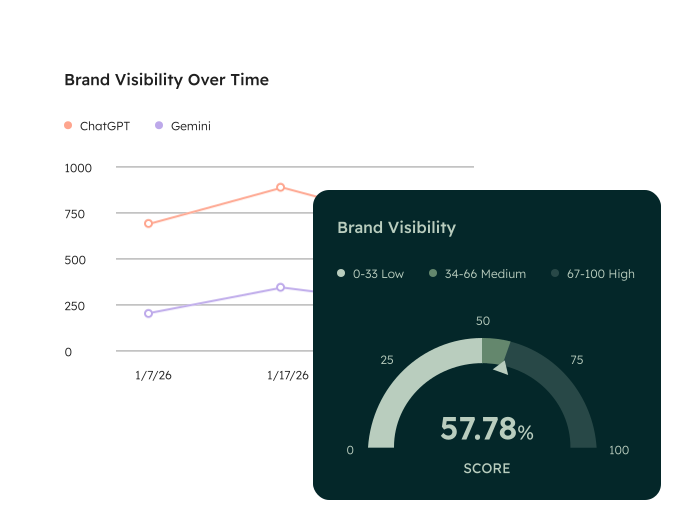
AEO Explained: How to Get Your Brand Chosen by AI
A practical guide to helping AI engines find, trust, and cite your content
The Search Landscape Has Changed
For the last decade, getting found online meant ranking in Google. Marketers understood the playbook: target the right keywords, publish quality content, earn backlinks, and climb the search results page. It worked. Businesses built entire growth engines on it.
That game has fundamentally changed — and it's happening faster than most marketing teams realize.
Buyers who used to click through search results are now getting direct answers from AI. ChatGPT recently crossed 900 million weekly active users. Google's AI Overviews appear at the top of the page for hundreds of millions of queries. Perplexity and Gemini are reshaping how people research products, evaluate vendors, and make decisions.
The Result:
60%
of Google searches now end in no clicks — the answer appears directly in the AI overview.
27%
decline in organic traffic for businesses over the last year as AI absorbs buyer attention.
900M+
weekly active users on ChatGPT alone — and growing.
When a buyer asks ChatGPT, "What's the best project management tool for a remote team of 20?" — they get an answer. A few brands get named. The rest don't exist in that moment.
This is happening to your prospects' businesses right now. Most of them just can't see it yet, because they have no visibility into what AI is saying about them.
That's the gap AEO fills.
Answer Engine Optimisation (AEO) is the practice of improving how often — and how favourably — your brand appears in AI-generated answers across platforms like ChatGPT, Gemini, and Perplexity.
Unlike traditional SEO, which focuses on ranking in a list of links, AEO is about becoming the brand that AI cites, recommends, and describes positively when buyers ask questions relevant to your category.
AEO vs. SEO: What's Different
| Old Playbook: SEO | New Playbook: AEO |
| Optimising for Google rankings | Getting cited in AI-generated answers |
| Measure clicks, impressions, and rankings | Measure AI visibility score, share of voice |
| Build content for search crawlers | Build content that AI engines reference and trust |
| Focus primarily on your own website | Build presence across all channels AI draws from |
| Assume ranking = discovery | Ensure your brand is the answer, not just a link |
Importantly, AEO doesn't replace SEO — it complements it. A strong SEO foundation helps AEO. But AEO covers the growing volume of discovery that SEO simply can't reach: the conversations happening directly inside AI interfaces before a buyer ever visits a website.
Why AEO Matters Right Now
The shift to AI-driven discovery is happening at every stage of the buyer journey — and the businesses that build their AEO strategy now will have a compounding advantage that lasts years.
Watch the full session, Winning Visibility in AI Search , to understand why this shift matters now and how marketing teams can start adapting their content strategy for AI-powered discovery. Rakky Curvelo from HubSpot shares a practical approach to structuring content to improve AI visibility, strengthen authority, and increase the likelihood of being cited when buyers are actively researching solutions.
Higher-Quality Traffic
When a buyer reaches your website after asking an AI for a recommendation, they already trust that your brand is relevant. AI has effectively pre-qualified them
4.4x
LLM visitors convert better than organic search visitors (SEMRush, June 2025, across 500+ high-value topics).
11.4%
conversion rate for AI-referred traffic vs. 5.3% for traditional organic (Similarweb).
23x
better conversion. AI search visitors generated 12.1% of signups from just 0.5% of traffic (Ahrefs).
Your Competitors Are Already Being Named
Right now, whenever a buyer in your market asks an AI assistant for recommendations on vendors, a set of brands is returned. If your competitors are named, and you're not, that's a deal lost before it ever enters your pipeline, and you have no visibility into it.
The blind spot is real. Most businesses have no idea how their brand appears across answer engines, what prompts trigger competitor citations, or what's driving those results.
Early Movers Compound
The marketers who invested early in inbound marketing and then SEO didn't just get a head start — they built advantages that lasted a decade. AEO is the next discipline that will separate the marketers who lead from those who spend years catching up.
The content AI cites today becomes the foundation of AI's opinion about your category tomorrow. The longer you wait, the more ground you're giving up.
How AEO Works
AEO requires understanding three things: how AI answer engines form their responses, what signals they use to decide which brands to cite, and how to systematically influence those signals.
In this short video, Coke Orellana, Sales Specialist at HubSpot, explains how buyer behaviour is shifting from traditional search engines to AI-powered answer engines such as ChatGPT, Perplexity, and Gemini. He shows why brands now need to optimise for AI-generated answers, not just search rankings, and how HubSpot’s AEO tools can help identify visibility gaps and turn them into content opportunities.
How AI Answer Engines Decide What to Say
When a buyer types a question into ChatGPT or Gemini, the AI doesn't just search the web in real time — it draws on a combination of its training data, live web retrieval, and trusted sources it has learned to favour. The brands, content, and perspectives that appear most consistently across those sources become the ones AI recommends.
AI engines are influenced by a wide ecosystem of signals:
-
Your owned content (blog posts, product pages, comparison pages, FAQ content)
-
Third-party content (listicles, comparison sites, industry roundups that mention you)
-
Review platforms (G2, Capterra, Trustpilot, Google Reviews)
-
Social media content (LinkedIn articles, Reddit threads, YouTube videos)
-
Earned media (press coverage, analyst mentions, partner content)
-
User-generated content (community forums, Reddit discussions, case studies)
The brands that appear most consistently — and most positively — across all of these sources are the ones AI recommends. This is a fundamentally holistic discipline, not just a content problem.
The Five Pillars of an AEO Strategy
1. Visibility Monitoring
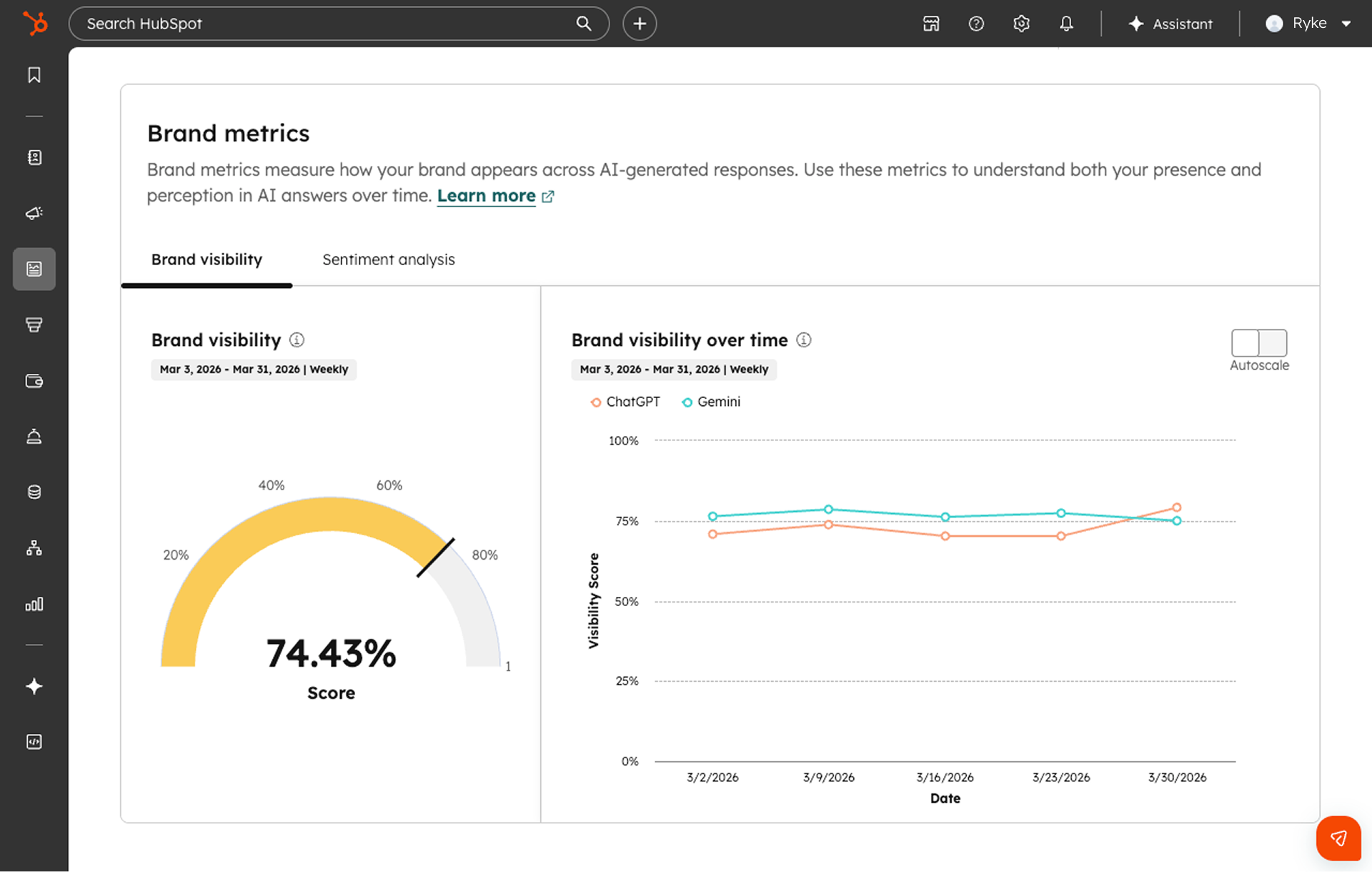
The foundation of any AEO strategy is knowing where you stand. Before you can improve, you need to track how often your brand is mentioned in AI responses across the platforms that matter — ChatGPT, Gemini, Perplexity — and which buyer questions they're associated with.
A Brand Visibility Score — the percentage of tracked prompts where your brand appears in the AI's response — gives you a single metric to track and improve over time.
2. Competitor Analysis
3. Citation Analysis
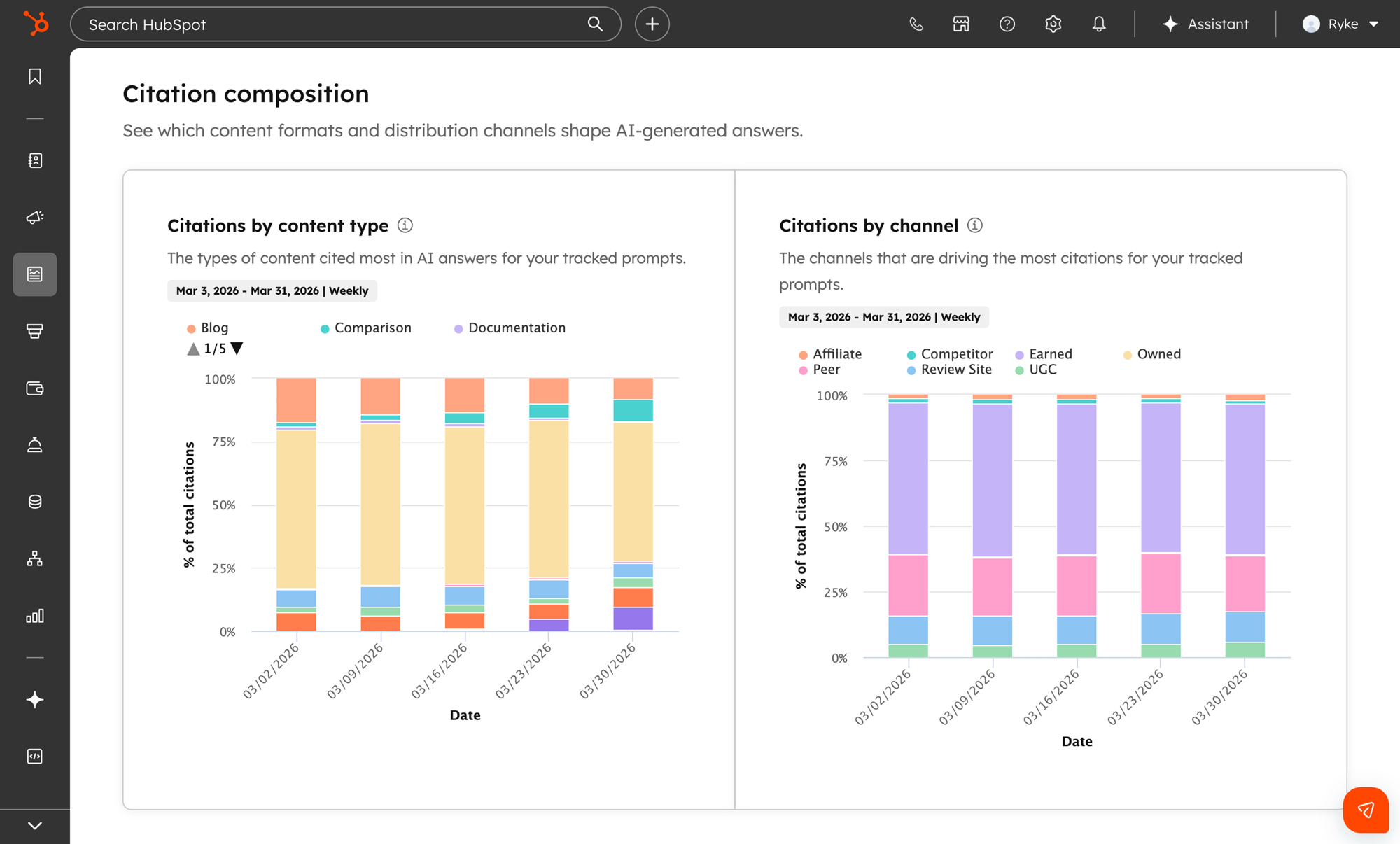
The content cited by AI shapes what AI says about your category. Citation analysis tells you exactly which domains, content formats, and source types AI engines are pulling from when they answer prompts relevant to your business — so you know where to focus your efforts.
If listicles dominate the citations for your key prompts, that's a signal to prioritise being featured in that format. If a particular third-party domain keeps appearing, that's a partnership worth pursuing.
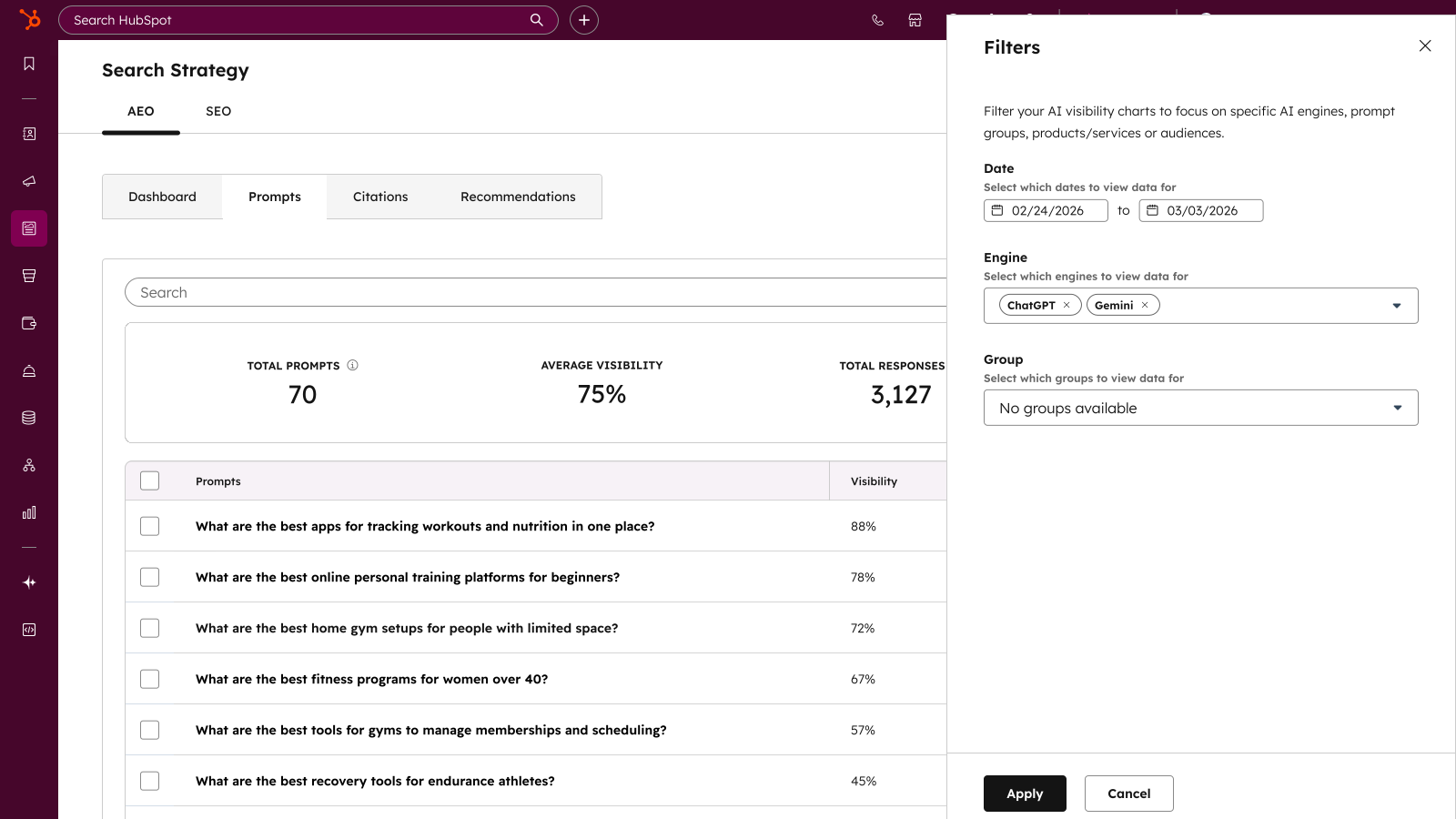
4. Prompt Tracking & Recommendations
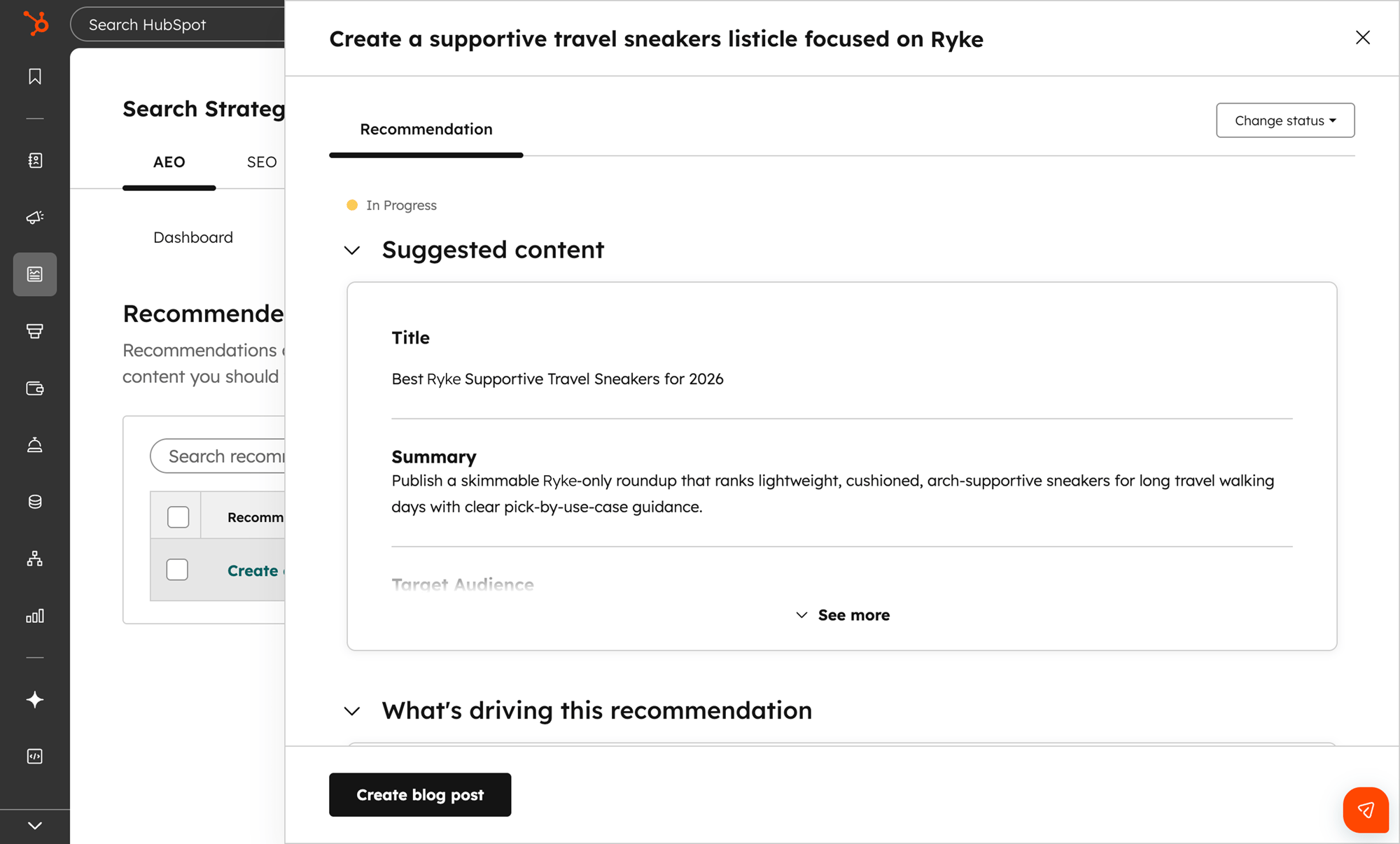
Prompts are the specific questions your buyers are asking AI — questions like "What's the best CRM for a scaling sales team?" or "Which marketing platforms integrate with Salesforce?" Tracking your visibility on the right prompts and getting prioritised recommendations for how to improve on each one is where strategy becomes execution.
Effective AEO tools surface the most important prompts for your specific business (not just generic industry questions) and give you concrete, brief-ready recommendations: what to create, what format to use, and why
5. Execution & Content Action
Visibility data and recommendations only create value when you act on them. The AEO discipline requires a connected execution workflow: creating new content to fill gaps, optimising existing pages, building social presence on cited platforms, engaging in community discussions, and earning coverage on the third-party sites AI favours.
The most effective AEO programs don't treat this as a separate workstream — they integrate it directly into the existing content and marketing workflow
How to Measure AEO Success
One of the biggest barriers to investing in AEO has been the lack of clear measurement frameworks. Here are the key metrics your clients should be tracking:
Core AEO Metrics
| Metrics | What It Tells You |
|
Brand Visibility Score |
% of tracked prompts where your brand appears in AI responses. Your headline KPI. |
| Share of Voice | How often your brand is cited relative to competitors across the same prompts. |
| Sentiment Score | How positively or negatively your brand is described when it does appear. Scale of -100% to +100%. |
| Prompt-Level Visibility | Which specific buyer questions you're winning vs. losing, so you know where to focus content efforts. |
| Citation Sources | Which domains and content types AI is drawing from for your category — tells you where to build presence. |
| AI Referral Traffic | Traffic to your site from ChatGPT, Gemini, and Perplexity. Tracks direct business impact. |
| AI Referral Conversion | Rate how well AI-referred visitors convert vs other channels. Typically 4-23× higher than organic |
As a benchmark: HubSpot's own marketing team implemented an AEO strategy and saw a 1,850% increase in qualified leads from AI-driven discovery, along with a 3× higher conversion rate from those leads compared to traditional organic traffic.
The AEO Quick-Start Checklist
Phase 1: Establish Visibility
☐ Set up prompt tracking across ChatGPT, Gemini, and Perplexity for 10–25 buyer questions relevant to your category
☐ Get your baseline Brand Visibility Score
☐ Run a competitor analysis: identify which competitors are being named and on which prompts
☐ Run a sentiment analysis: understand how positively or negatively AI describes your brand when it does appear You can use HubSpot’s free AEO Grader or chat with us and we’ll go deeper.
You can use HubSpot’s free AEO Grader or chat with us and we’ll go deeper.
Phase 2: Understand the Gap
☐ Audit citation sources: which domains, content types, and channels is AI pulling from for your key prompts?
☐ Identify which prompts you're invisible on and which competitors are winning those
☐ Review the specific AI responses being generated — what narrative is AI telling about your category?
☐ Map your current content and presence against the citation sources AI favours
Phase 3: Build the Strategy
☐ Prioritize content gaps: which prompt areas offer the highest visibility upside?
☐ Create or update owned content (blogs, FAQ pages, comparison content) optimized for AI citation
☐ Identify third-party platforms and publications where your brand should be appearing
☐ Build or strengthen your social and community presence on channels AI favors (Reddit, LinkedIn, YouTube)
☐ Set up a monthly cadence to review your visibility score and iterate
What Good AEO Content Looks Like
AI engines are not simply summarising SEO-optimised pages. They favour content that is specific, structured, authoritative, and genuinely useful in answering buyer questions. Here's what to prioritise:
-
Be specific and niche. Generic overview content is less likely to be cited than specific, detailed content. AI rewards depth on a focused topic.
-
Use a clear structure. Headers, lists, definitions, and tables make it easier for AI to extract and cite your content accurately.
-
Answer questions directly. Frame your content around the specific questions buyers are asking — not just keywords.
-
Demonstrate credibility. Original data, customer testimonials, case studies, and third-party validation all increase the likelihood AI cites you as authoritative.
-
Be consistent across channels. AI builds its picture of your brand from many sources. A consistent, positive narrative across your website, social profiles, press coverage, and reviews reinforces that picture.
Statistics referenced in this guide are sourced from: SEMRush (June 2025), Similarweb, Ahrefs / Getpassionfruit, HubSpot internal data, TechCrunch / ChatGPT usage data, and Search Engine Land. All HubSpot customer statistics are based on data current as of March 2026.