Unlock the Power of your HubSpot Portal
fiachra circle

Prospecting Agent & Target Accounts

See how AI is transforming sales with HubSpot’s Prospecting Agent and Target Accounts features.

Fiachrá Duffy, Lead Customer Success Manager, HubSpot

3:20 PM - 3:30 PM

Fiachrá demos the latest capabilities and leads a live Q&A, showing sales teams how to leverage these AI-powered tools for maximum impact.

Session Recording

In this short, practical session, Fiachrá Duffy, Customer Success Manager at HubSpot, walks through the latest updates to Target Accounts, the Prospecting Agent, and the new Sales Performance workspace. Delivered as a live, portal-based demo, the recording focuses on how sales teams can use HubSpot’s AI-powered tools to research accounts, scale personalised outreach, and gain better visibility into performance and risk, while maintaining strong alignment with marketing.

Viewers will gain a clear understanding of how these tools work in practice, where they sit within the HubSpot platform, and how they can be applied to support account-based strategies and mid-funnel sales productivity.


Session Summary

The summary below provides a structured breakdown of the key moments from the session. It follows the natural flow of the live demo, highlighting the main feature areas, practical use cases, and strategic guidance shared throughout the walkthrough.

Introduction and Account-Based Context

Introduction and Account-Based Context

Fiachrá opens by setting expectations for a fast-paced, portal-led walkthrough focused on sales tooling, specifically Target Accounts and the Prospecting Agent. While the session leans sales-orientated, he emphasises from the outset that account-based strategies should never be siloed. Instead, success depends on close collaboration between sales and marketing.

He acknowledges that many teams are still experimenting with account-based marketing and target accounts, and reassures attendees that the concepts covered will remain relevant regardless of their current maturity. This framing positions the session as both an introduction and a practical evolution for teams already exploring this approach.

Exploring the New Target Accounts Workspace and AI Research

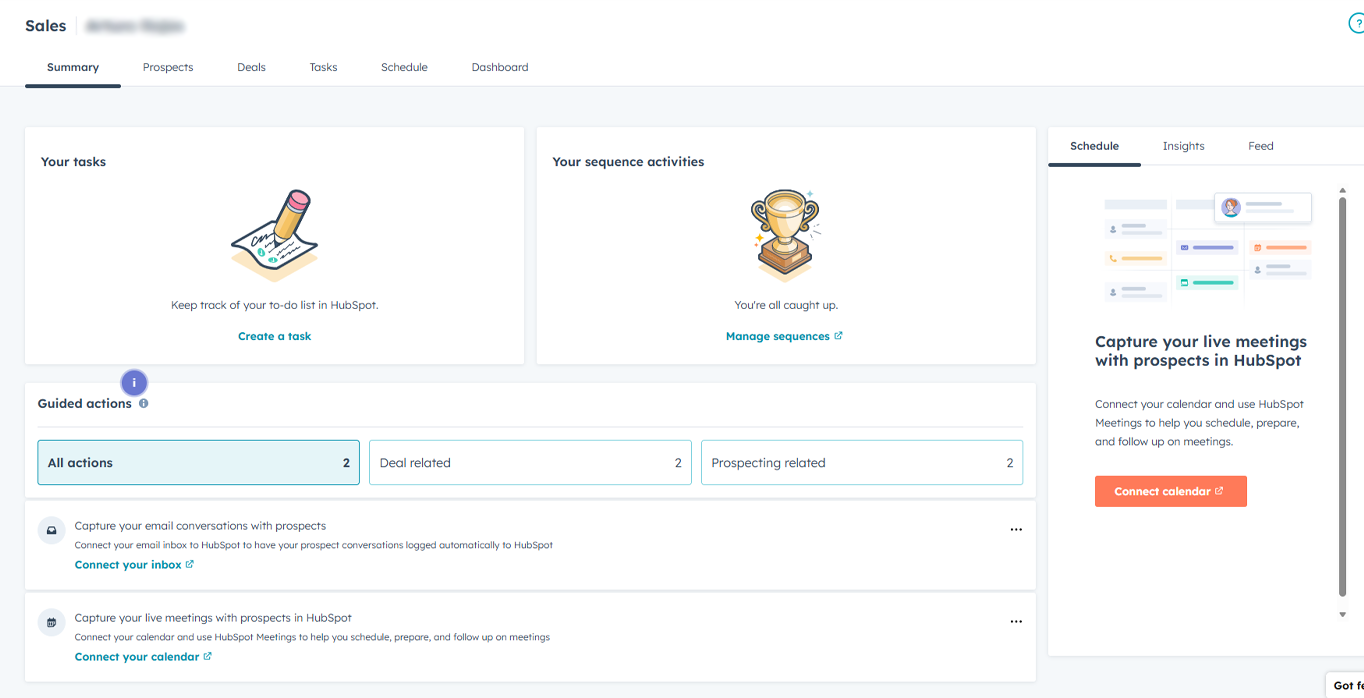
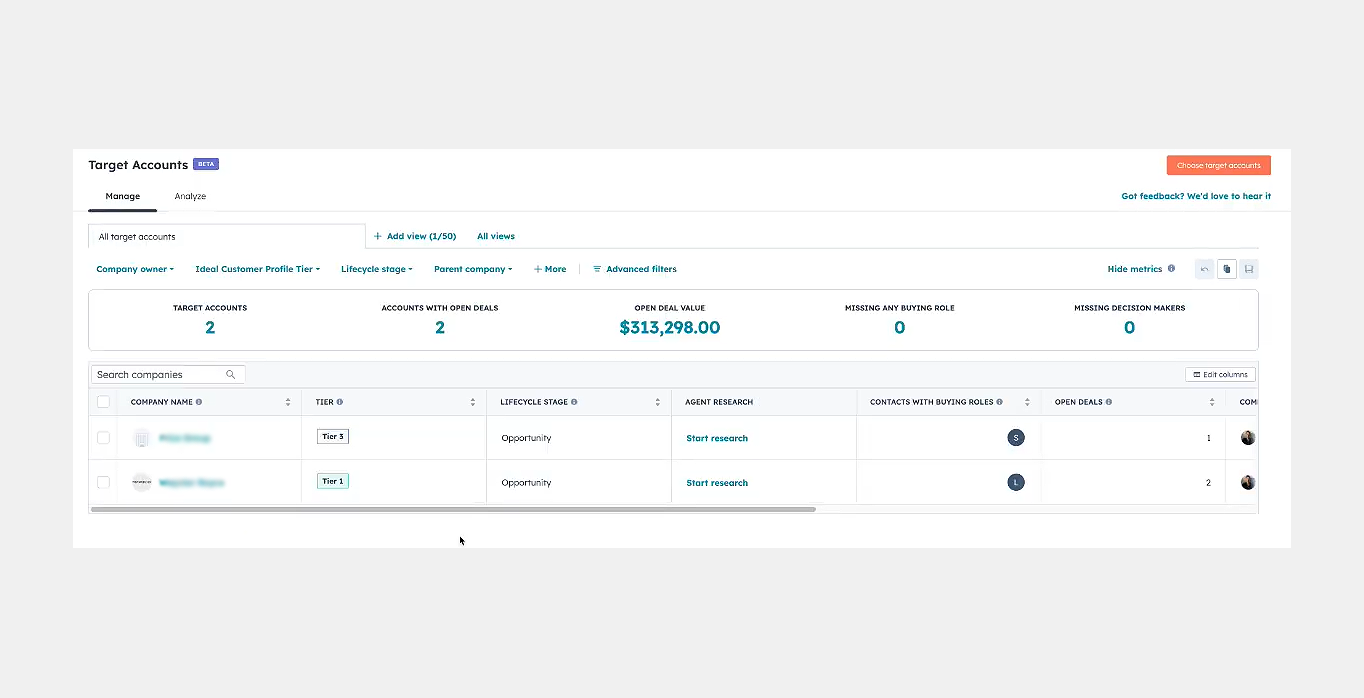
The session then moves into the Sales workspace, where Fiachrá introduces the new Target Accounts section and explains how to enable it via HubSpot’s beta tools. He highlights a key shift from the previous, property-based model to a new AI-enriched research experience designed to provide deeper context at both company and account level.

By initiating research directly within a target account, users can now access AI-generated company summaries, website insights, news, values, job listings, and blog summaries. This additional context replaces manual research and enables sales teams to approach outreach with a clearer understanding of each account, supported by real-time enrichment rather than static properties alone.

Exploring the New Target Accounts Workspace and AI Research
Managing Target Accounts at Scale and Measuring Performance

Managing Target Accounts at Scale and Measuring Performance

Fiachrá demonstrates how the updated Target Accounts index allows teams to view and manage all target accounts collectively, rather than at an individual rep level. The layout mirrors familiar HubSpot index pages, enabling custom views, filters, and tabs that support different working styles across teams.

He also introduces AI-driven company suggestions powered by HubSpot credits, which analyse existing data to surface new, relevant target companies. Alongside this, the new built-in analytics consolidate reporting into a single workspace, replacing multiple dashboards and giving teams a clearer, shared view of progress and accountability.

Personalised Outreach and the Prospecting Agent in Action

Shifting from research to execution, Fiachrá shows how insights from target account research feed directly into outreach. Users can generate AI-written one-to-one emails that pull together company context, contact-level research, product positioning, and built-in calls to action such as meeting links.

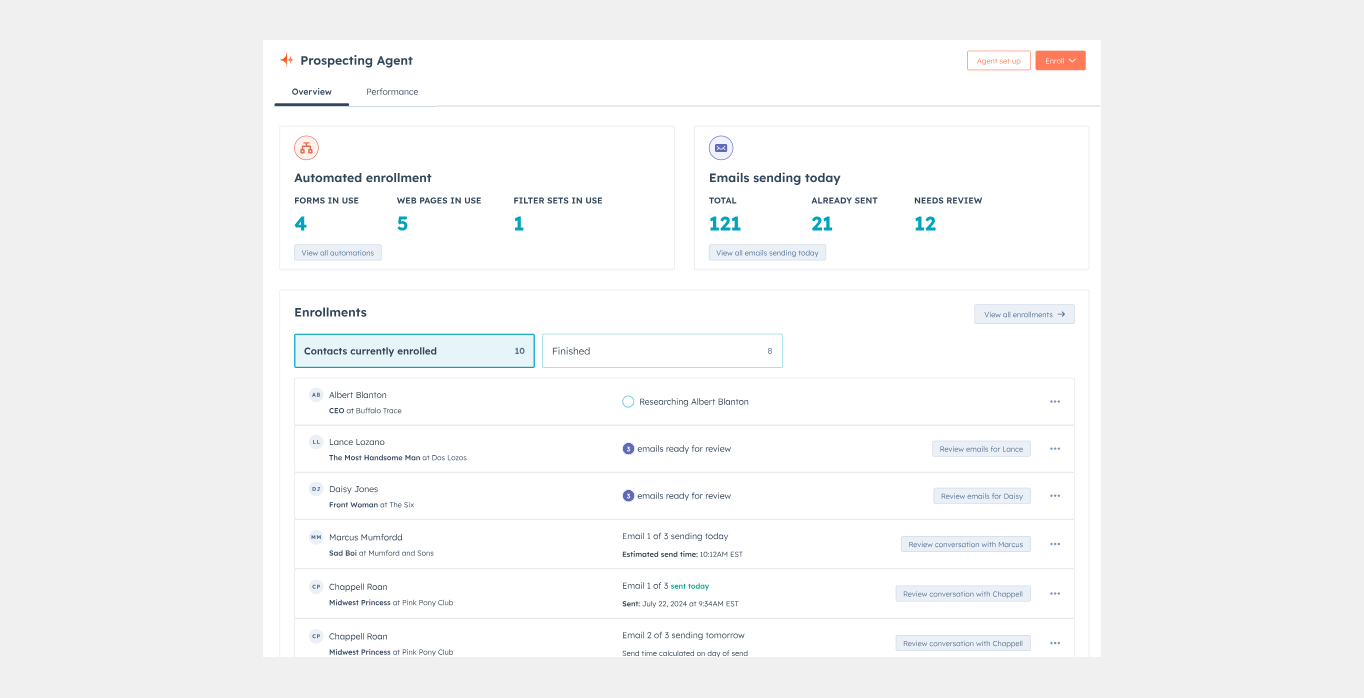
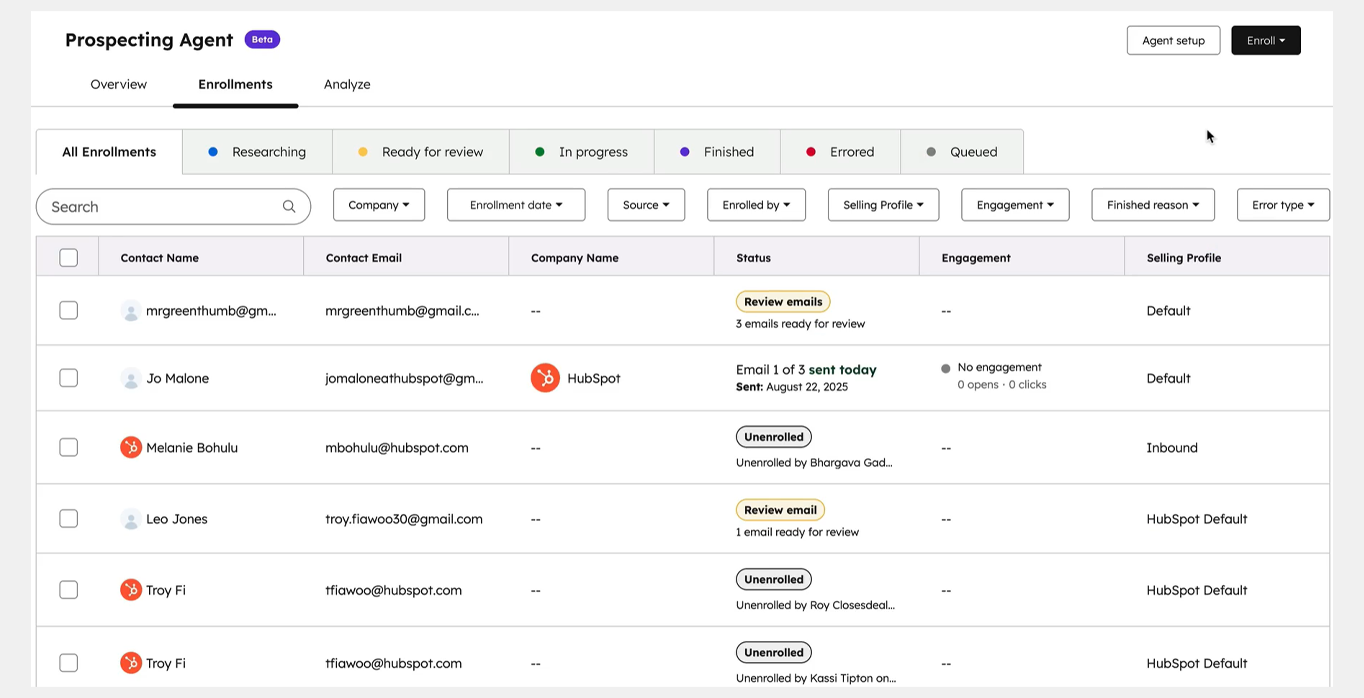
He then introduces the Prospecting Agent, which automates outreach through AI-generated email sequences. Users can choose between reviewing emails before sending or enabling a fully automated “free-fire” mode. While currently limited to three email steps, the agent allows teams to reach prospects at a scale that would be impossible manually, particularly for mid-funnel engagement.

Personalised Outreach and the Prospecting Agent in Action
Sales Performance Workspace and AI-Driven Coaching

Sales Performance Workspace and AI-Driven Coaching

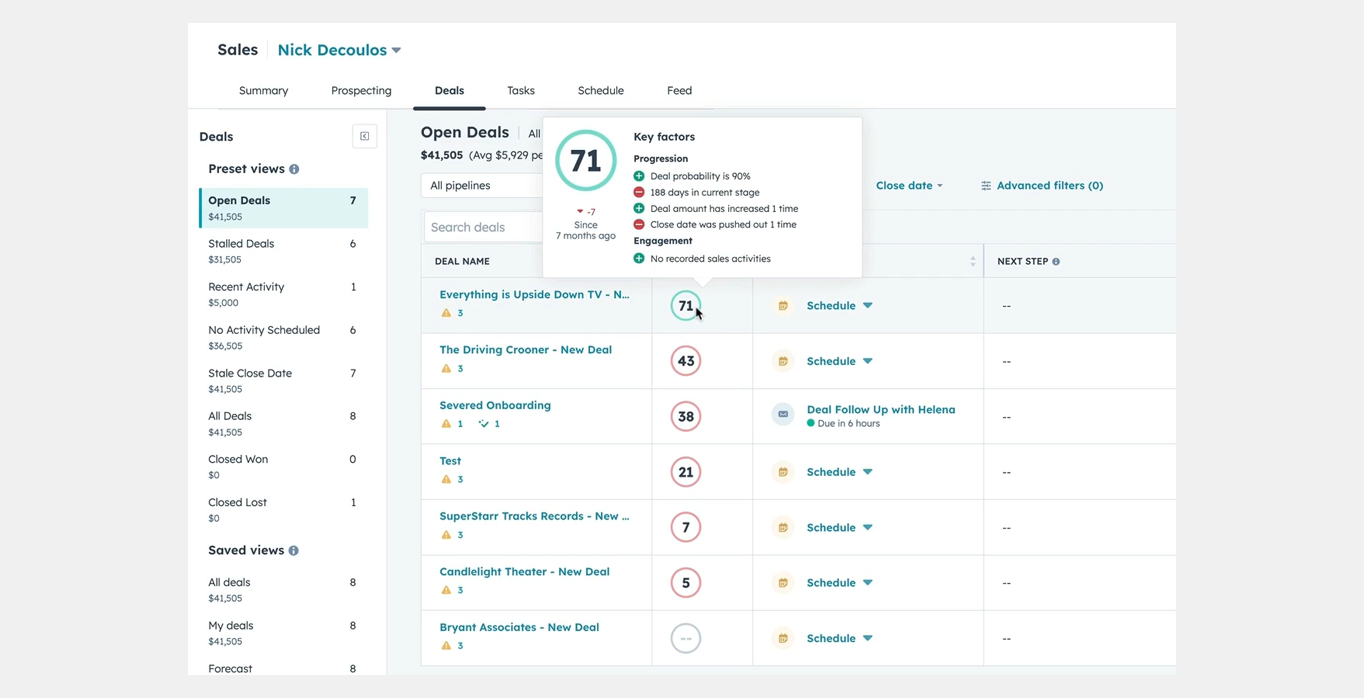
The final section focuses on the new Sales Performance workspace, designed for sales managers and operations teams. Unlike traditional dashboards, this AI-powered view assesses activity across leads, deals, and engagements to surface risks, stalled deals, inactivity, and performance gaps.

Fiachrá explains how managers can configure the workspace around direct reports, allowing them to quickly understand what is happening across their team before one-to-ones. The workspace also tracks prospecting performance, revenue goals, and deal health, helping teams identify both risks and positive trends. Access is currently available via private beta for Sales Hub Professional and above.

Q&A Highlights:

Can sales managers view both team-level and individual performance in the Sales Performance workspace?

Yes. Managers can configure the workspace by defining their direct reports. This allows them to see a high-level team overview and then drill down into individual reps to understand activity, deals, meetings, and engagement patterns.

Which HubSpot packages include the Sales Performance workspace?

The Sales Performance workspace is available in Sales Hub Professional and above, with a required sales seat. Access is currently managed through a private beta approval process.

How do target accounts handle companies, contacts, and buying roles together?

Target Accounts are designed to reflect real buying committees rather than single contacts. Users can assign tiers to accounts, link parent and subsidiary companies, and track multiple buying roles such as champions, budget holders, and decision-makers within the same account.

Why are tiers important in Target Accounts?

Tiers help teams focus effort strategically. By defining Tier 1, Tier 2, and Tier 3 accounts — often through workflows based on revenue or employee count — teams avoid clutter and ensure that true priority accounts receive the most attention.

How are buying roles captured and maintained?

Buying roles are stored as contact properties and can be populated through marketing forms, sales playbooks, or manual updates during calls. This ensures both marketing and sales have visibility into who is involved in the buying decision and where gaps still exist within an account.

Sales Workspace

Explore the latest Sales Workspace tools and how they help boost productivity and improve pipeline visibility. Katie Magorrian from HubSpot’s Customer Success team walks through real scenarios and shares best practices to help your sales team get the most out of the workspace.


✦   Dublin HubSpot User Group

Prospecting Agent & Target Account

Explore the latest AI-powered sales tools in HubSpot, including the Prospecting Agent and new Target Accounts features. Fiachrá Duffy demos what’s possible and dives into a live Q&A on how sales teams can get the most from these updates.


✦   Dublin HubSpot User Group

Prospecting Agent & Target Account

Explore the latest AI-powered sales tools in HubSpot, including the Prospecting Agent and new Target Accounts features. Fiachrá Duffy demos what’s possible and dives into a live Q&A on how sales teams can get the most from these updates.


✦   Dublin HubSpot User Group

Dublin HUG = Your  New Community 

Share the vibe, shape the next one

HUG Dublin - OCT 2025-070 (1)
IMG_4227
HUG Dublin - OCT 2025-091
HUG Dublin - OCT 2025-069
IMG_4227