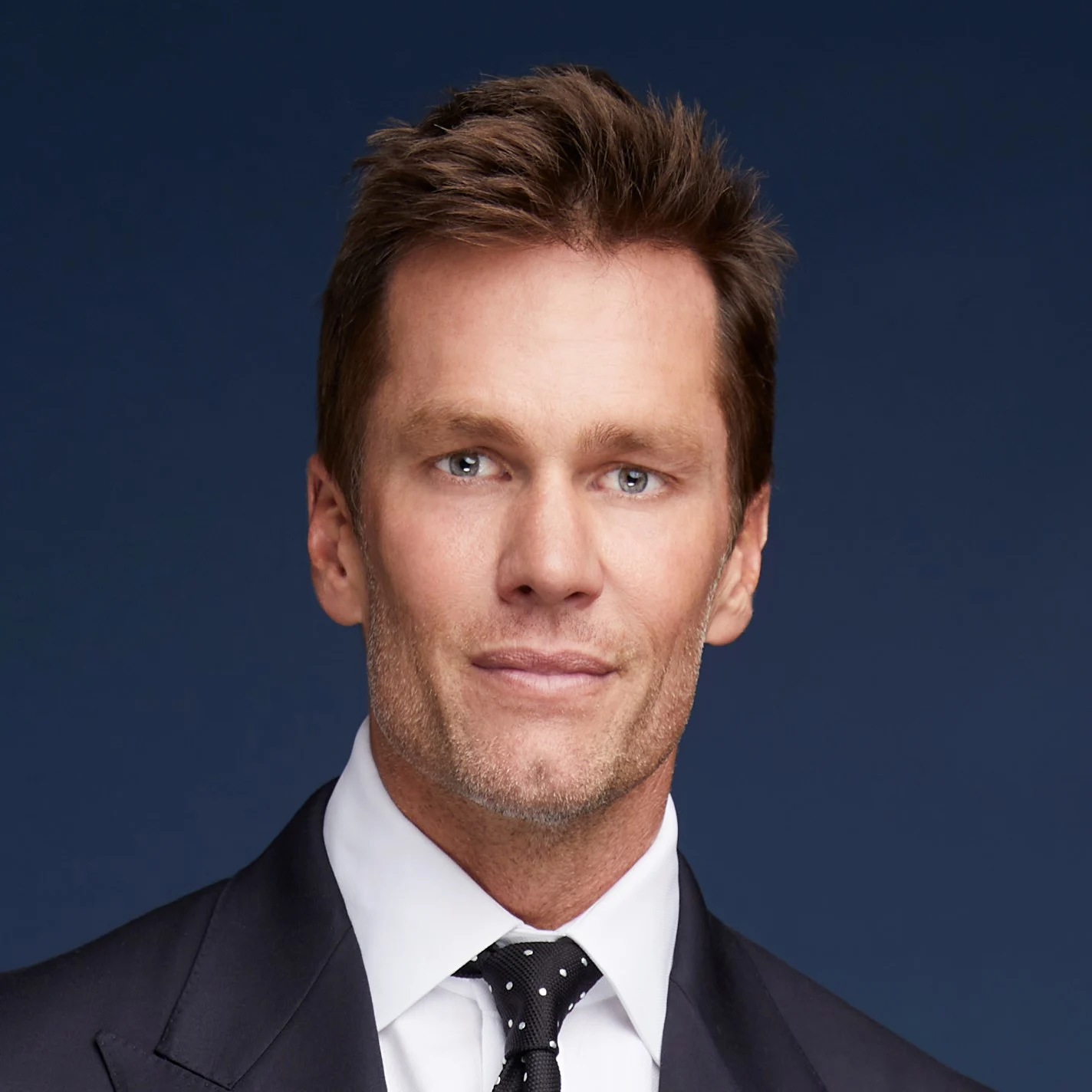
Tom Brady
SEVEN-TIME SUPER BOWL CHAMPION
Tom Brady is a seven-time Super Bowl champion and entrepreneur with ventures spanning sports ownership and investment.


SEVEN-TIME SUPER BOWL CHAMPION
Tom Brady is a seven-time Super Bowl champion and entrepreneur with ventures spanning sports ownership and investment.

CO-FOUNDER @ HUBSPOT
Brian Halligan co-founded HubSpot and is a Sequoia partner, Propeller Ventures founder, author and podcast host.
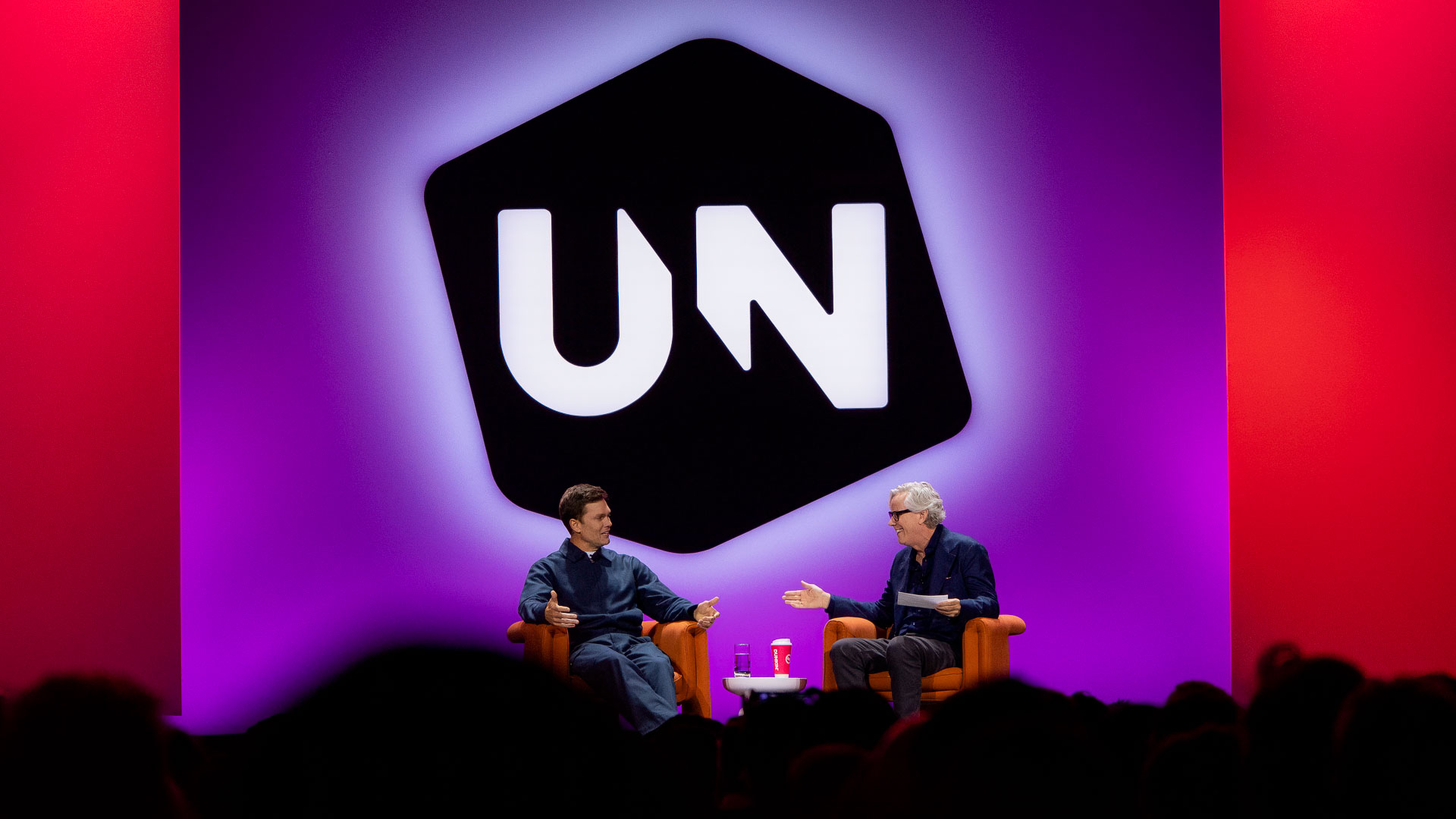
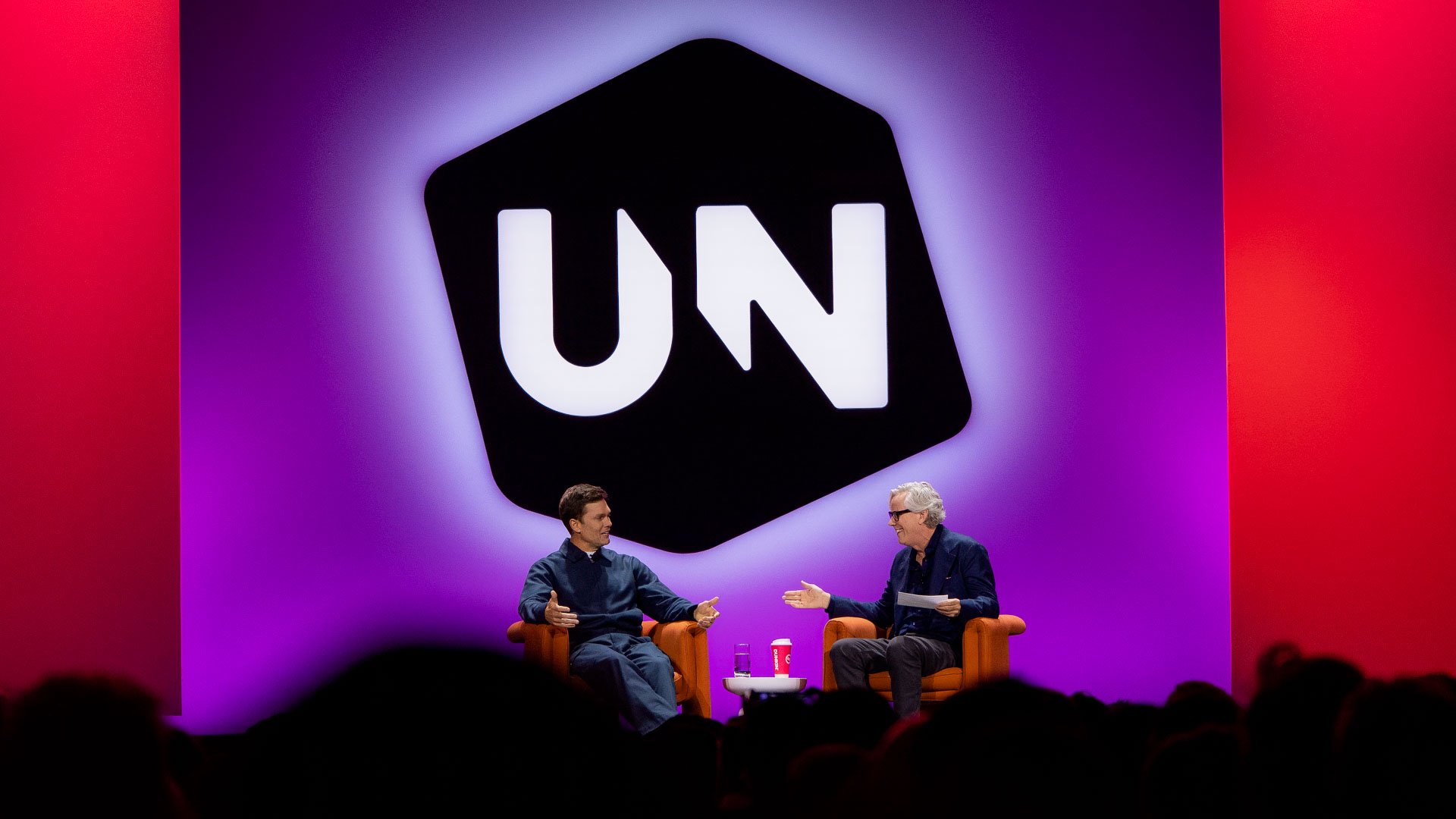 Tom Brady and Brian HalliganWhat Winning at Scale Actually Requires
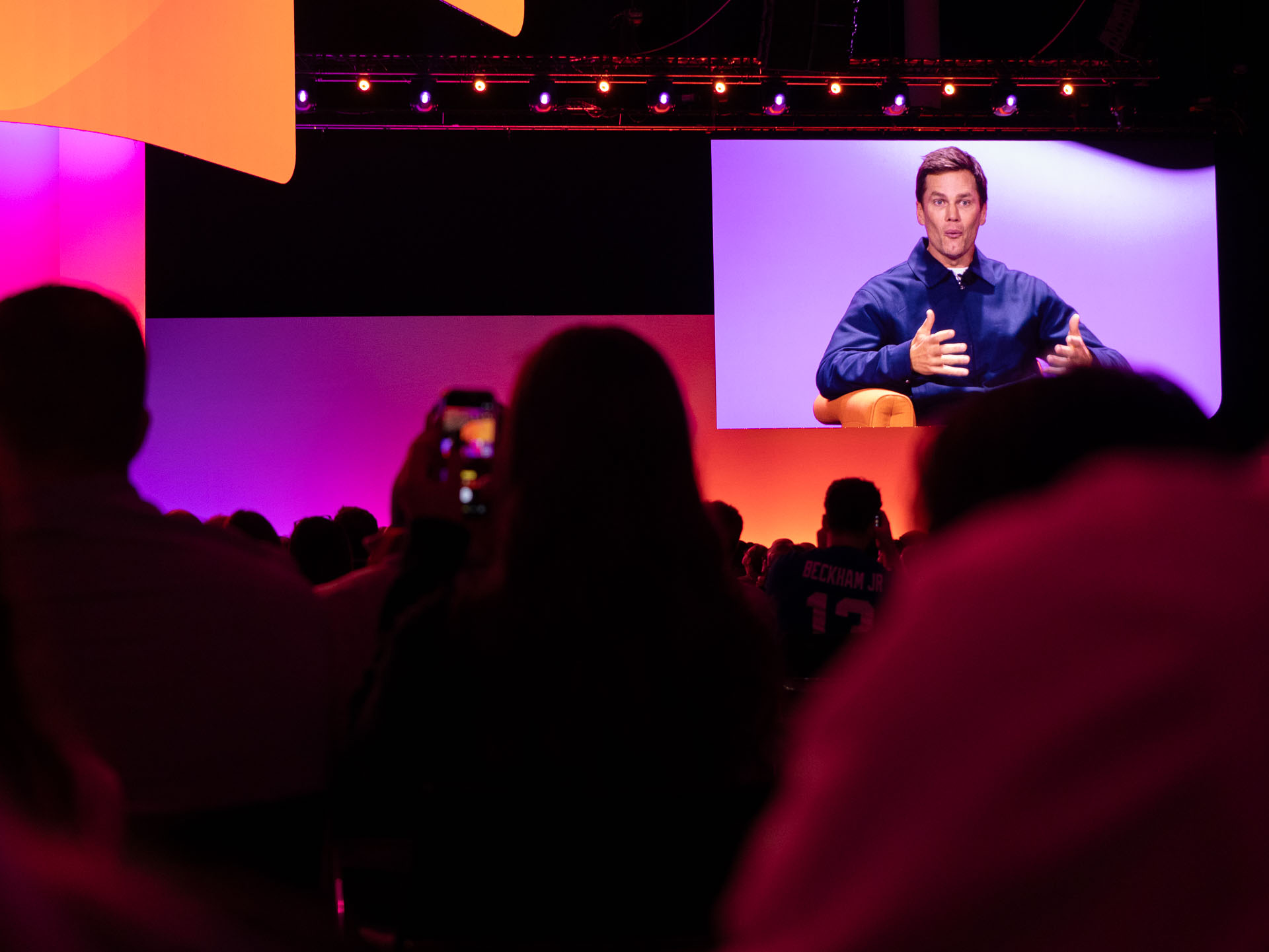
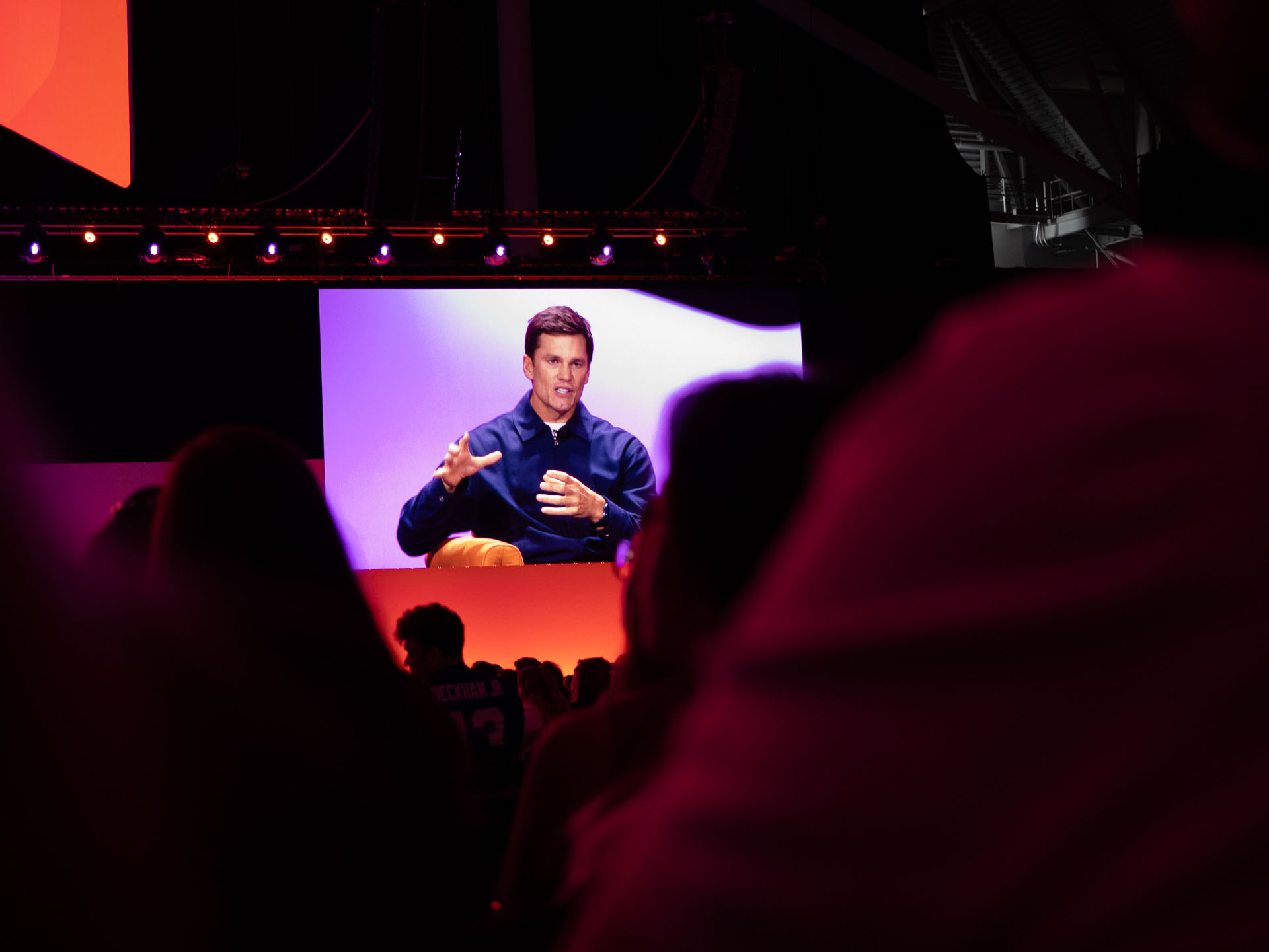
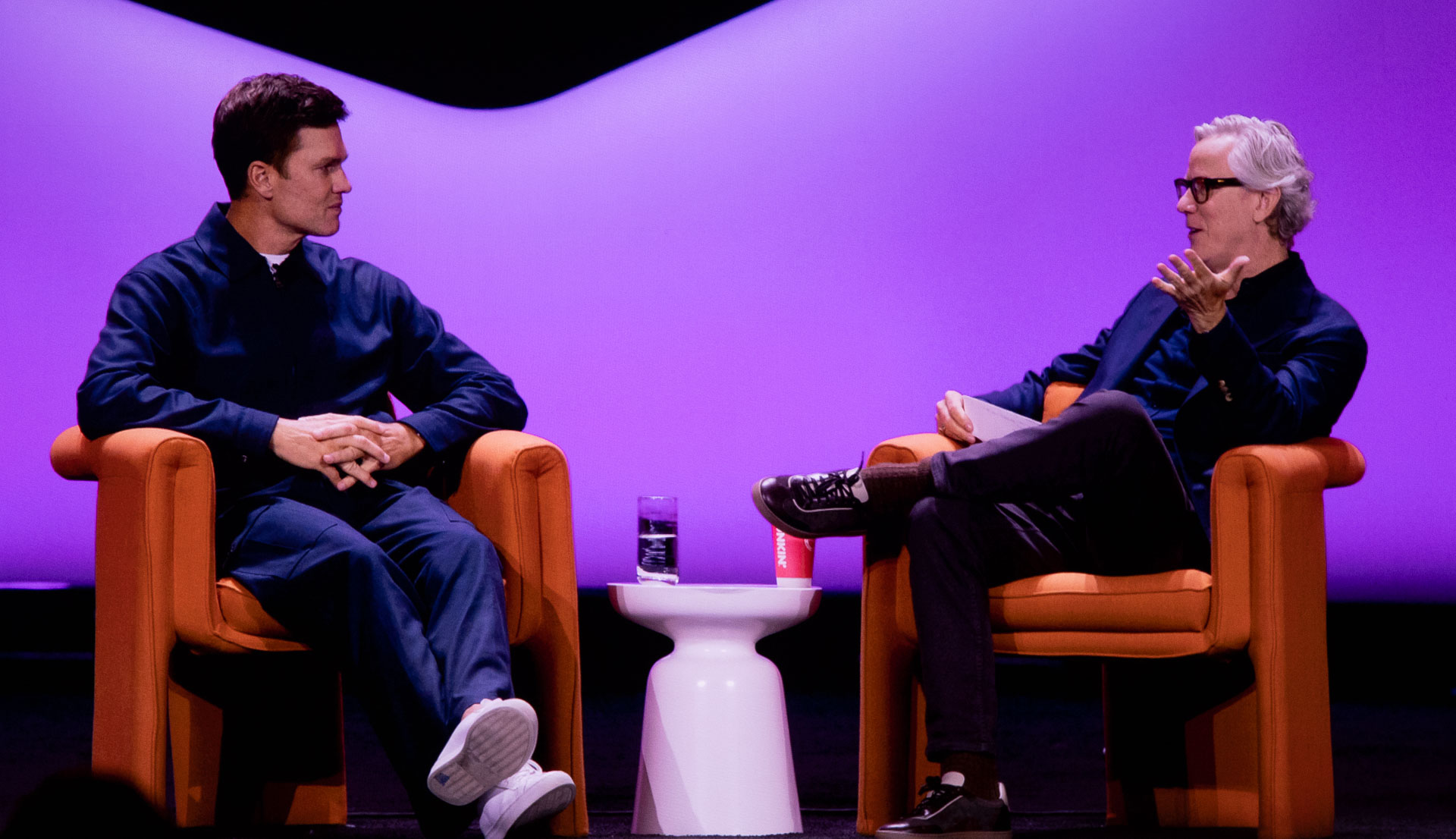
Nothing in this conversation was a highlights reel. Sitting on stage in fireside format, Tom Brady spent the session dismantling the idea that his career was a story about talent. It was, in his telling, a story about a scouting report he agreed with, three years of college football spent watching from the sidelines, a sports psychologist who refused to let him complain, and a practice habit so obsessive that the real Super Bowl felt like the hundred-and-first repetition rather than the first.
For an audience of operators and builders, the transferable material is not the football. It is the method: how to behave when the reps are scarce, how to treat feedback that stings, how to keep standards after success, and how to start something new when you already know you will be bad at it. Brady framed his own limitations as the engine of the whole thing — “the biggest blessing” — because they forced him to find routes that more gifted people never had to look for.
He also spoke to the room with unusual directness about community: the region where his children were born, and the two decades he described as “the most magical”. What follows is the argument as it unfolded, from a sixth-round phone call to a second career learning how to connect his brain to his mouth.
The story opened in 2000 with a phone call that did not come from Bill Belichick. A Patriots staffer rang to say, simply, “We just took you in the sixth round.” Brady admitted he did not even know where the team was based — “I wasn’t very good at geography” — and he was the 199th player selected. The host put the obvious explanation on the table: the scouting report.
Read aloud on stage, it was unsparing: “Poor build, skinny, lacks mobility, lacks a strong arm.” What was striking was Brady’s refusal to use it as a grievance. He defended the scouts, describing the assessment as accurate and reasonable given what they were measuring, and said he remains fond of many of them. Professional evaluation departments, he argued, should not be underestimated.
His only correction was about scope. A combine-style evaluation over-weights the physical, and a physical baseline is necessary but never sufficient. What no stopwatch captured was the mental and emotional contribution he would bring to a locker room — the part of the job that would ultimately decide the outcome.
“I really couldn’t disagree with what they said… it was very justified for what they thought.”
Brady did not play Pop Warner. His mother did not want him hit as a child, and there was little organised football for twelve-year-olds in the Bay Area. His first proper team came at fourteen, as a high-school freshman, and at the opening tryout he did not know how to insert the pads into his trousers. He made the freshman team as the backup quarterback; the team lost every game.
Sophomore year brought a starting job on junior varsity and a roughly .500 record. Only in his junior and senior years did he win the varsity job. Recruitment was thin, and one Midwest school took the chance: Michigan, which he regarded as the best place to go if you genuinely wanted to be a football player. He arrived seventh on the quarterback depth chart, moved to fifth, then fourth midway through year two, second string in year three, and finally won the job in years four and five, finishing 20–5 as a starter.
Before the combine he was projected as a second- or third-round pick; the shirtless combine photograph taken at around six in the morning in baggy grey shorts remains a running irritation, resurfacing endlessly with no flattering alternative in existence. But the more serious point was about the three years he did not play. In hindsight, he called them valuable: time to earn the trust of teammates and coaches, build physical strength, and fail repeatedly on a practice field with nobody in the stands.
“That allowed me to figure out how to deal with failing in front of my teammates before I failed in front of a bigger audience.”
The Michigan years were the adversity case study the host kept returning to. Brady was recruited by secondary coach Bill Harris, who left days after the scholarship was accepted. The head coach who recruited him was sacked in the spring, two weeks before Brady arrived, after punching a police officer. The quarterbacks coach who recruited him departed after year one for an offensive coordinator role at Indiana.
By his second year, the head coach, the West Coast recruiting coordinator and the quarterbacks coach had all gone. Nobody at the university was invested in his success or campaigning for him, and nobody remained to honour the promises made in his parents’ living room. “So it forced me to grow up.” His new quarterbacks coach, Stan Parrish, was hard on him — in hindsight sometimes harder than he was ready for — and head coach Lloyd Carr was tough too. He seriously considered quitting and transferring back to Cal Berkeley: easier, closer to home, weaker competition, and his mother could do his laundry.
The turning point was Greg Harden, Michigan’s sports psychologist, who became a lifelong mentor and whom Brady continued to consult for years afterwards; Harden died the previous year. Brady went to him in his second year complaining that the coaches did not like him and that he could not prove anything on two or three practice repetitions. Harden refused the premise and handed him a different one.
“Why don’t you quit complaining about all the things you’re not getting and be appreciative of the things you’re working on?” — Greg Harden
Out of months of weekly Tuesday sessions came a practical instruction: treat practice like the game. If they give you two repetitions, be brilliant in two. Sprint off the field with energy so teammates see conviction. Celebrate a practice touchdown as though it were a win over Ohio State. Tuesday to Thursday became his Saturdays, because Saturdays were not his.
“Sometimes we always wait for the perfect opportunity… How about we do it every time, so it doesn’t matter who’s watching?”
Asked to name the method behind the scenes, Brady offered a simple partition. You cannot know when an opportunity will arrive. You can control your attitude, your workouts, your disciplines, and whether you give your best today. Success, on his account, is partly self-belief, partly a support system — someone who believes in you and hands you new mental tools — but mostly taking full advantage of whatever chance actually turns up.
He was blunt about motivation. Contracts, Super Bowls and MVP awards were not durable fuel. Never letting his teammates down was. That reframed the daily question from what he wanted to how he could serve the people around him, including making the coach look good the moment he was given a chance. At the Patriots he repeated the Michigan behaviour, and defensive players noticed: quiet encouragement in the corridor — stay ready, when you get your chance, I know what you’re doing — which reinforced his belief long before any opportunity materialised.
On nerves, he was disarming. He was anxious throughout his career, including before Super Bowls, slightly more than before ordinary games. What changed was exposure. “We get better at the things that we spend a lot of time doing” — including, apparently, being nervous.
“My number one motivation was I never want to let my teammates down.”
Arriving in New England in spring 2000 as fourth quarterback on the depth chart, Brady ran the Michigan playbook again: build condition, learn the system, study Drew Bledsoe. The standing intention, held before any opportunity existed, was to take the chance when it came and never let the team down. In his second year, shortly after 9/11, the starter was injured in game two and Brady entered in the fourth quarter. He was not taken off the field for the next twenty-two years.
Winning the job changed the standard rather than relaxing it. He had earned it by treating practice like a game, so he reasoned he could only keep it by treating practice like the Super Bowl — and he assumed there was “probably another Tom Brady right behind me” with the same attitude. By the time he ran out for a real Super Bowl, he had run out for it a hundred days in a row in practice.
That, he insisted, was the actual secret of the Patriots’ success — not “some stupid quote on a jumbo screen”. Winning games simply confirmed the method was sound. From the broadcast booth he now sees the opposite: players who do not rehearse the moment and only begin asking what to do once it arrives, by which point it is far too late.
The transfer to business was explicit. Before a high-stakes conversation, he advised, close the deal in the mirror ten times before you have to close it for real. Every ordinary day is a chance to make the eventual moment big.
Brady recounted a parable he had read a fortnight earlier. A boy asks a Hall of Famer how to reach the Hall of Fame. Good decisions. How do you make good decisions? Experience. How do you get experience? Bad decisions. Failure, on this logic, is not an obstacle to expertise but its raw material — the accumulated store that later produces composure under pressure.
Sustaining excellence, he argued, is harder than achieving it. Human nature pushes you to reward yourself after a win; the discipline is to indulge only slightly and return immediately to work, because next year will be harder. Cutting corners and taking days off were not available options. The compensation comes later: stepping off what he called an arduous treadmill and being able to look back proud of what was sacrificed for long-term success.
He declined the “greatest ever” framing entirely. “I made the most of what God gave me” was as far as he would go, alongside repeated insistence that nothing significant is accomplished without a great many people — teammates, coaches, fans, ownership, family and community. The same humility drove his message to the room: plenty of people there did not attend an Ivy League school, and someone will always be smarter or better positioned.
“All you can do in life is take advantage of the opportunities that you get.”
The most useful part of the session may have been the part where Brady was not an expert. Having loved being, in his words, a soldier down on the field, he moved quickly after retirement into television analysis — an entirely different craft from the obsession with playing quarterback. His problem was elementary and unglamorous: “how do I connect my brain to my mouth” in a way an audience enjoys and understands. He is not a natural talker, and described it as a lot harder than it looks.
His first broadcast, two years ago, was Dallas at Cleveland. His reaction afterwards was relief at having survived. The next day a friend and colleague of seventeen years delivered the verdict without cushioning: “What were you doing yesterday? I don’t know what you were saying.” Brady’s response was structurally identical to 1996 and 2000 — he decided he was back to number seven on the depth chart and started working.
Year one went on learning what the audience wanted and what his broadcast partner needed; he felt real progress in year two, a view the host echoed. Decades of playing mean he spots errors instantly, and his frustration now is restraint: he wishes he could be more candid on air when a mistake is in plain sight and nobody else seems to see it. His own framing was that inexperience produces bad decisions with the voice, and that more experience should mean more good ones.
Brady named the familiar failure mode of every multi-day event. After three or four days of sessions, attendees leave with long to-do lists. By Monday morning the list has shrunk, and the real commitment is to start building daily. Starting is unnatural and uneasy: most people get distracted on Monday, skin their knees on Tuesday, and quit.
His counterweight came from a visit with his son and daughter to MrBeast’s content studio in North Carolina. Asked how he began, the answer was to make a video nobody will ever watch — roughly five thousand of them before anyone watched one. The principle Brady drew out is deliberately unsentimental: you will be bad at first, and there is no way to reach the thousandth attempt other than through the first.
He then offered the mechanism he used for twenty-plus years. After watching film, he wrote on his wristband the things he had done badly that day — better on your drops, better on your follow-ups, move your feet faster, rotate your hips more. The business equivalent is a notebook on the desk or by the bed.
“The only way you can get to 1,000 is by starting at one.”
The closing argument was the through-line of everything that preceded it. There is no growth — physical, mental or emotional — while you remain inside your existing limits. The instruction was to break those self-imposed boundaries down deliberately, because reaching into new and untested territory is the only way to find out what you are actually capable of.
That is not a motivational flourish so much as a summary of a career built out of unwanted conditions: a scouting report he agreed with, coaches who left, repetitions he had to earn two at a time, and a second profession begun at an age when most people stop starting things. The world is changing and will not go backwards, he said; adaptation is compulsory, and nobody is good at something they have never done.
“We get to discover parts of ourselves that we would never have known had we not got outside of that.”