
Tasso Argyros
VP of Engineering @ Databricks
Tasso Argyros is VP and GM of CustomerLake at Databricks and a serial entrepreneur focused on data and AI.


VP of Engineering @ Databricks
Tasso Argyros is VP and GM of CustomerLake at Databricks and a serial entrepreneur focused on data and AI.

VP and GM, Agent Hub @ HubSpot
Adam Cuzzort is GM and VP of Product of Data Hub and Agent Hub at HubSpot, leading the teams behind HubSpot's data foundation.
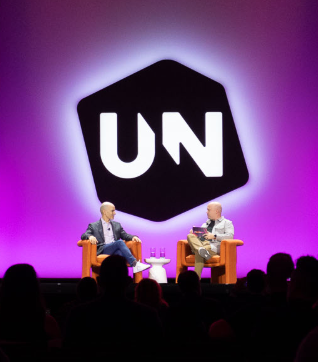 Tasso Argyros and Adam CuzzortFrom Data Strategy to AI Execution
The most striking claim of this fireside conversation was not that artificial intelligence is coming for our work, but that the intelligence problem has already been solved and almost nobody has noticed. Two speakers who share a background as company co-founders now working inside established businesses opened with an audience poll — do you think AGI is already here? — and only a handful of hands went up. The response on stage was blunt: by any workable definition, models are already smart enough to do most of what humans do across many domains. What stops them is not reasoning power. It is that they are asked to work blind.
That reframing set the agenda for the next hour. If the bottleneck has shifted from intelligence to context, then the work of leaders in growing and mid-market companies — precisely the audience in the room, with limited appetite for heavy data infrastructure — is no longer to chase the best model. It is to decide where data and context will live, and to make both legible to agents. The session moved from that diagnosis through platform consolidation, trust and data quality, and ended somewhere unexpectedly human: what is left for professionals once the execution is handled for them.
The definition of AGI offered on stage was deliberately modest: AI that is as smart as a human, at least for certain tasks. Nobody, the speakers conceded, has settled on a definition, and the three camps — it is here, it is coming, it will never arrive — mirror the older good-versus-bad argument almost exactly. What matters commercially is the failure pattern. When a model stumbles on a task it clearly ought to manage, the cause is almost always that it lacks context the human operator holds in their head.
The tension was put in terms the room recognised instantly: another model has just dropped, it claims to solve quantum physics, so why can it not run my marketing campaign? The answer is that the campaign requires knowing the business, and the business has never written itself down.
“It feels we moved from a lack of intelligence to a lack of context in the last couple of years.”
Two things kill AI outcomes, according to the panel: fragmented data, and context that is never documented. Against those, model choice barely registers. Which lab, top-tier or mid-tier — none of it matters next to accessible data and good context, which was credited with roughly a tenfold uplift in AI productivity.
Customer data is the easy part: browsing behaviour, past transactions, service interactions, support tickets. Years of CRM use accumulate it almost automatically. Context is the layer above — how teams actually work, what the processes are, how a customer relationship evolves over time, including the temporal dimension that raw records simply do not carry.
The panel broke it into categories. There is business context: how the operation runs, how customer-centric it is, how much money you are willing to lose to keep a customer happy. There is product and inventory context: which lines you most want to promote, which items carry strategic weight beyond their margin. That last category was called massive — and its absence is exactly what leads an agent to make decisions that are technically defensible and commercially wrong.

Context is also created continuously and invisibly. A short video call, a corridor exchange in which two colleagues agree to try something — that decision is captured nowhere, and every agent downstream is weaker for it. The panel was honest about the limit: human conversation does not fully translate into documentation, so capturing everything is impossible. But a very large amount of easily capturable context is currently being missed by most organisations, and that is the recoverable ground.
Here the conversation turned counterintuitive. The more tools an organisation adopts, the harder it becomes for agents to be effective, because every tool is its own small island of data that is awkward to extract and consolidate. Agents have two routes to context, and neither is comfortable. They can query each tool individually through MCP servers or APIs — elegant in theory, poor in practice, because the agent does not know what exists until it asks, a chicken-and-egg problem when the data is hidden behind the server. Or the organisation can proactively extract everything into one place, which works better but costs more, requiring engineers and analysts to pull from around twenty customer-touching tools and normalise the formats.
“Less is more… the more centralised your data is, by definition, the easier it is for agents to find what they need when they need it and act smart versus acting stupid.”
The structural argument followed: a martech landscape of roughly 15,000 vendors was built by buying a point solution per use case — a dedicated abandoned-cart tool, a separate measurement tool, another for mobile messaging. Workable once; described here as catastrophic in the age of agents, because orchestrating across five different MCP servers from one place is extremely difficult. The prediction was a market shift from thousands of vendors to a handful of platforms, with functionality delivered as plug-ins that read context from the platform and write results back to it, rather than as disconnected products each hoarding their own data.
That is the logic behind the HubSpot and Databricks pairing discussed on stage: context and data built in Databricks can be brought into HubSpot and kept synchronised, so both systems hold complete context and agents at either end are not working with gaps. Databricks recently launched Customer Link with HubSpot as a launch partner — described as its first product built for marketers, letting teams use data inside Databricks, deploy their own agents on it, and push insights into HubSpot to activate. Customer actions then generate fresh data that flows back, a flywheel that makes the system progressively more intelligent. The motivation was summed up plainly: “We were tired of everything being a data engineering exercise for the business.” The guest speaker’s fifteen years on this problem — including founding a customer analytics company and a customer data platform — gave the point its weight.
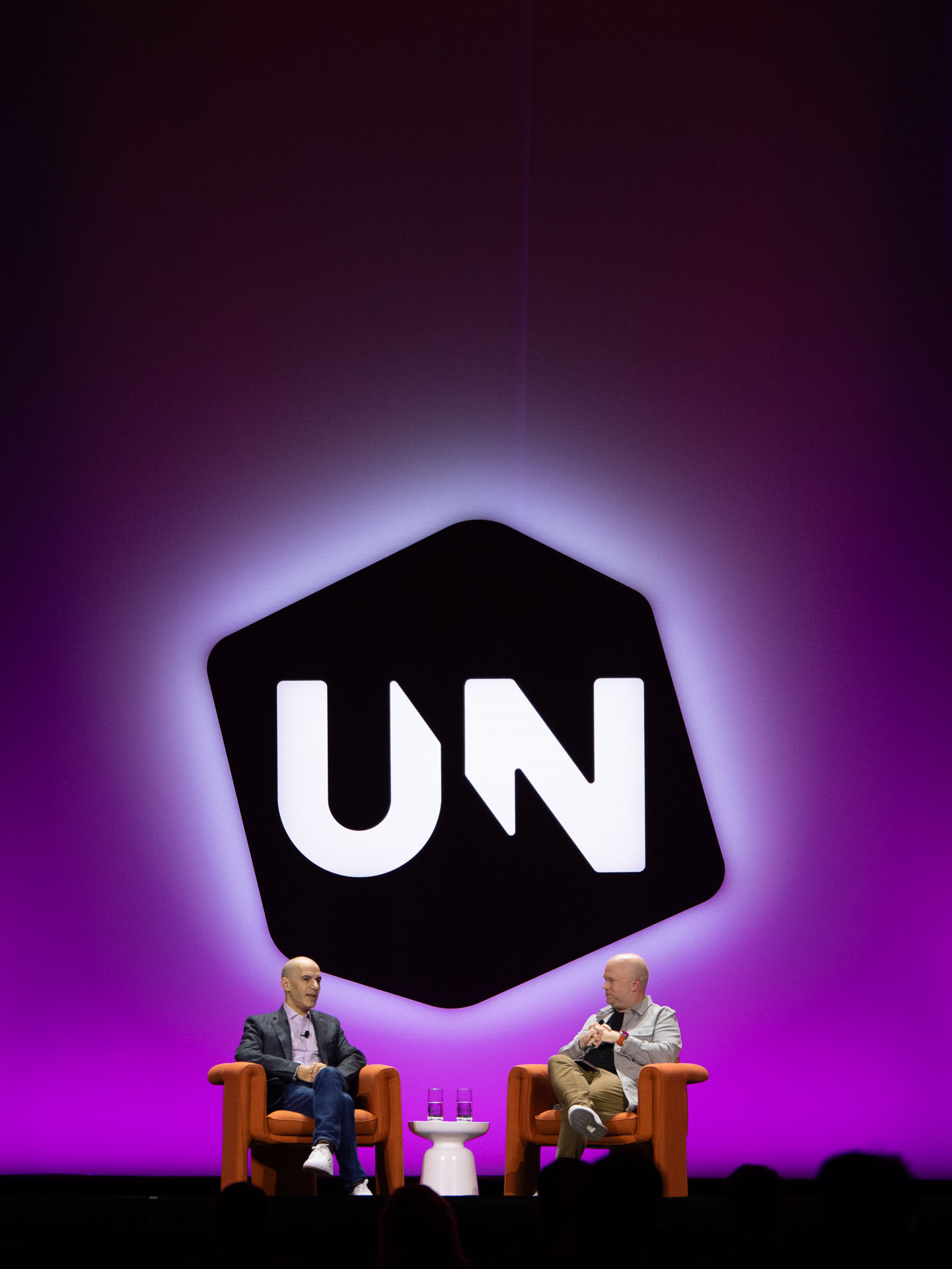
HubSpot’s announcement of Context Home this week was positioned as the practical expression of the whole argument: a single place to see everything HubSpot holds about a company, its teams and its customers. Its value comes from two directions at once — native CRM data, activities and workflows, with HubSpot as the system of action, plus integrated data from the partner ecosystem, from small martech vendors through to Databricks making a centralised repository available as agent context.
Crucially, Context Home does not only display context; it shows how complete that context is and recommends how to improve its quality. That matters because of what the panel called the trust onion: the outcomes you want from agents depend on trusting that the context they use is complete and high quality, which in turn depends on trusting that the underlying data is complete and accurate.
“At its core, it’s really about the data quality.”
The panel also noted HubSpot’s internal framing that within the platform the distance between data and action is effectively zero — a property described as especially powerful in the agentic age, and the reason the data-to-action gap no longer has to be bridged by hand.
When the audience was asked who had wondered whether AI is coming for their job, considerably more hands went up than for the AGI question. The panel’s response was to change the question. The pressure of displacement is real, but someone has to manage the agents — and the meaningful test is no longer “is AI taking my job” but “can you prove AI is actually working for your business”. The shift, as the speakers put it, is from look what I built to look at the outcome that what I built delivered.
Leading an agent was defined concretely: holding a clear point of view, setting strategy and priorities, deciding which investments and risks to take, and allocating resources. Every professional, at every layer, becomes a kind of mini CMO or CFO — set the vision, monitor execution, diagnose whether a failure came from the strategy or the execution, then fix and iterate. One duty in particular cannot be handed over.
“You cannot delegate risk management… someone has to own this.”
Agents will have opinions; a human still has to judge whether those opinions are trusted, with brand exposure and managed resources always at stake. The failure state is the agent becoming a black box nobody understands. The antidote is observability. Evaluating agents is a genuinely new form of quality assurance: traditional workflows were deterministic, so you ran a test execution and confirmed that everything touched matched expectations. Agents are non-deterministic, so the method must change even though the job — guaranteeing high-quality output — is identical. Product direction referenced on stage included agent-builder capabilities that let users test-run an agent, inspect the execution it actually performed, see what data it manipulated, and see which knowledge and context it drew on.
One open worry lingered. Today’s professionals have an advantage because they did the work by hand and therefore know what good looks like — employees are, on average, happier with a boss who can do their job, and the same holds for supervising agents. The next generation may never run an analytical report or configure a campaign manually. How they will build that depth of judgement remains genuinely unresolved.
The closing argument arrived through an analogy from mathematics, a field described as facing an existential crisis as models begin proving theorems better than humans — historically the very proof of a good mathematician. The response emerging within that community is that mathematics was never really about proving the theorem at all.
“Math was never about proving the theorem. It was about understanding what that proof meant.”
The discipline was always a means to an end, originating with the ancient Greeks for problems in physics and geometry; its value lies in using a proof to ask better questions and find applications. The business parallel is exact: even when the agent executes, a human has to understand why it succeeded or failed and decide where to go next.
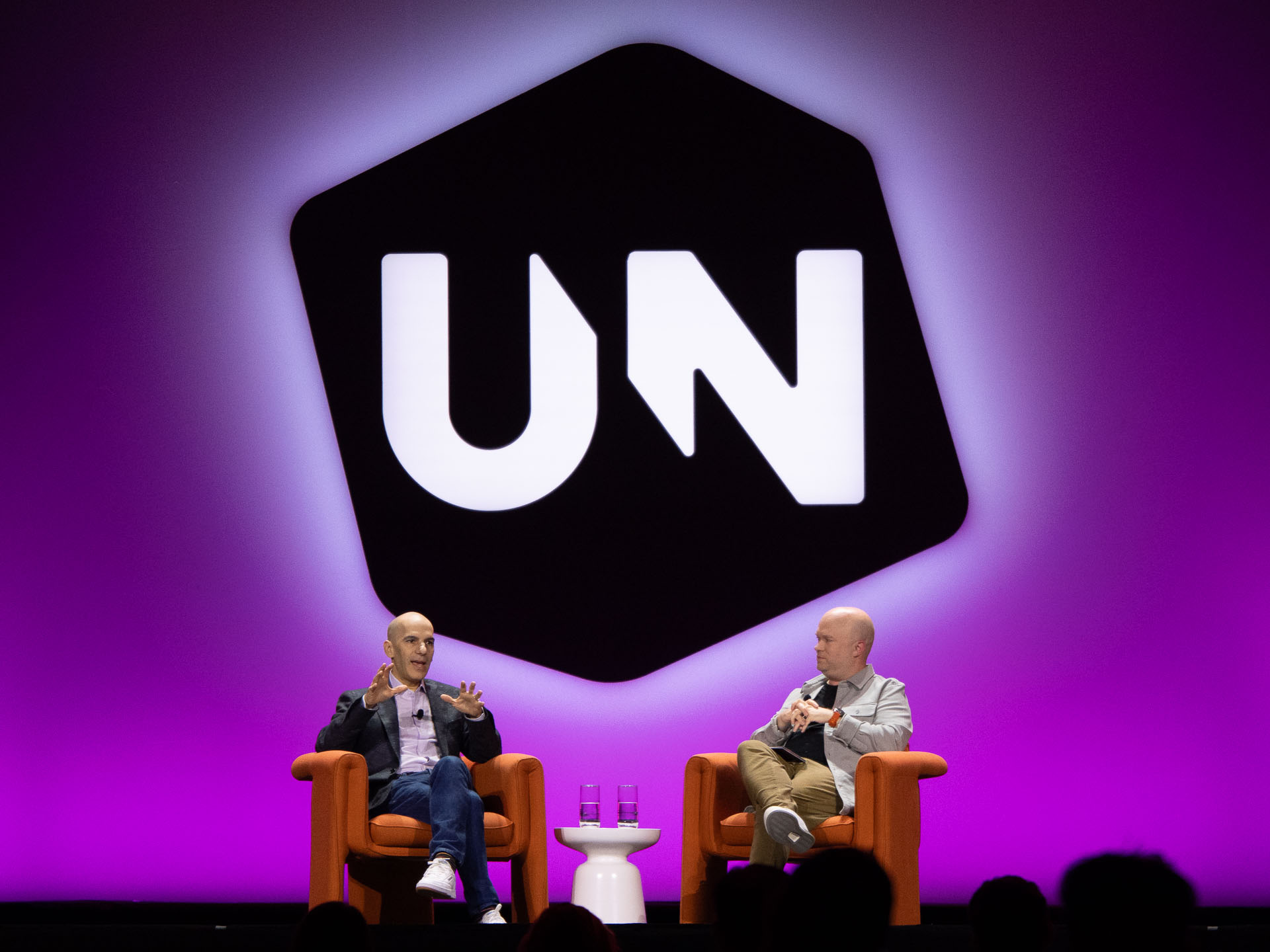
From there the session ended optimistically. Ideas, the motivation behind them and the human judgement applied alongside agents were named as the most valuable skill sets available today — the new competitive edge. Agents reward an entrepreneurial mindset, because ideas can be materialised far faster than before, and they reward curiosity, because experimenting across different directions is easier than it has ever been. Far from a diminished role, the panel framed this as a more enjoyable one than the routine execution that filled so many jobs before it.
“We’re going to use judgement, we’re going to use taste, and we’re going to use the power of agents to build incredible things.”
The practical takeaway for leaders: pick a default home for enterprise data and context and centralise there as early as possible — at the moment a tool is deployed, not years later once it has built its own island. Not everything must be consolidated, and the strategy need not be perfect, but there should be a clear default. Then document the decisions, the reasoning and the conversations in the same place, so that the intelligence you already have access to finally has something to work with.