Jordi Hays
Host @ TBPN
Jordi Hays is co-founder and host of TBPN (Technology Business Programming Network), a live daily tech and business show streaming on X and YouTube.


Host @ TBPN
Jordi Hays is co-founder and host of TBPN (Technology Business Programming Network), a live daily tech and business show streaming on X and YouTube.

Host @ TBPN
Launched in 2025 with Jordi Hays, TBPN is known for its sharp, unfiltered coverage of startups, AI, and venture capital, combining expert interviews with fast-paced commentary and visual storytelling.
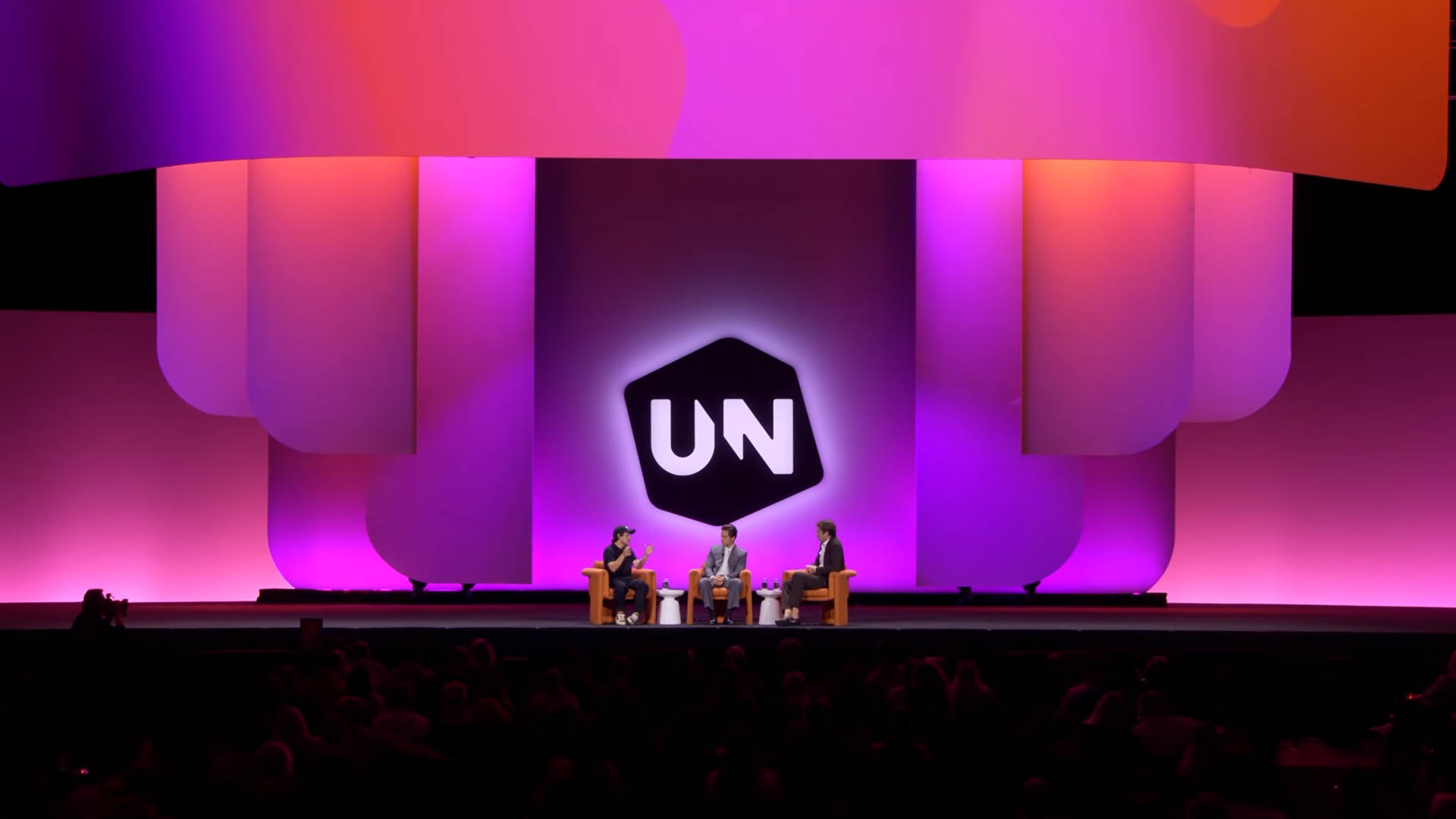
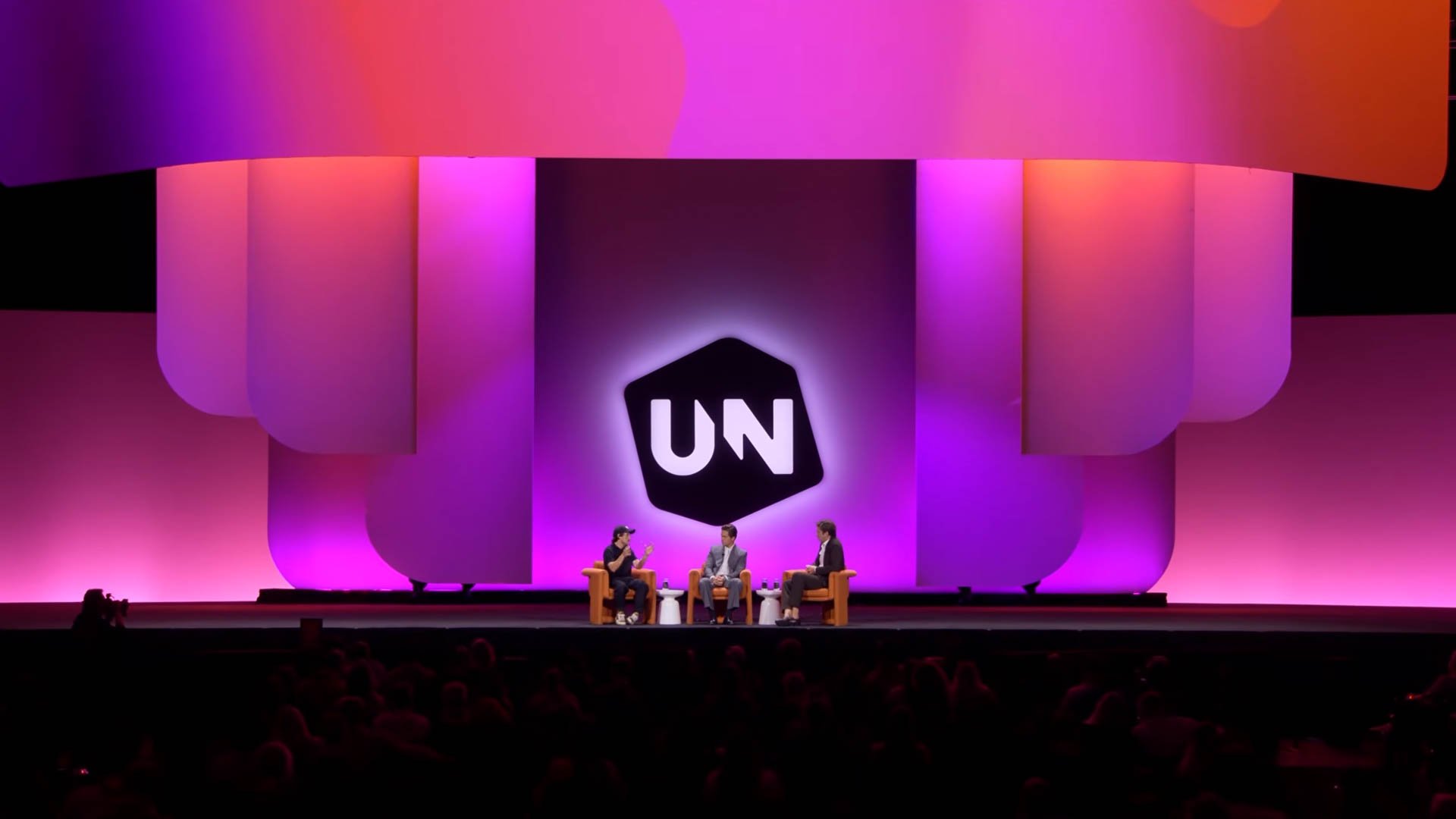 Jordi Hays and John CooganLive from UNBOUND: The TBPN Show
A conversation about a category everyone declared dead, a self-serve platform for advertisers nobody was serving, a billboard aimed at one famous forehead, and a $1.2bn exit to Walmart that was bought for its plumbing rather than its revenue.
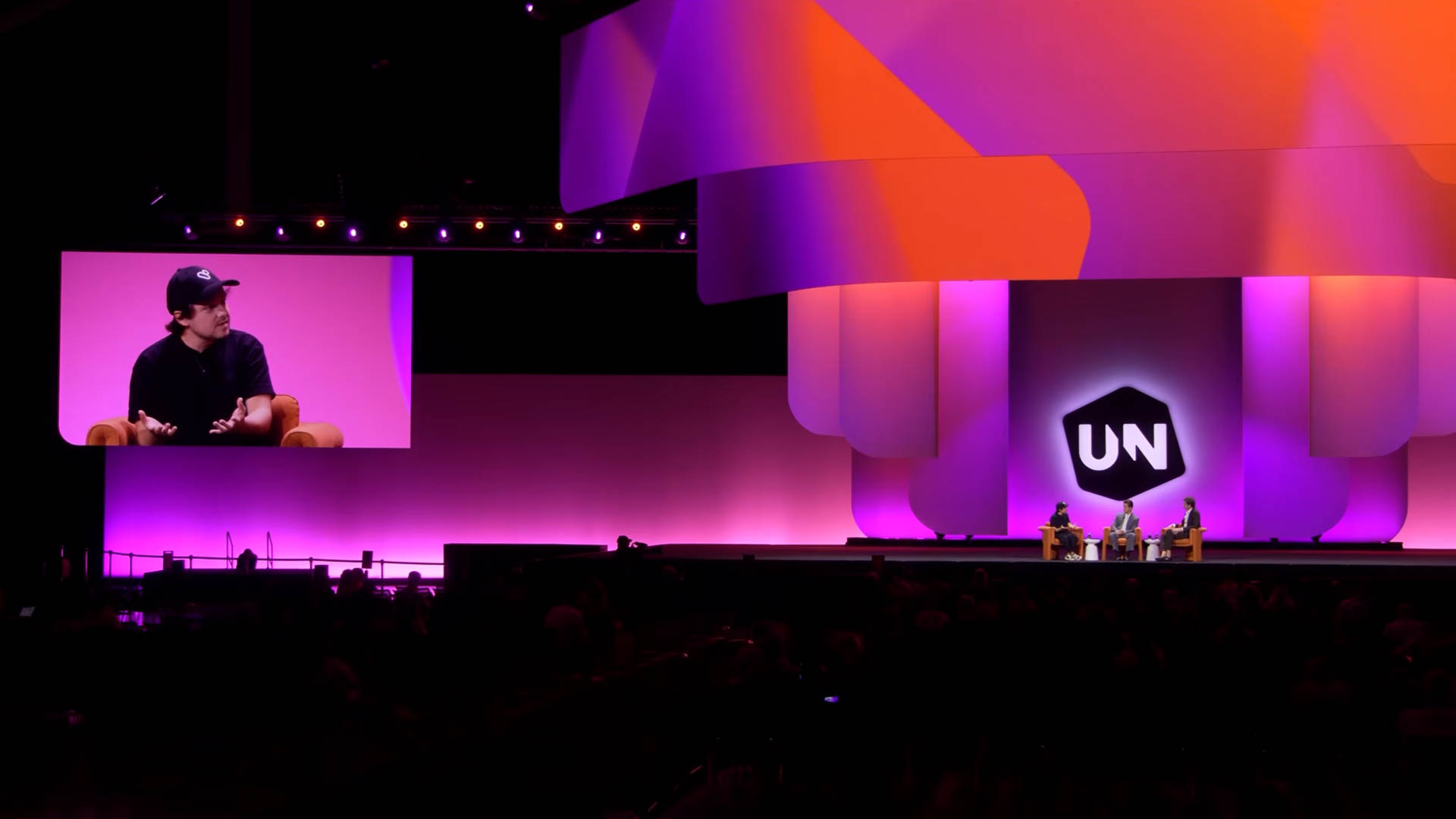
Most live interviews at a marketing conference stay in the safe middle of the road: a founder narrates a tidy arc, the hosts nod, everyone agrees that AI changes everything. This one did not. Arthur Querou, co-founder and chief executive of Vibe.co, arrived on the TBPN stage a week or so after his company’s $1.2bn sale to Walmart closed, and spent the session unpicking the unglamorous decisions behind it — which market to enter, which product not to build, which investors to ignore, and which layer of the stack actually accrues value.
Hosts Jordi Hays and John Coogan framed the session as an exercise in specificity. Rather than a highlight reel, they wanted the smaller, everyday judgement calls that marketers, operators and founders face: how you convince a media owner to give you inventory, how you decide whether a billboard should be funny, how you know when a personalisation experiment has gone too far. Querou obliged, often against the grain of the prevailing consensus.
What emerges is less a story about connected television than a working theory of where durable advantage sits when generative models make software features cheap to copy. The short version, in his words: build the infrastructure of your industry, and let everyone else race on aesthetics.
Querou has spent his entire career in advertising. His previous company, Kymantics, set out to democratise programmatic advertising for small brands and performance marketers — a genuinely good idea that COVID promptly broke. The pivot that saved it turned the business into a managed-service operation, which became the largest of its kind in France and comfortably profitable. It was also, he admitted, a business the founders did not enjoy running.
That experience produced three rules he carried directly into Vibe, and they are unusually blunt for a European founder speaking on an American stage. First, geography: a category leader cannot be built from France, so the company had to start in the United States from day one. Second, motion: self-serve rather than agency or service-led, precisely to avoid the client-servicing treadmill. Third, architecture: a platform, not a service business dressed up as one.
“You don’t create a leader from Europe… you have to do it day one from the US.”
Read as strategy rather than patriotism, the point is about distribution gravity and buyer proximity rather than talent. The margin structure of a services business is seductive when it works, but it caps the ceiling and dictates the culture. Vibe was designed from the outset so that revenue growth would not require headcount growth in account management.
The market thesis was straightforward once you were paying attention. Streaming was consolidating audience and improving monetisation — Netflix, Hulu, live sport migrating away from broadcast — and better retention meant higher dollars per thousand views. To capture that, platforms began splitting inventory so it could be bought by the impression, with the sort of targeting marketers already expected from social media.
The gap was in who got served. Every impression-level CTV product on the market was pointed at enormous brands — the Procter & Gambles and Fords of the world. Nobody was building for smaller brands, B2B marketers, e-commerce, app companies and the vast base of performance marketers who already advertise on Instagram every day. Querou’s bet was that whoever solved that segment would own an enormous pool of spend.
“Whoever cracks it will sit on tens of billions of revenue… we’re advertising nerds, so we’ll do it.”
It was a deeply unfashionable position. Around 2019–20, the consensus held that television was finished and the influencer economy was the future. Investors introduced by the hosts passed on the company, dismissing a “TV advertising platform” in favour of AI. When the Walmart deal was announced, the hosts sent those same investors the news.
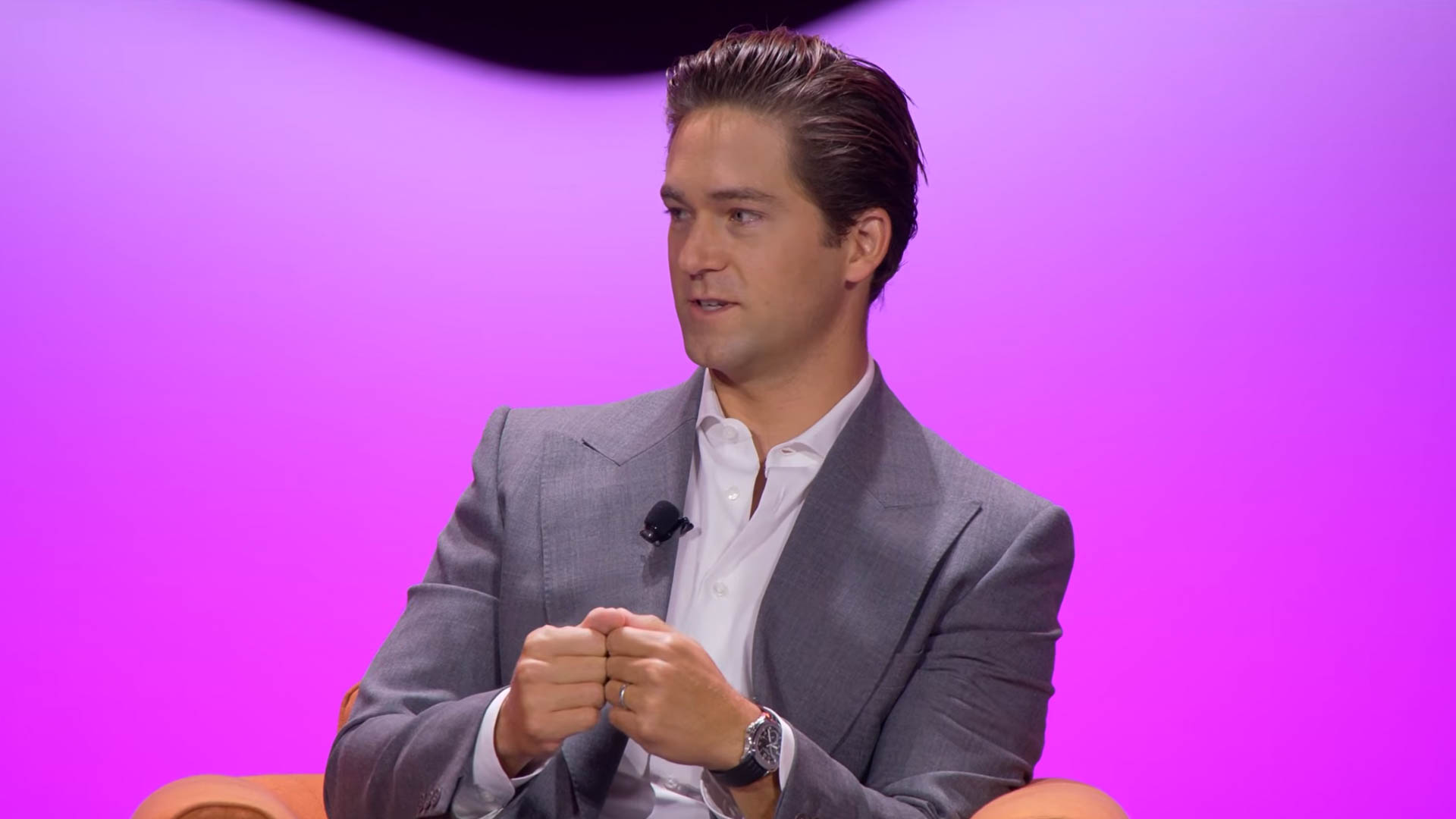
Any marketplace begins with the same deadlock: demand will not arrive without supply, and supply will not open up without demand. With media owners of the scale of Disney, Warner Bros. and Paramount, Querou described the work as trust-building rather than negotiation. These companies sell only a very small fraction of their inventory publicly, so early access is a privilege extended cautiously.
Vibe obtained that inventory, resold it, and then improved its terms by demonstrating something the publishers rarely see: genuinely incremental demand. The differentiator is worth stating plainly, because it is the part most intermediaries get wrong. Publishers dislike partners who resell the same demand they already have access to while taking roughly a 15% tax on the way through. Vibe instead arrived with thousands of B2B, e-commerce and app advertisers that the media owners had no route to reach.
“You don’t see that revenue… So it’s new revenue.”
The hosts drew out the structural lesson, which applies well beyond advertising:
Brand-building is where Querou now spends most of his own time, and his reasoning is commercial rather than sentimental. Vibe sells to a very large base of entrepreneurs, which makes the motion effectively B2C-like: the brand has to be relatable to a person, not procurement-friendly to a committee.
“Most B2B companies are extremely boring in their brand… And I’m not even talking about advertising, which is probably the worst industry for that. And so it’s super easy to stand out.”
The team therefore makes work that is deliberately “stupid, ridiculous”, that they genuinely find funny, and that matches their internal culture. The validation test is personal: “At the end of the day, I’m a performance marketer… if I like it, people will likely like it as well.”
The case study he told against himself is the best illustration. OUTFRONT called with two days’ notice: a cancellation had freed the largest billboard on the 101. The team had roughly twelve hours to produce creative.
The obvious execution — “advertise on TV for $50” — was rejected as too boring. Instead they ran “target Mark on TV”, with nothing but the top sliver of a bald forehead and, for legal reasons, no name. Among the thousands of out-of-home campaigns San Francisco absorbs each year, it broke through: it went viral, it was covered by the New York Times, and Marc Andreessen — an investor who, the hosts noted, had likely passed on the company — liked it himself.
Importantly, the stunt was targeted, not general. The San Francisco push was aimed at a total-addressable-market expansion segment in B2B, tied to the account-based marketing solution launched the previous year. Vibe’s core audience remains e-commerce.
Querou’s positioning line is short enough to survive a noisy exhibition hall: “We built the exact same solution as Instagram ads, but for TV.” The point is not the interface but the customer. The same advertisers, the same buying logic, the same expectation of targeting and measurement — applied to a medium that most of them have never touched.
That unfamiliarity dictates the go-to-market model, which is hybrid rather than purist. Self-serve is the default path, because the economics of serving tens of thousands of small advertisers demand it. But because television is genuinely new to most marketers, the motion has to be educational as well as transactional, and larger prospects get human assistance.
Layered on top is a data position that did not exist when the company started. Vibe now holds substantial commerce data and, as part of Walmart, has access to what Querou argues is the best commerce data asset available — a natural fit for how targeting and campaign operation already work on the platform.
The hosts set the scene: not long ago, producing a single 30-second video for Meta was cumbersome and expensive for a small business, requiring either an in-house hire or an agency. Then came creator partnerships and user-generated content, trimmed and recut into thousands of variants with the help of an expanding set of AI tools.
Querou put a number on it: roughly 80% of the ads running on Vibe today were created fully or partly with AI, with SMBs leading. The behavioural shift is just as telling. Early clients arrived with one simple creative; today they arrive with around fifty videos at once, testing multiple angles. Creative is a primary driver of performance, so the platform is built for experimentation — and the environment is becoming correspondingly more competitive.
What Vibe explicitly does not do is build its own video model. “There’s no way we can put enough resource into creating the best video tool… it’s a race we don’t want to run.” The company partners with AI labs and video companies — Higgsfield and Runway were named, with Gemini and Seedance offered by the hosts as examples — and points its own machine learning at optimisation instead.
The proprietary edge, in other words, is the record of what has already run: tens to hundreds of thousands of creatives, labelled and explored for what is actually inside the ad — content, rhythm, editing style, sound level. That analysis produced one delightfully counter-intuitive finding, and the most quotable practical tip of the session.
“If you run TV ads, turn the sound volume in your video just as high as you can.”
Loudness, it turns out, is one of the largest drivers of performance for TV ads. It is also a neat encapsulation of the company’s angle on creative: performance and return, not beauty. “Our job is to make the highest ROI from TV ads for our clients” — a position he contrasted with competitors optimising for aesthetics.
The roadmap, stated openly as non-confidential, is automated creative generation at scale: ingesting brand guidelines, using agents to verify that ads are on-brand and not “weird”, and generating hundreds to thousands of creatives for a single product. As generative costs fall, he expects targeting to migrate into the creative itself — a shoe brand showing a running environment to one viewer and a hiking environment to another, chosen by whatever performs best. The hosts pushed the logic to its end state: an advert generated for one individual viewer. On whether marketers will stop reviewing assets altogether, as engineers increasingly stop reading generated code, Querou was clear that brands — especially in e-commerce — will keep reviewing, but agent-based brand-safety checks will carry much of the load. The implication for agencies charging six figures for a single 15- or 30-second spot was not softened: “Yes, big time.”
If creative is converging on automation, so is the buying interface. Querou predicted that within two years nobody will log into an advertising platform to set up and name campaigns by hand; they will drive campaigns from ChatGPT instead. This is a striking thing to say when ease of use is one of the two large areas of product investment at his own company, alongside machine learning. He applies the same standard to his own purchasing: “If they don’t have MCP in the past six months, I don’t use any platform anymore” — he now operates his tools directly through it.

Targeting precision has advanced sharply, driven by bringing more first-party data into the system. Vibe built its own identity infrastructure, enabling granularity down to an individual CRM entry. HubSpot was one of the first integrations: users import HubSpot audiences into Vibe, target them directly, and build lookalikes on top to drive performance. The hosts framed it as account-based marketing and retargeting arriving in connected TV for the first time.
“ABM works stupidly well, a bit too well.”
The evidence for “a bit too well” is the experiment the team ran on itself. Vibe recorded the same advert 250 times in a row, each version naming a specific target company — “Hey, you work at HubSpot…” — and served them to people at those 250 companies. The outcome: “We got tons of leads out of it. We also got tons of… privacy complaints.” Viewers called it super creepy and the campaign was stopped. Notably, the spots were human-recorded rather than generated, even though they felt synthetic.
The hosts argued that hyper-personalised creative, up to and including the viewer’s name, will eventually be normalised simply because it works — as it already has in sales, creepiness notwithstanding. Querou agreed that personalisation is coming across advertising, content and social, “pretty much anywhere”. A related observation from the hosts: small businesses are uniquely well placed as early adopters of AI creative because they carry far less backlash risk. BMW was criticised for an AI creative in which a wheel changed between shots; an SMB is simply not held to that standard.
Two related myths got dismantled in quick succession. The first concerns who is actually adopting generative tools fastest. E-commerce companies are producing large volumes of AI creative and getting very good at it, but the genuinely surprising cohort is the smallest businesses — sole owners who previously filmed themselves on an iPhone and now produce AI video of high quality.
“There’s no rule — the smaller they are, the faster they’re adopting Gen AI.”
Quality gaps of the BMW variety are treated as a six-month-to-a-year problem rather than a structural one, and the professional backlash is waved away: “On Twitter people will complain… creative directors will say ‘Oh my God, they used AI.’ The reality is nobody cares.”
The second myth is more seductive, because it sounds like craft. The hosts proposed that ads perform better when their production texture matches the surrounding content — Super Bowl polish in a Super Bowl, podcast-clip aesthetics blending into an Instagram Reels feed — and that AI might let advertisers match the look of a television show on a social-media budget.
Querou pushed back on both halves. The Super Bowl is a counterexample, because it is an event rather than simply a game. And Vibe has tested content matching directly, running sports creative against sports content: it worked, but the gain came from sports being the “Holy Grail” of TV performance, not from the matching. His verdict extended to sequenced messaging — different creative for the first, second and third exposure — with no real upside found. Both belong, he said, to the category of marketer’s fallacy: ideas that merely sound clever.
The hosts offered the most useful framing of the session: through a year of market chaos, fear and investor obsession with AI-native companies, Vibe kept its blinders on, executed, and reached a strong exit — a pattern thousands of other companies could copy by ignoring the doom cycle and venture commentary and concentrating on customers and market ownership.
Querou’s advice to founders who do not run AI companies was correspondingly unsentimental. Do not rush into AI for its own sake. You must be AI-enabled and you must build with AI, but Vibe never led its marketing or its creative with AI — it led with customer value. Three years of venture pitches, he said, were frustrating precisely because the question was always “but what happens with AI?”
His thesis is that value in software now accrues to whoever builds the infrastructure. Vibe built the infrastructure of performance television advertising: connecting the data, holding the data, aggregating supply — Disney included — and bundling it into something an advertiser can actually buy.
“They didn’t buy the revenue — they bought the infrastructure, because they knew they could build on it.”
Asked what he would do if he were starting again, he was specific about where infrastructure still wins, because AI systems alone are too slow or too costly for certain classes of work:
In each case, models need infrastructure in order to operate efficiently within an ecosystem. Build that, and “you win”. His own postscript to the exit was characteristically dry: he now describes himself as an employee — “a Walmart associate”.
The acquisition makes more sense once the buyer’s inventory of assets is laid out. Walmart has an enormous marketplace — described as roughly a billion SKUs, including a long tail of small-business sellers — along with first-party data and both demand and supply. Two years or so before this deal, it acquired Vizio, and now owns one of the best-selling television brands in the United States. Owning the screen is what unlocks monetisation of the wider ecosystem.
What was missing was the media execution layer, and Walmart had been shopping the market for some time. The trigger was prosaic: Vibe launched a Series C, Walmart heard about it, and discussions opened. The deal was driven by the product being differentiated, unique and purpose-built for performance rather than retrofitted from brand advertising.
Querou’s claim is that Walmart now holds the full stack required to drive advertising performance — more data, he argued, than the Seattle-based firm, plus the devices and the media layer — and can therefore compete directly with Amazon’s vertically integrated model of advertising, distribution and own brands.
The deal had closed roughly a week before the session, yet integration was already deep across teams. The company remains independent, with Walmart focused on accelerating it, and Querou admitted to being surprised by the buyer’s speed both during and after the transaction. Business continues as before for existing clients, with one significant change in posture.
“It feels like doing our business now, but with cheat codes.”
The closing question asked what is most under-appreciated about AI and agents for marketing and sales leaders, and the answer was a correction of the dominant framing rather than a tool recommendation. Stop trying to build agents that replace people. The more valuable exercise is to rethink how agents help the business as a whole — building, in his phrase, “the brain of your company” across marketing, finance and every other function.
“Agents are not employees version two. Agents are intelligence on demand that you can deploy.”
Read alongside the rest of the conversation, the closing advice is consistent with everything that preceded it — a preference for leverage over substitution, and for infrastructure over theatre:
One thread was left open: the hosts asked how deeply Vibe is collaborating with Vizio on further integrations, and the question went unanswered before the session closed.