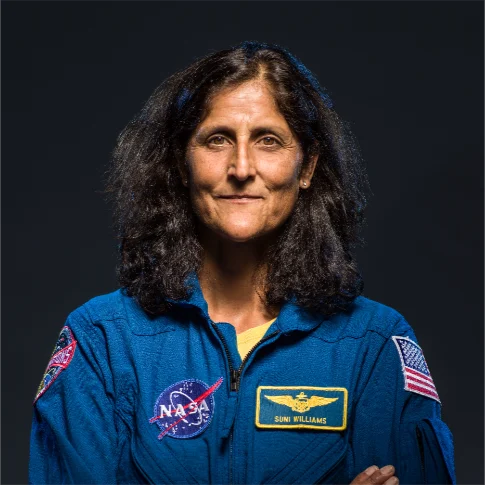
Astronaut Suni Williams
NASA ASTRONAUT AND U.S. NAVY CAPTAIN (RET.) @ NASA
Sunita “Suni” Williams is a NASA astronaut and Navy captain who logged 608 days and a record 62 hours of spacewalks.


NASA ASTRONAUT AND U.S. NAVY CAPTAIN (RET.) @ NASA
Sunita “Suni” Williams is a NASA astronaut and Navy captain who logged 608 days and a record 62 hours of spacewalks.

INDEPENDENT JOURNALIST AND FILMMAKER
Miles O’Brien is an award-winning journalist specialising in science, technology and aerospace for PBS and other outlets.
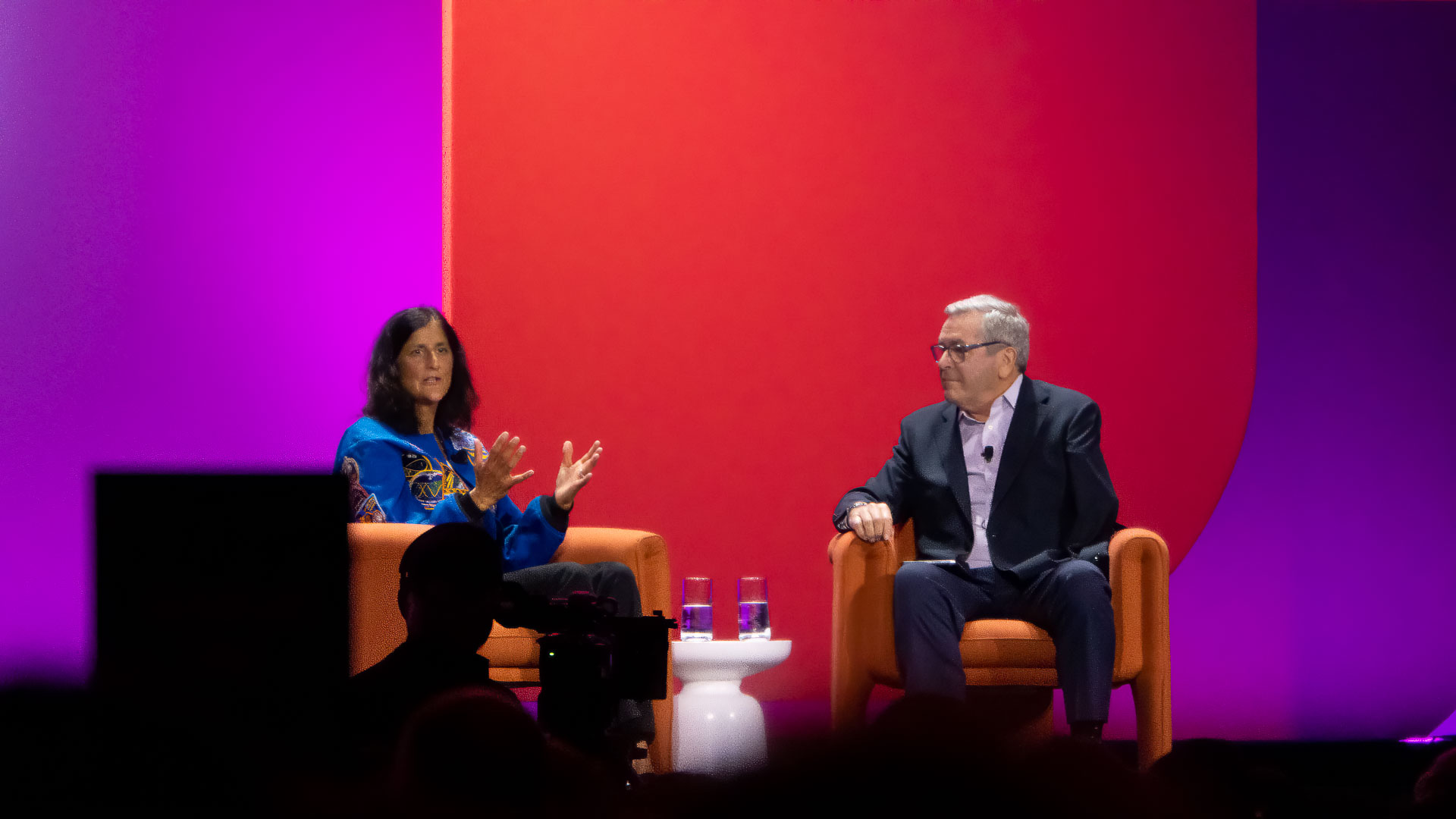
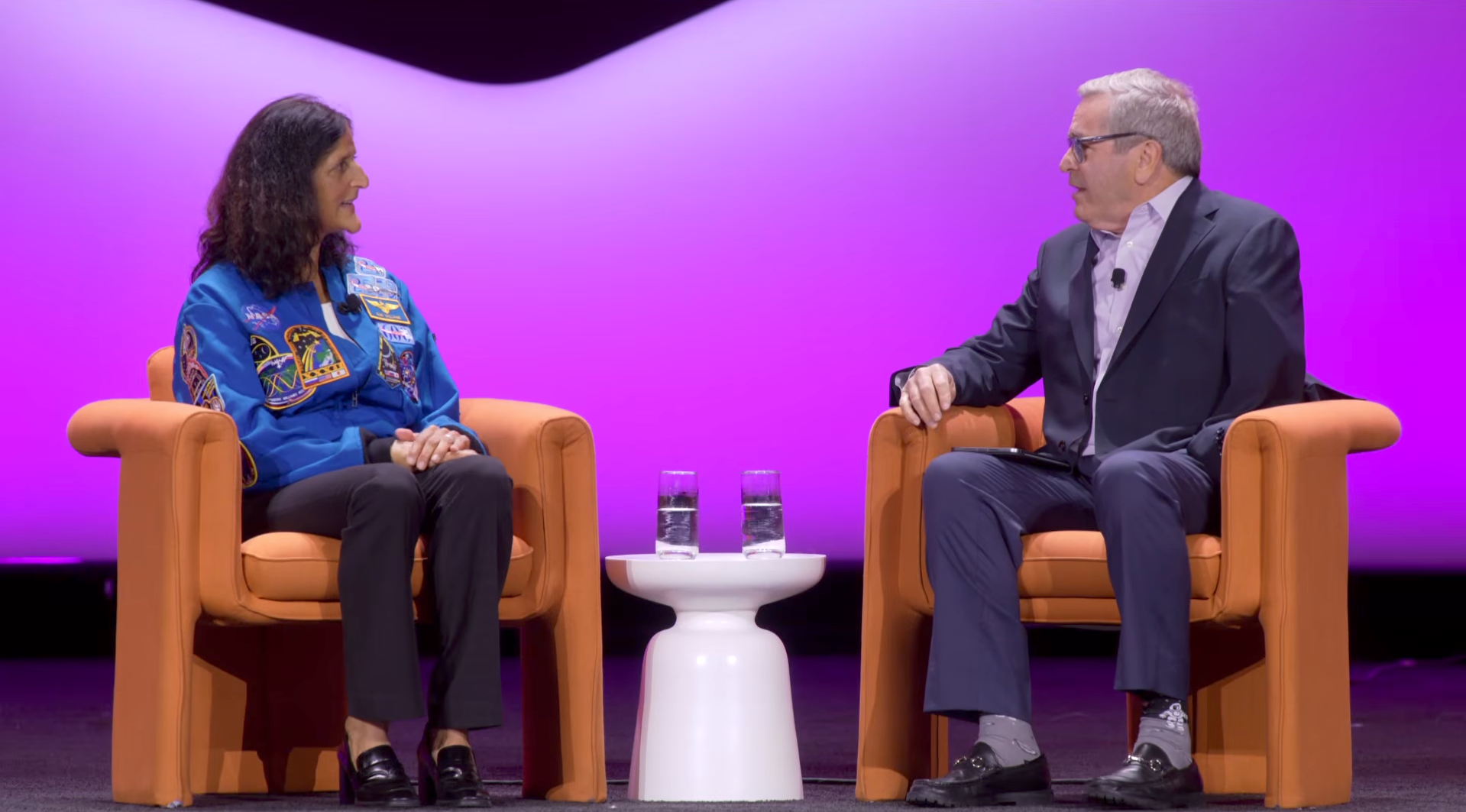 Astronaut Suni Williams and Miles O'BrienOperating at the Edge
Every organisation rehearses its procedures. Far fewer rehearse the moment the procedure stops matching reality. That was the quiet provocation running underneath this fireside conversation with NASA astronaut Sunita “Suni” Williams — twenty-seven years in the astronaut corps, a US Naval Academy graduate and naval aviator, three missions to the International Space Station, twice a station commander, and the holder of 609 hours of spacewalk time, a record for a woman in the NASA astronaut corps.
The session was scheduled for thirty minutes and, as the host joked, could easily have run a full day. What emerged was less a mission debrief than a working model of how experienced teams behave when the plan dissolves: how they triage, how they speak to one another, how they absorb an eight-day assignment turning into 286 days, and how they hold accountability without collapsing into blame. The framing question, posed early, set the tone for everything that followed: when the checklist no longer applies, what do you do?
Read on a Monday morning rather than from a flight deck, Williams’ answers translate uncomfortably well into ordinary corporate life — integration risk, contractor relationships, information that never quite travels up the chain, and the difference between resilience and denial.

Day one of the Boeing Starliner crew flight test was, by Williams’ account, close to perfect. She and Butch Wilmore both hand-flew the spacecraft on the sticks, put the vehicle through its paces and pointed its tail at the Sun to harvest solar energy — a manoeuvre she cheerfully calls “mooning the sun”. They went to sleep confident the vehicle was performing well.
Day two, on approach to the International Space Station, the thrusters began dropping offline one at a time. The trained reflex kicked in: work the simulator procedure, pull out the checklist. But the indications did not match anything the training had produced. By the time the vehicle reached the docking axis, clusters two, three, four and five were offline — effectively the loss of all clusters in one of the six axes needed for full control, while still retaining enough authority to fly.
The tension in the cockpit was real, and deliberately not broadcast. Communication with Mission Control stayed disciplined and restrained. The roles divided themselves without discussion: Wilmore on the sticks with control authority, Williams monitoring systems, diagnosing and talking to the ground. Both had been test pilots since the 1990s and had been assigned together through years of Starliner development, which produced shared mental models and a trust that made conversation largely unnecessary.

“We were off the checklist. We had not simulated this.”
In the background sat an unspoken fact: the affected clusters were precisely the ones needed to orient the spacecraft for the deorbit burn and the return to Earth. The crew consciously refused to carry that forward, solving problems one step at a time. Plan A was reaching the station. Plan B — the non-docking contingency — was, in Williams’ understatement, “not so great”. Had an axis failure prevented them reaching the station, they would have reassessed and worked that problem when it arrived.
Williams is candid that, in the moment, the crew did not fully appreciate how bad the situation was. What carried them through was a blend of pilot instinct — rapid triage, identifying the single problem to solve and parking the rest — accumulated experience, training, and trust: between the two crew members, and in the team on the ground. Asked whether she would have climbed back into that spacecraft to fly home, she suggested she already sensed they would be staying on station “for a little while”.
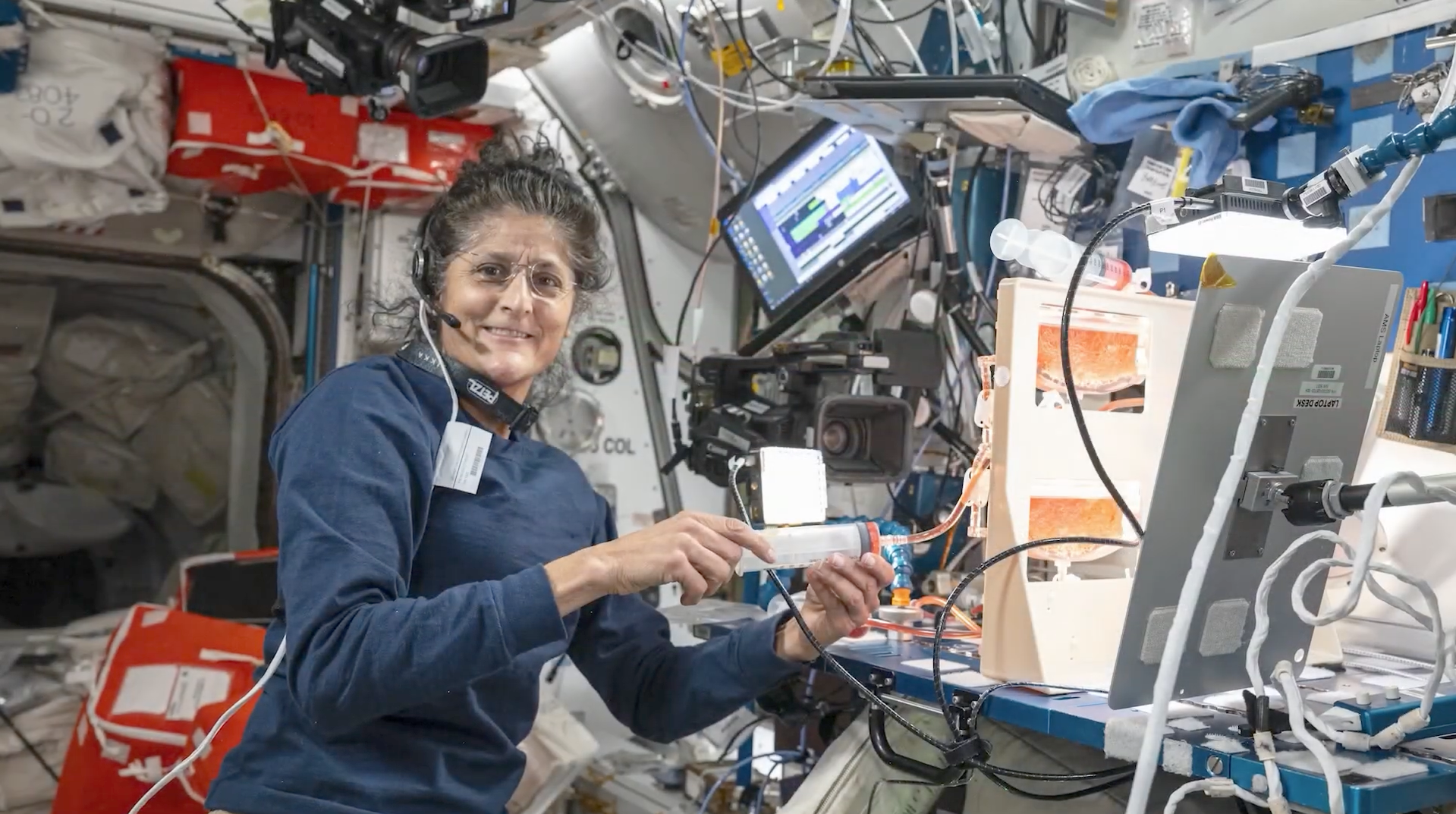
Williams drew a sharp line between the problem they might have had and the one they did have. A software problem can be diagnosed quickly from the ground and a fix uplinked to the spacecraft. A hardware problem — thruster pressure behaviour — is a different order of difficulty. The root-cause view that emerged was that the failed thruster failed because it was overfeeding, and understanding that required simulating the “dog house” thruster cluster environment rather than testing a single thruster in isolation.
This became the crew’s persistent argument from orbit. Single-thruster testing was necessary to identify properties, but insufficient to explain the integrated picture. As Williams put it: to understand the whole integrated problem, you have to do integrated test — and at the time, she and Wilmore did not see that happening. Time pressure compounded it. The programme could have waited a number of years and probably resolved the question, but the ISS is a working science platform that has to be run.
“An eight-day mission ultimately became 286 days. It came in installments, and the goalposts kept moving.”
That phrasing matters more than the headline number. The crew were not handed a single, clean piece of bad news; they were handed a sequence of them. Information arrived very slowly, and it took roughly three months to reach the conclusion that they were staying. The summer was the hardest stretch: personal and family plans were already made, and the question of whether they were coming home reopened repeatedly. They had wanted the Starliner test flight to succeed for the sake of the wider aerospace community, and gradually came to see that it would not get there. Williams judged staying the best decision. She apologised to the audience for the prolonged public watch; the reply from the stage was immediate — “you really don’t owe us an apology, Suni.”
The more instructive part of this section was the deliberate identity shift from visitors to crew. Williams used a blunt analogy: visiting crews are like in-laws — welcome briefly, and then it gets old. Both she and Wilmore had watched earlier visiting crews leave a mess behind. Their response was practical and unglamorous:
Williams went on to become ISS commander, a role made possible by prior training and previous long-duration experience. As she summarised the whole arrangement: “It’s a team up there.”
The interviewer brought his own story into the room: waking in a hospital in the Philippines some twelve years ago after a sudden event, going down a dark path, dwelling on what had been lost, and then deciding to stop. His conclusion was that resilience contains an embedded choice — the decision not to dwell on what might have been, and instead to play the hand you have been dealt. Asked whether everyone has resilience available to them if they are willing to make that choice, Williams answered simply: yes.
She did not pretend the choice was costless. Flying the first flight of a new spacecraft is, she said, the biggest honour a test pilot can have; not getting to fly that spacecraft home was a pretty big disappointment. Roughly 180 extra days in space was never the envisaged mission. Her response was to set the disappointment aside and look at the next chapter with open eyes: limited time to look out of the window at the planet, limited opportunities to do a spacewalk — so take them.
“You can wallow in your situation, or you can say: what opportunities is this giving me right now?”
Usefully, the discussion also policed the boundary between resilience and denial. Churchill’s “if you’re going through hell, keep going” was offered from the chair, alongside a warning about pushing through so hard that important feelings are suppressed. Williams agreed: the crew were not jumping for joy. She had plans; she did not feel prepared to be there that long; there were genuinely difficult times. The emotional stakes were concrete and family-shaped — the Dragon pilot’s son’s high-school graduation, a daughter’s graduation, Williams’ own niece’s graduation — all put at risk by a return date nobody could name.
Her leadership answer to that was restraint rather than rallying. Do not force everyone to come along at the same pace. Give people space and time to work through their own feelings, let them experience it, and then move on together. Asked whether she felt obliged to project optimism she did not always feel, she broadly agreed she did — while noting that the station is a genuinely great place to work, that calls are crew-initiated and outbound, and that the work itself is plentiful, interesting and fun.
Team-building in orbit carried its own complication. Crews normally train together for around two and a half years. Williams knew the American astronauts aboard, but had not trained with and did not know the newer cosmonauts. Her approach was to get to know people properly rather than perform the effort — including Friday nights in the service module, where the crew gathers for karaoke, and where reading Russian lyrics at speed doubles as language practice.
The transfer to earth-bound teams was explicit: take the moments to have fun, and learn something real about your colleagues’ families. It is the same mechanism that later lets two people work a failing spacecraft without needing to explain themselves.
The hardest questions of the session concerned organisational culture. Post-Challenger and post-Columbia critiques have repeatedly found that concerns raised at lower levels are not always heard up the chain of command. Given a career spent inside chains of command, where did Williams and Wilmore actually sit in the decision not to fly the spacecraft home — and had NASA genuinely absorbed the lessons of Columbia?
Williams was measured. The crew were tied into technical discussions on the ground, but communication from orbit is limited and not continuous, so what they received were snippets. They learned as much about the spacecraft as they could. And they did voice their opinions to management. When told the team had it covered, she and Wilmore looked at each other and pushed back — flagging that Plan A might not lead to the best result, that there might be a real issue, and that Plan B was staying aboard. Having said it, they then fully supported the decision that came, recognising the churn and the scale of attention on the ground, and trying to be patient.
Her assessment is that the culture has changed, and that the voices of the people at the sharp end are now being heard. That judgement was reinforced by how the replan was handled. Once the decision was taken, the whole plan had to change — and the change carried its own risks. Starliner had to be undocked and disposed of to free a port for the next crew vehicle. In the interim, the contingency return arrangement involved improvised seats on the floor of Dragon, with no proper seats and no compatible life-support or suit interfaces to plug into: in Williams’ words, not the best way to come home. That risk posture was accepted and carried for roughly a month, after a formal risk trade in which management laid out what was at stake for both the Dragon crew and the Starliner crew. Her verdict: NASA convened effectively and produced a plan once the situation was clear.
“It’s a shared responsibility by all of us as government organisations, as individuals.”
The most striking moment was the accountability itself. Williams and Wilmore publicly accepted personal responsibility at a conference. The intent was deliberate: in an era of commercial providers for spacecraft and suits, NASA as integrator cannot simply say it’s all the contractor. Responsibility is shared across government organisations, contractors and individuals. Her specific admissions were unusually concrete.
Williams framed this as a turning point for how NASA integrates with contractors across suits, spacecraft, habitats, rovers and communications systems — a need to work in a far more streamlined way than in the past. The lessons have been shared directly with the Artemis programme and another programme, both of which she described as performing strongly. She also noted a broader industry dynamic worth sitting with: older companies with long-established ways of doing things, newer companies doing things differently, and the need for a happy medium that respects lessons learned while integrating new methods.
One more thread: researchers outside NASA and outside the Starliner programme had heard how integration and testing were being run, and questioned it. Her conclusion — “if you have information, you need to share it” — came with an honest caveat. Balancing accountability against blame and finger-pointing is difficult and not simple. The anchor she offered is purpose: “We’re all doing this for the common good… this is for humanity.”
What surprised Williams most after her return was not the physical readjustment but the scale of the public reaction. Strangers in the street — of unknown nationality and background, with no connection to her or to the programme — showed genuine care and goodwill. Her reflection was disarmingly simple: strip away judgement, and it turns out that people are fundamentally good, and they do care.
That fed directly into her answer on leadership. Asked what people most need from those who lead them, she chose a single word with obvious resonance given the setting: space. Space to grow, space to ask questions, space to be available and creative. It is the same instinct that runs through her account of the extended mission — do not force everyone to move at the same pace, and do not mistake pressure for progress.
The closing question brought it back to the room. Delegates would return to their organisations within days, facing concerns about AI, shifting traffic and market conditions, and broad change across the business world. What should they carry with them as they lead their teams?
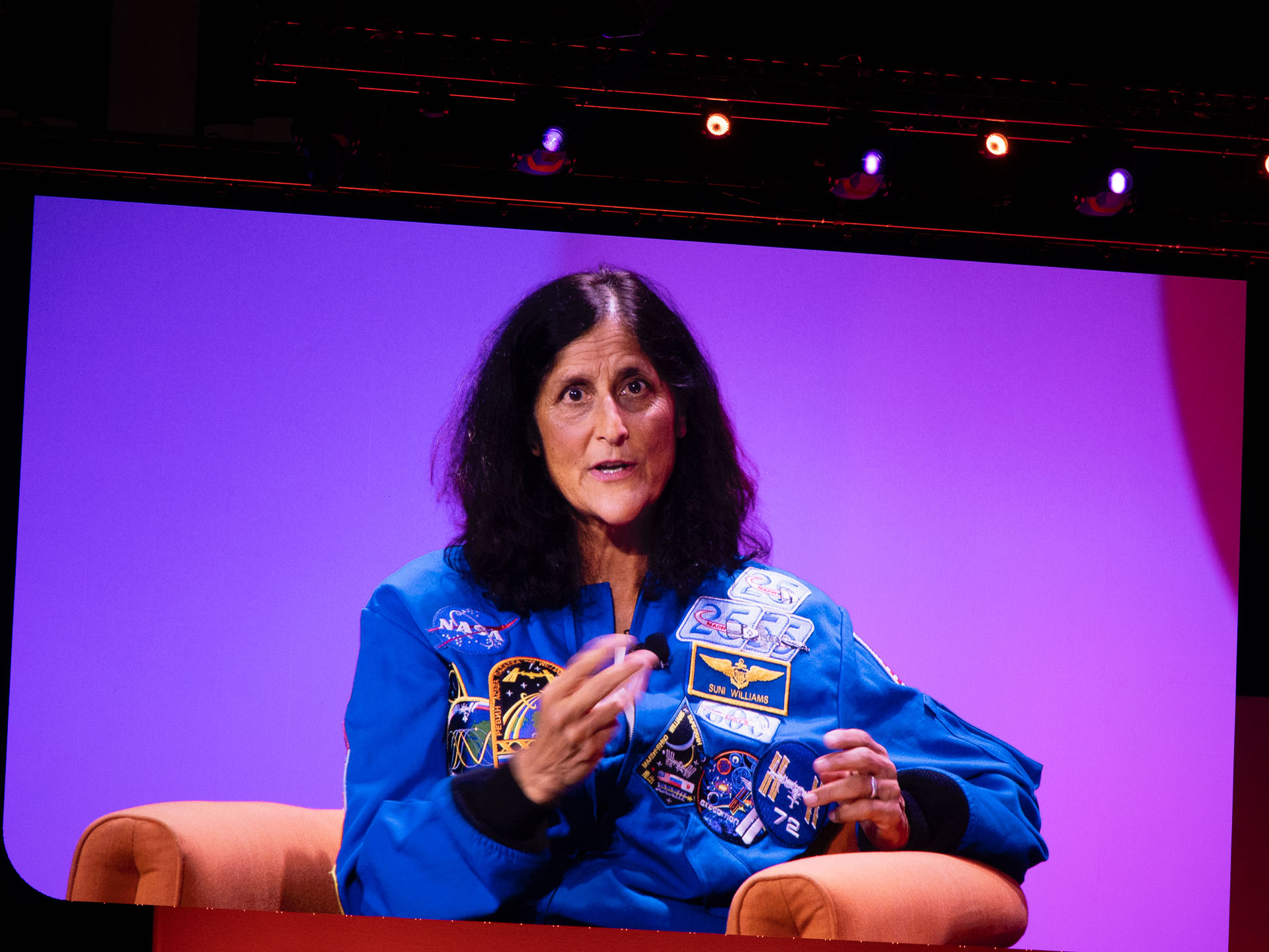
“We are at a stage in our lives where you can create your destiny — make it happen.”
Her core message was that the work being done right now is genuinely awesome, and that there is no limit other than imagination. Creativity and imagination are the only constraint — a claim that lands rather differently coming from someone who spent 286 days improvising inside a plan that had comprehensively failed.
The practical takeaway for attendees: carry the “imagination is the limit, create your destiny” message back into their teams and day-to-day roles — paired, if the rest of the session is taken seriously, with the less comfortable habits that made it survivable: triage one problem at a time, say the uncomfortable thing up the chain and then support the decision, test the integrated system rather than the convenient component, and give people the space to catch up in their own time.
The session closed with thanks to Suni Williams, and a characteristically practical parting line: she would try to go and eat, though she expected it to be fairly chaotic out there.