
Darren Chait
CMO @ BEEHIIV
Darren Chait is beehiiv’s CMO, specialising in product-led growth, viral acquisition, freemium and hybrid GTM strategies.


CMO @ BEEHIIV
Darren Chait is beehiiv’s CMO, specialising in product-led growth, viral acquisition, freemium and hybrid GTM strategies.

SR DIRECTOR, MARKETING @ HUBSPOT
Kyle Denhoff leads HubSpot Media and its Creator programme, using new media to build awareness and qualified pipeline.
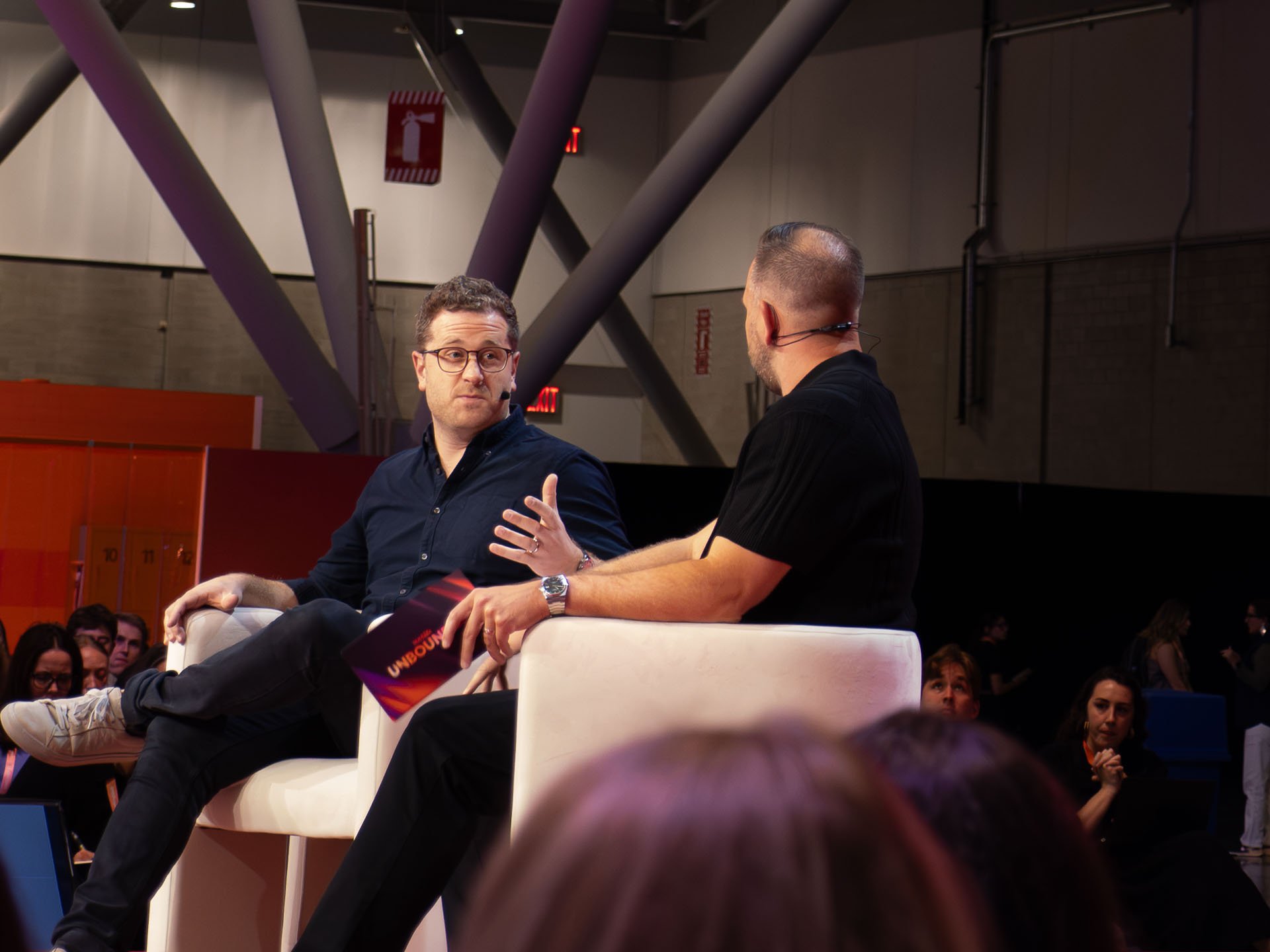 Darren Chait and Kyle DenhoffOwn Your Audience: Why B2B Marketers Are Publishing Direct
Two operators — a HubSpot media leader who built the company’s blogs, newsletters and YouTube presence, and Darren from beehiiv, the publishing infrastructure behind thousands of independent newsletters — sat down to argue a deceptively simple point: the marketing strategy has not changed, but the channel has. Thought leadership still matters. Nurturing the vast majority of buyers who are not yet in market still matters. What has broken is the delivery mechanism.
Search disruption sits underneath everything. Zero-click answers and AI-generated results mean far less traffic arrives from what the panel called “the largest discovery engine on the planet”. The response on stage was not another session about answer-engine optimisation — there was a running joke that next year’s event might be rebranded “AEO-bound” — but something more structural: stop renting audiences from algorithms and start owning them outright.

The panel’s definition of an owned audience was refreshingly literal. When somebody hands over a name and an email address and opts in, you control distribution. You have earned the right to appear daily, weekly or monthly regardless of what any platform decides to do with its feed.
That is not an argument against social. Nobody begins with hundreds of thousands of subscribers, and YouTube and social remain essential demand-building channels. The caution is that they are algorithm-dependent: you may reach an audience once and never reach the same people again. The strategic move is to convert that rented reach into a direct relationship.
Email, in this framing, is the trust compounding machine — a recurring touchpoint rather than a one-off impression.

HubSpot now runs two engines rather than one. At the top of the funnel sits HubSpot Media — YouTube, newsletters and social — whose job is demand and mindshare. At the bottom sits a reworked blog, glossary and product-page strategy pointed squarely at intent: the person searching for a CRM in a specific industry or category.
The sequencing matters. Build demand and mindshare first, then capture it with SEO and AEO when buyers are actually ready to move. The panel acknowledged the irony openly: the company that wrote the book on inbound marketing two or three years ago with a very different playbook is now leaning hard into bottom-of-funnel capture.
Asked how to choose between a podcast, a newsletter and a YouTube channel, the panel offered three traits shared by media properties that work: a short, clear promise (for example, the authority for college sports in your inbox every week); a regularity audiences internalise, with cadence directly correlated to open rates; and a person at the core, so the content is identifiable even without the logo.
Newsletters were positioned as the gateway property because of low overhead. One cited example: a CEO spending roughly two hours a week on a newsletter with around 80,000 subscribers that drives a large share of revenue. Audio and video cost dramatically more.
“We’re not just publishing content. It’s like any product. You need to find product–market fit.”
HubSpot’s own The Science of Scaling illustrated both the upside and the gap. Launched as a podcast first because sales audiences are mobile and on calls, it grew over two years to roughly a 13x increase in viewership across podcast and YouTube — and still was not generating demand. A newsletter was added to capture it.
Authenticity beat polish throughout the conversation. Tools can help with structure, but voice and point of view carry the product — and over-produced writing loses subscribers quickly. The beehiiv example was Big Desk Energy, written by the CEO in a couple of hours on a Monday night, now at around 140,000 subscribers, credited internally with supporting capital raises and most key hires, and carrying ads that turn it into a revenue-positive “side hustle”.
“If it’s overly polished, they’re going to unsubscribe quickly.”
HubSpot’s creator programme, started four to five years ago, was a response to two observed trends: algorithms favouring individual profiles over brand pages, and subscribers migrating towards individual Substacks, beehiiv newsletters, YouTube channels and podcasts. The resulting rule is blunt — build it from the brand, but put an in-house practitioner’s name on it, because customers want to see how you think and operate.
It also explains the acquisition market. Buyers acquire newsletters rather than blogs or social channels, because the content is differentiating rather than commoditised and the asset is an audience with subscription intent. Milk Road reached roughly 250,000 subscribers and about $1m ARR in ten months before being acquired; The Hustle and Mindstream followed similar distribution logic.
The demand-stage arithmetic framed the whole argument. Roughly 94–95% of prospects are not in market at any moment, yet most marketing effort concentrates on the remaining 5%. AI-driven search has pushed activity further down funnel still, into comparisons, listicles and brand visibility inside model outputs. Meanwhile around 77–78% of buyers have effectively formed a shortlist before ever speaking to a vendor.
A newsletter’s job, therefore, is to serve the 95% and be present when they become the 5%. That means thought leadership about the category and how you think about the space — and the discipline to keep promotion sparing. There is dedicated inventory for your own product, but the week-over-week relationship is what earns the right to use it without the pitch feeling forced.
“They’ll take away the key to their front door. But for as long as you’ve got it, you’ve got the right to open the front door, sit on their couch and have a chat.”
The catch is distribution: there is no algorithm surfacing an owned media product for you, so you must market the media product itself. HubSpot’s Mindstream writers, whose combined LinkedIn following exceeds 500,000, bring in roughly 3,000 subscribers a month from organic social — and those subscribers convert to leads at a markedly higher rate because trust was established before the click. Ramp report a comparable effect, at roughly 3.5x other channels.
Attribution was described as harder than ever and a problem that resurfaces year after year: brand and upper-funnel activity is inherently less traceable. Newsletters are nonetheless far more attributable than social, because clicks are trackable and subscribers are identifiable by name, company domain and topic interest — enough to trigger nurture or account executive outreach.
The typical pattern still defeats last-touch reporting. A subscriber reads for months, then at the trigger moment goes straight to the site or searches the brand, and the credit lands on direct or brand search. One cautionary example: a team investing heavily in podcast advertising saw platform data attribute just over 2% of lead acquisition to podcasts, while self-reported attribution at sign-up told a materially different story. Content-led demand via YouTube and newsletters rose roughly 85% year on year, much of it traceable to newsletters.
This session ran as a moderated fireside conversation; the format did not include an audience question segment, so no audience questions were recorded.