
Yamini Rangan
CHIEF EXECUTIVE OFFICER @ HUBSPOT
Yamini Rangan is Chief Executive Officer at HubSpot and leads the company’s mission to help millions of organizations grow better.


CHIEF EXECUTIVE OFFICER @ HUBSPOT
Yamini Rangan is Chief Executive Officer at HubSpot and leads the company’s mission to help millions of organizations grow better.

CHIEF PRODUCT AND TECHNOLOGY OFFICER @ HUBSPOT
HubSpot CPTO Duncan Lennox leads its product portfolio and technology teams, helping millions of organisations grow.

CHIEF CUSTOMER OFFICER @ HUBSPOT
HubSpot CCO Jon Dick leads global sales and customer success, helping over 280,000 customers grow better.

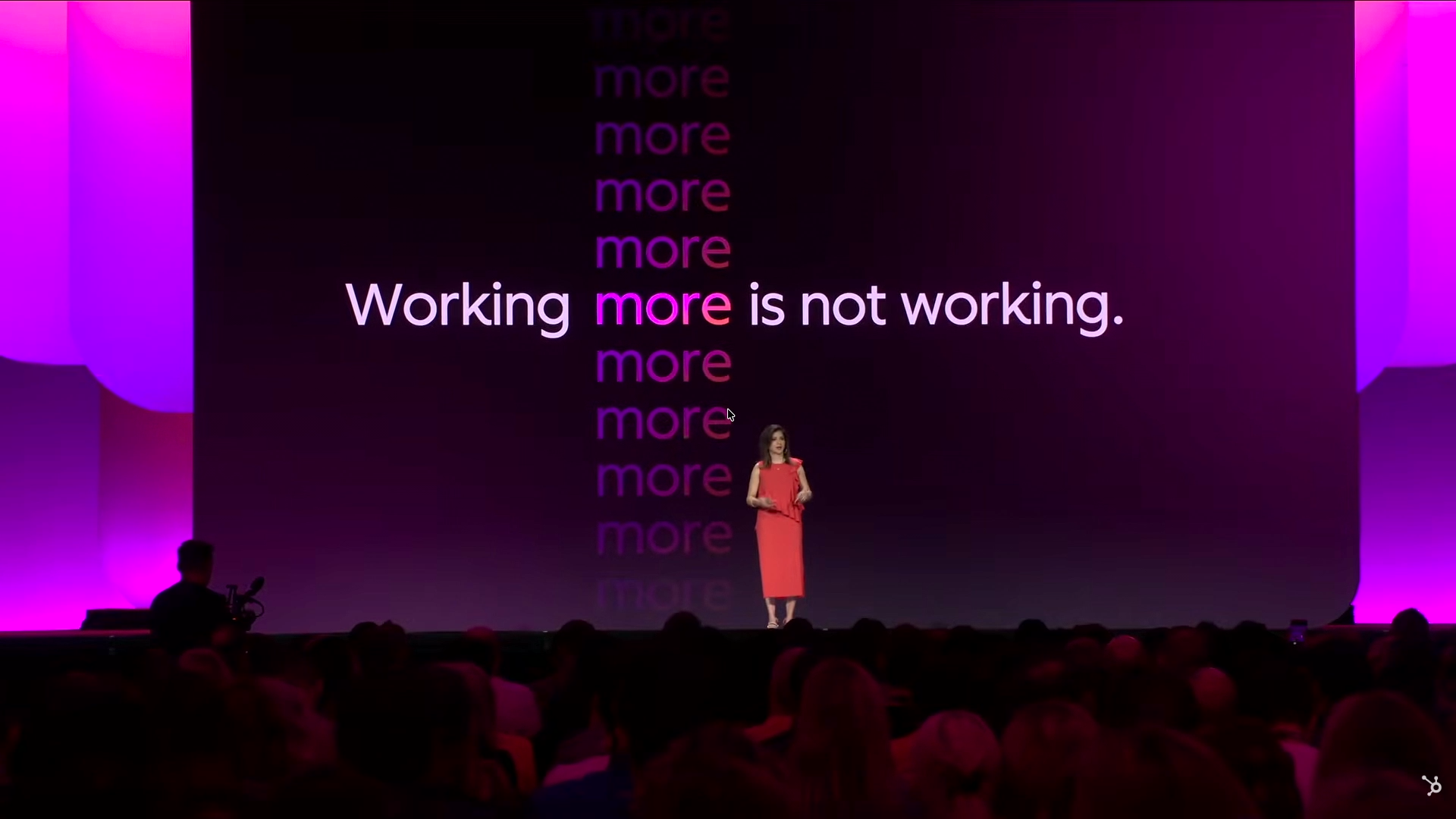
The first UNBOUND opened not with a product reveal but with a diagnosis. After nearly three years of watching companies pile tools, agents and pilots on top of one another, HubSpot's chief executive Yamini Rangan argued that the industry has been stuck in a phase of accumulation rather than achievement — and that the way out is a deliberate move into what the keynote called the outcomes era. What followed across the session was a single continuous argument: pick fewer things, feed them better context, and judge everything by the outcome rather than the optics.
This summary walks the full arc of the spotlight session — the rebrand, the research, the three habits of the companies actually getting transformational results, the product architecture built to support them, and the customer panel that tested the thesis against real go-to-market teams.
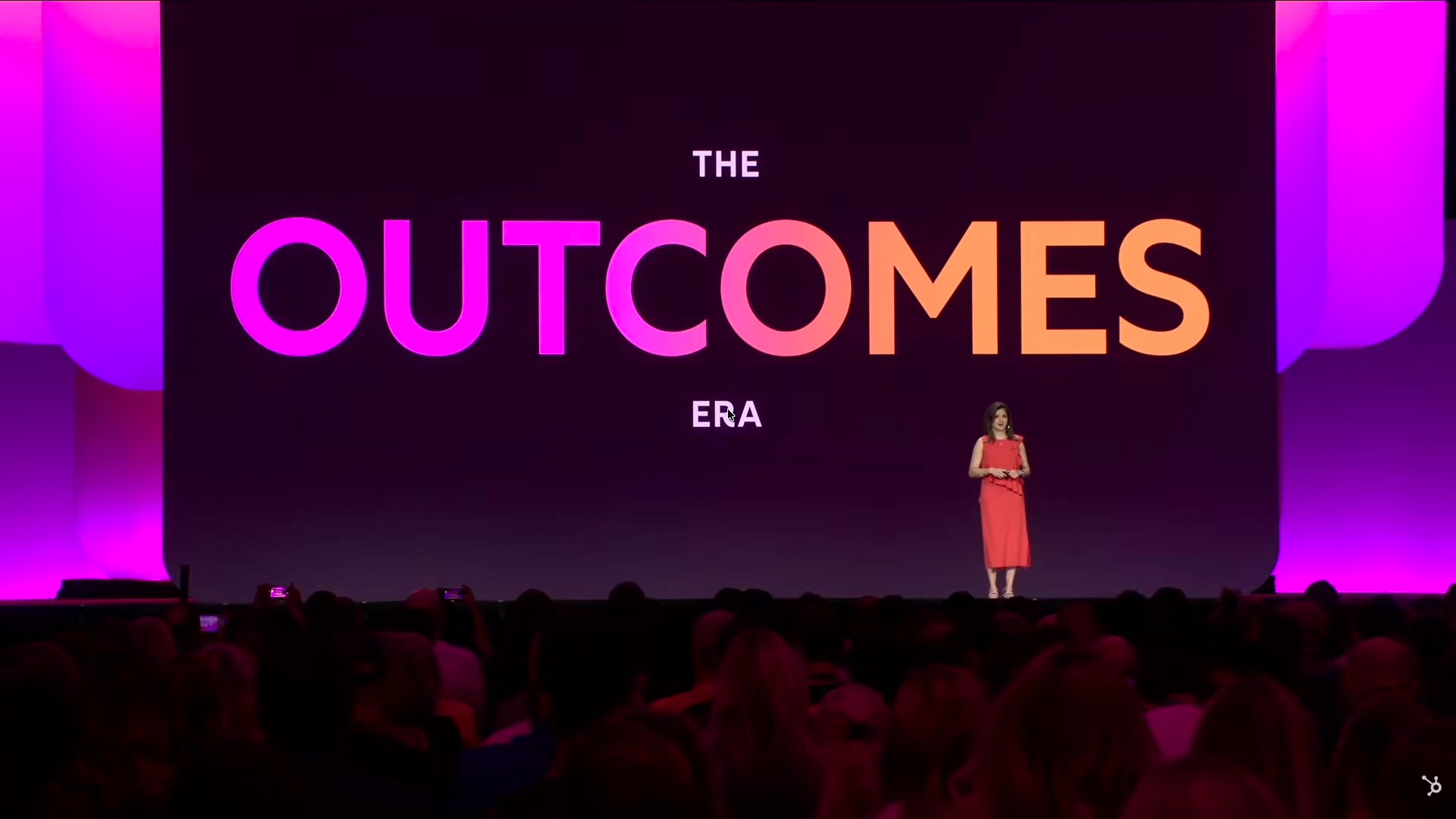
Changing a single letter in a brand with fifteen years of equity is not a design flourish, and the keynote did not pretend otherwise. The rename was described from stage as “a very strategic decision”, justified by a simple observation: “the way we grow has fundamentally changed”. New channels, new playbooks and new technology have arrived faster than the old conference name could carry.
The opening film handed the definition to the audience rather than the marketing team. Attendees described being unbound as seeing beyond limits, unlearning what they thought they knew, making unexpected connections, unleashing potential and moving past old playbooks. The word was chosen because it matched a feeling: unconstrained, unafraid, unstoppable.
Underneath the change, one thing was declared constant — the community in the room. And the question that community brought with it framed the entire session: “How do we adopt AI? What’s actually working in an AI world?”
The most quoted moment of the morning began with a phone call. A marketing leader had expected AI to make her job easier; instead her workload tripled. Hours spent writing out her own thinking, building prompts, validating results, refining and iterating — and then, on top of it, what she described as a second full-time job simply keeping up with AI. Her summary was three words long: “I feel behind.”
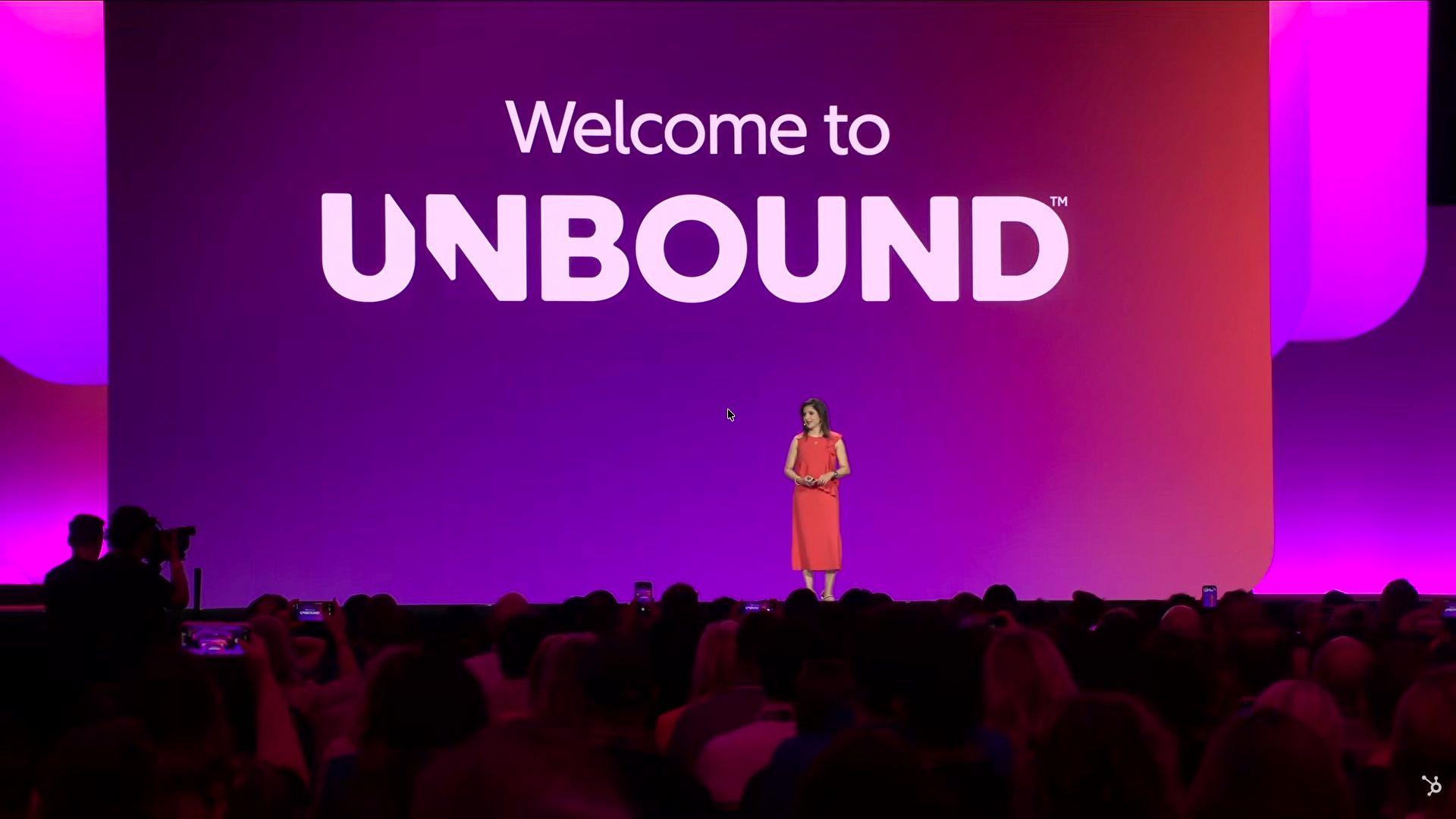
Rangan admitted the feeling is contagious, and used her own morning as evidence: AI newsletters, social posts about new models, podcasts at double speed, and self-appointed gurus dispensing prescriptive advice — “so much AI theatre all before breakfast”. The instinctive response across the industry has been to do more: more tools, more agents, more use cases, more tokens. The keynote’s verdict was blunt.
“Working more is not working.”
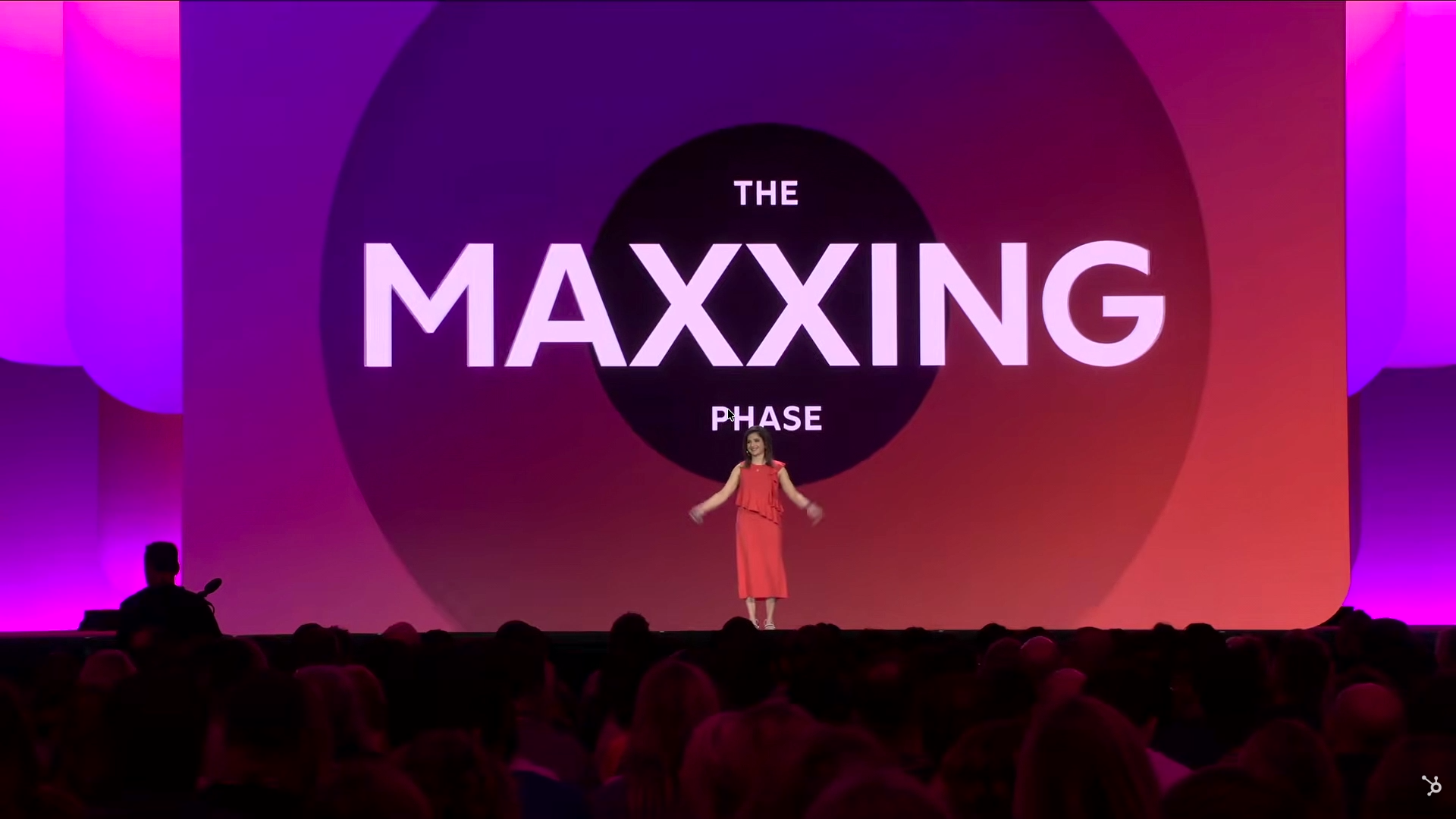
The phrase borrowed from her seventeen-year-old son’s vocabulary — protein maxing, looks maxing, jaw maxing — and applied it to technology. The maxing phase is the moment after discovery and wonder when everyone rushes to do more of something before anyone has worked out what it is actually for.
History supplied the warnings. In the 1950s, thousands of shoe shops installed X-ray fluoroscopes: customers got a good fit and a dose of radiation, because cutting-edge technology was applied to every problem even when the harm outweighed the benefit. The mobile era produced its own artefacts, including a $70 smart egg tray app. As Rangan put it: “Everybody used to say ‘we have an app for that’. Few had the courage to ask why.” The 2026 equivalents were named directly — agent maxing, pilot maxing, token maxing.
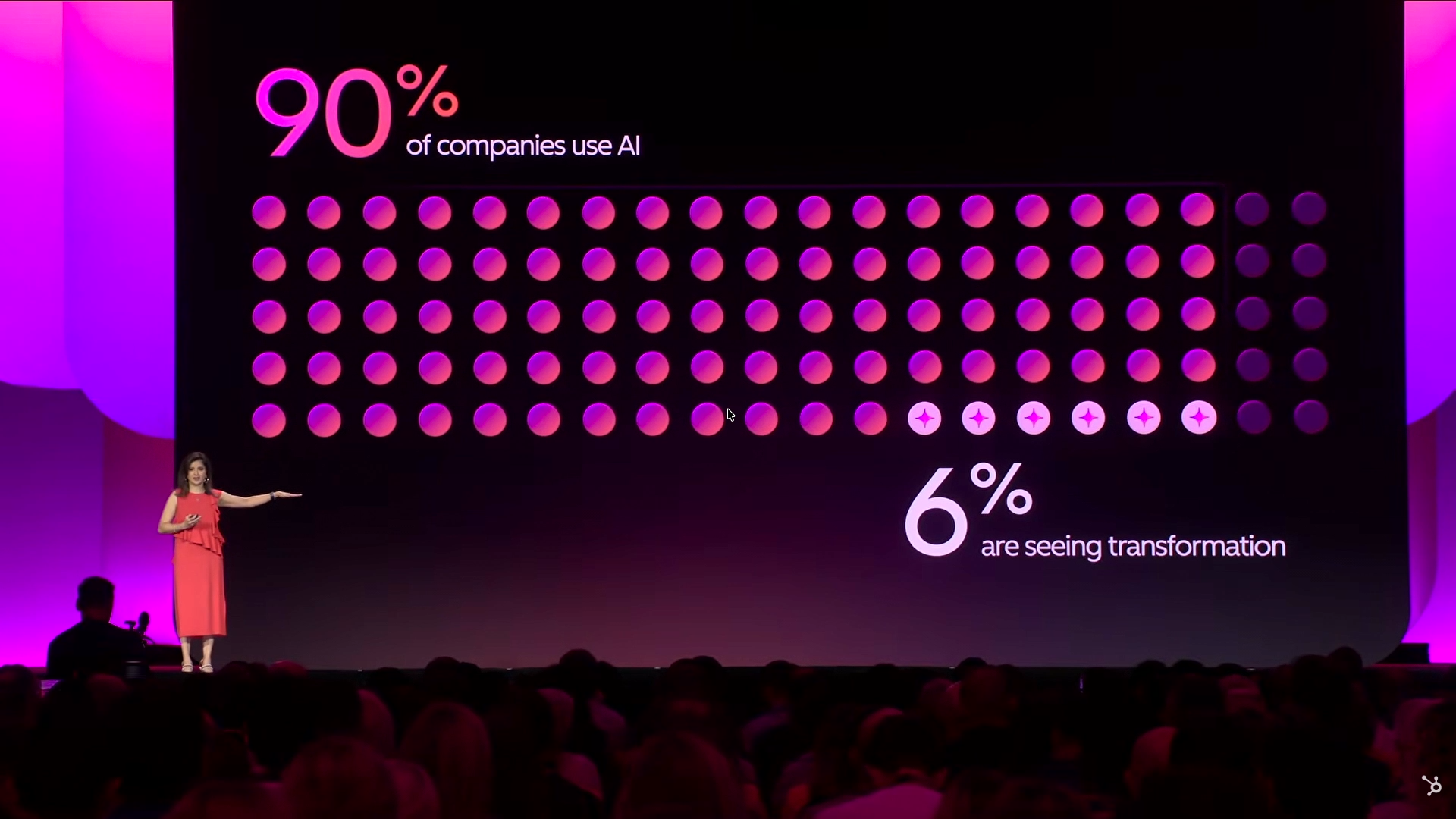
To move the argument from anecdote to evidence, HubSpot surveyed 6,000 customers and prospects across multiple industries, tracking roughly 50 AI use cases spanning the full customer journey.
The headline is uncomfortable. 90% of companies surveyed use AI. Only 6% see transformational results. The gap between adoption and impact is, in effect, the maxing phase quantified.
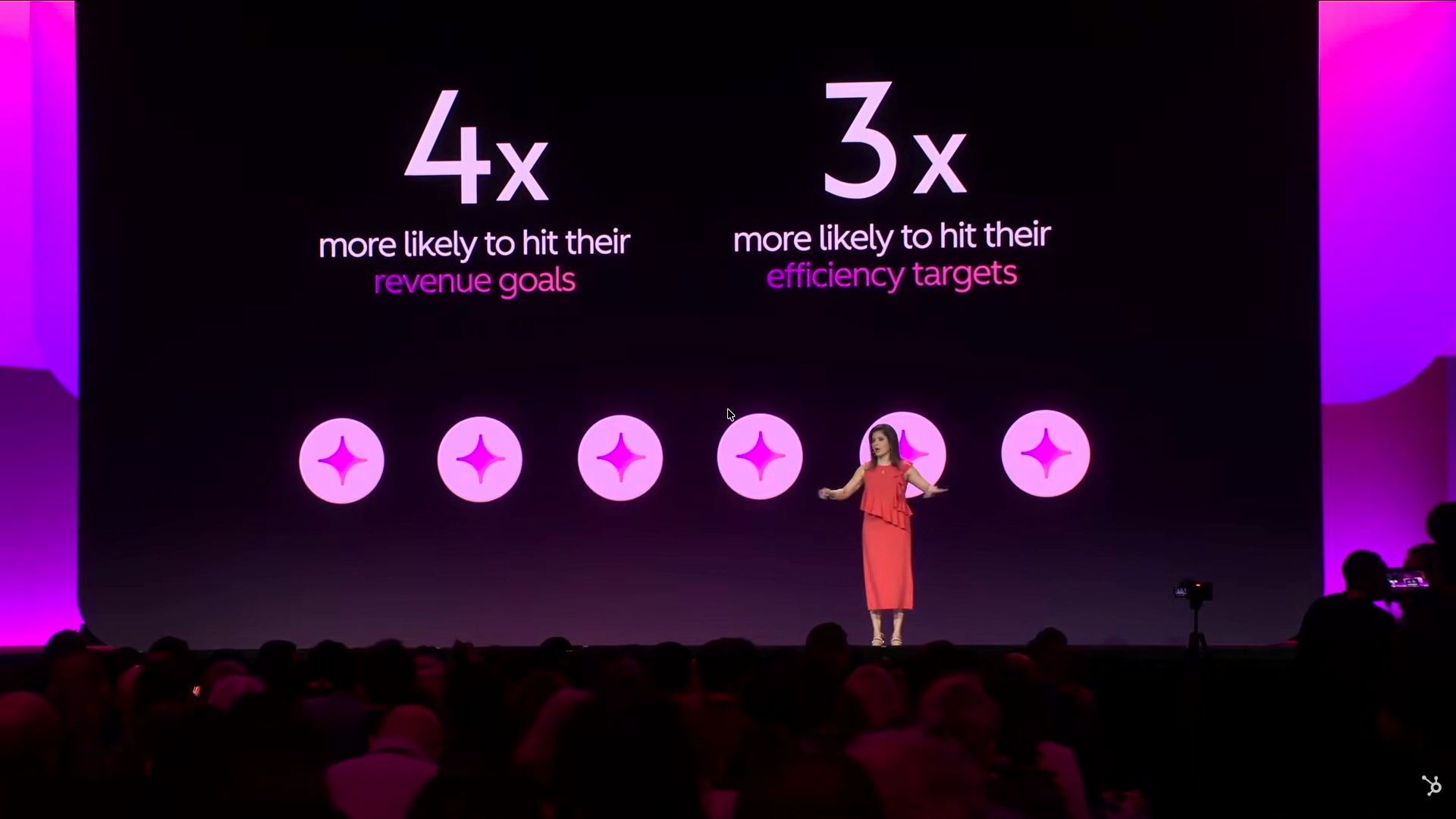
The 6%, however, are not marginally better. They are four times more likely to hit revenue targets and three times more likely to hit efficiency targets. That prompted the question the rest of the keynote answered: are they simply maxing harder, or doing something completely different?
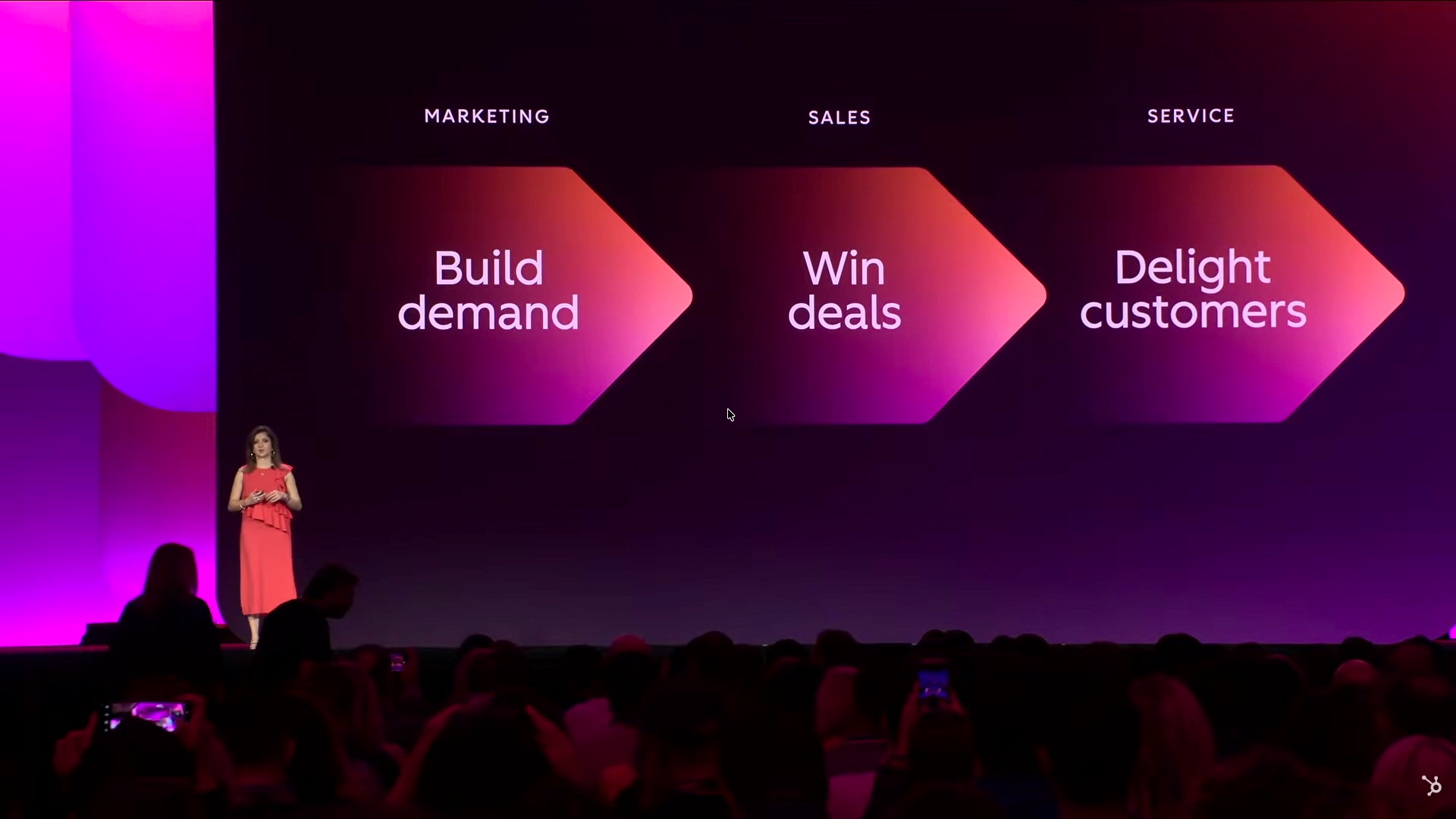
The first differentiator is deceptively old-fashioned. Go-to-market outcomes, the keynote argued, have not changed in a decade and will not change in the next one: build demand, win deals, delight customers. Marketing fills the top of the funnel and drives awareness of products and solutions. Sales qualifies demand into pipeline, makes representatives productive and wins business. Service keeps customers successful.
What has changed is the temptation to measure the wrong thing. Counting pilots, agents or tokens is optics. The transformational companies start from the outcome and work backwards to the technology, which reframes the central question of the AI era.
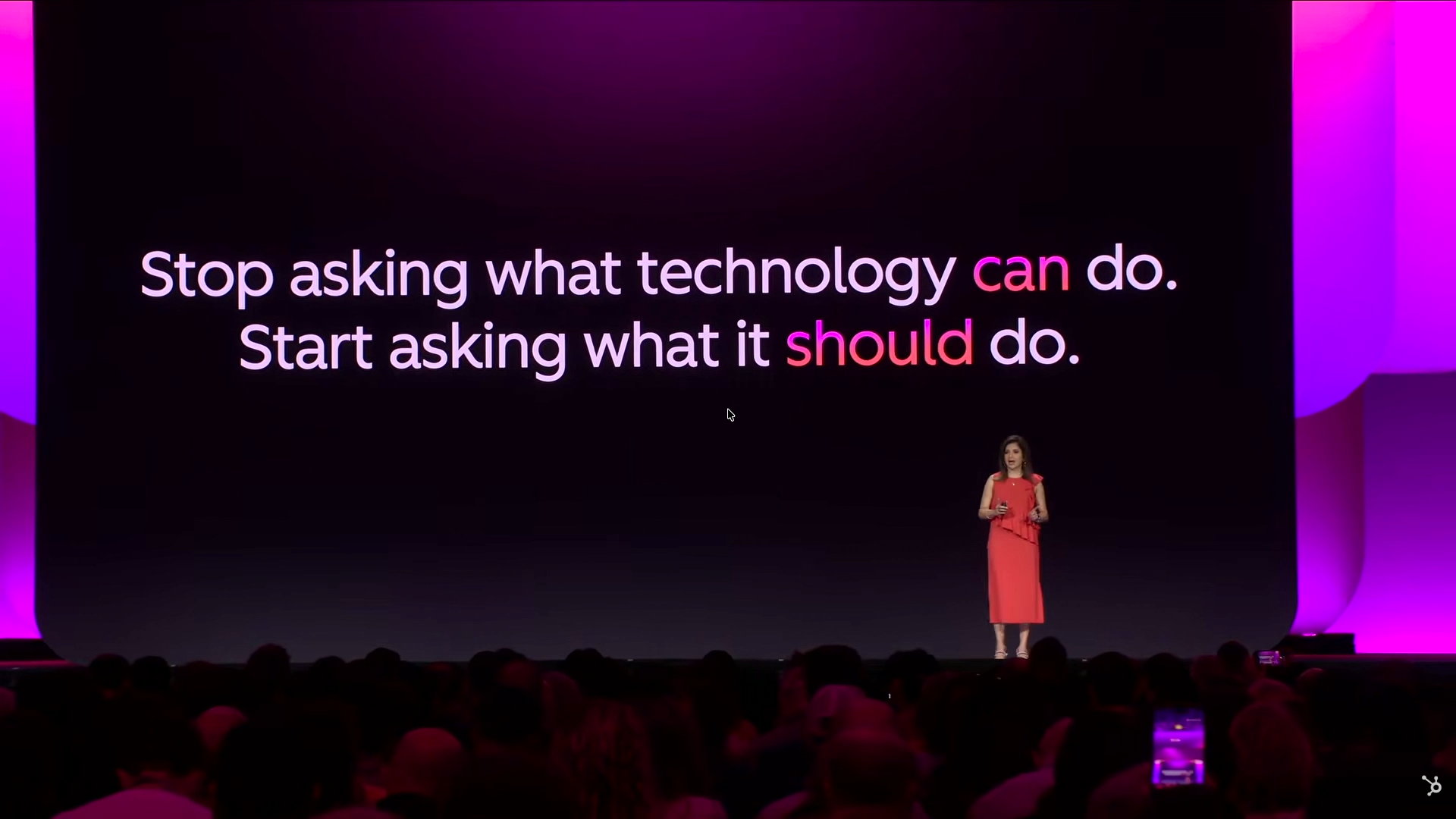
Framed this way, the three outcomes become a filter rather than a slogan. Any AI investment that cannot be traced to building demand, winning deals or delighting customers is, by definition, theatre.
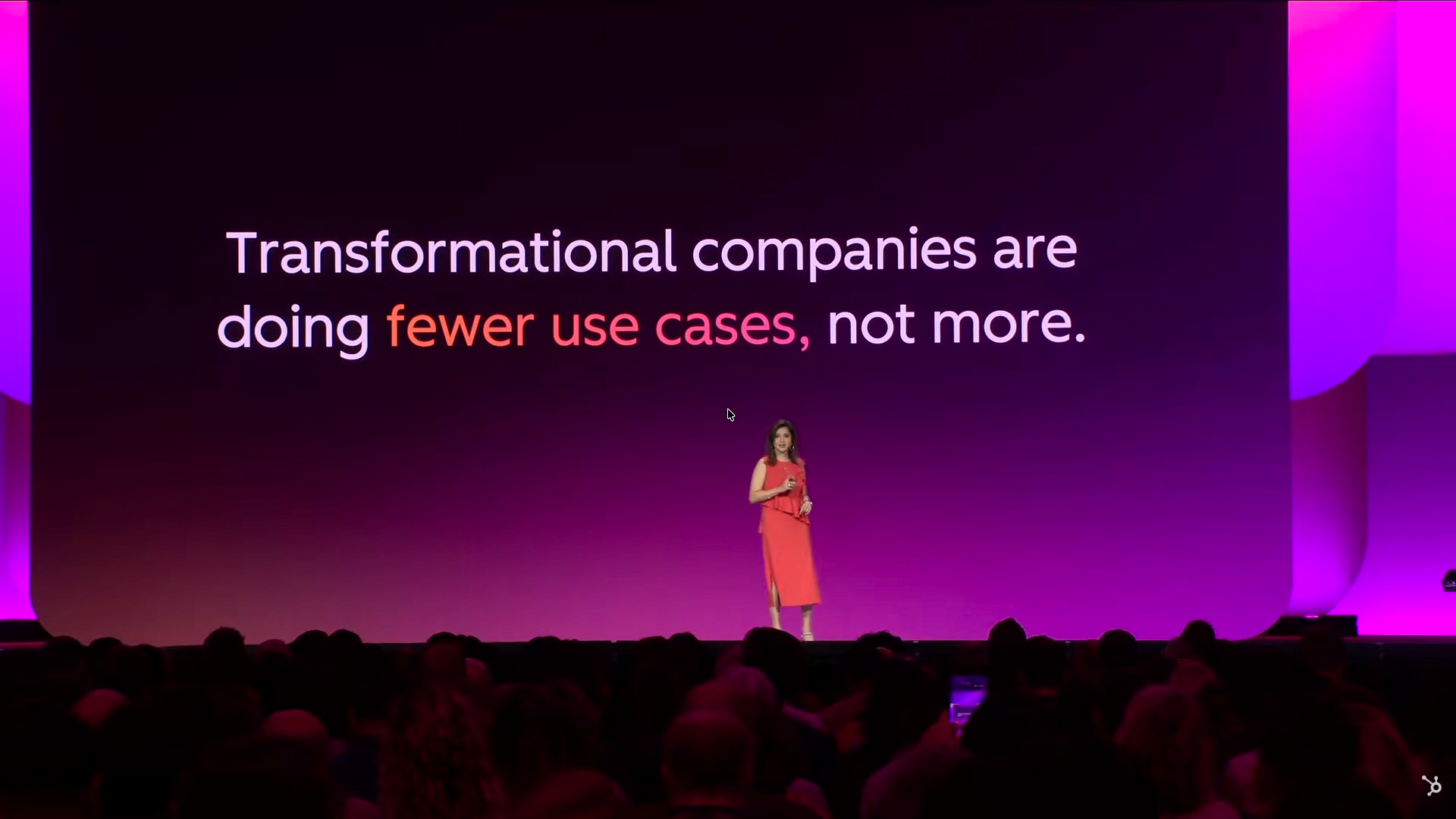
The second differentiator directly contradicts how most AI programmes are scored. The research found that transformational companies are doing fewer use cases, not more. They concentrate a small number of deployments against each outcome rather than spreading effort thinly across a long menu of possibilities.
A supporting slide put the ratios on screen — a handful of live use cases for building demand against a far larger catalogue of available ones. Focus, in other words, is not a constraint imposed by budget; it is a deliberate strategy that the highest performers adopt on purpose.
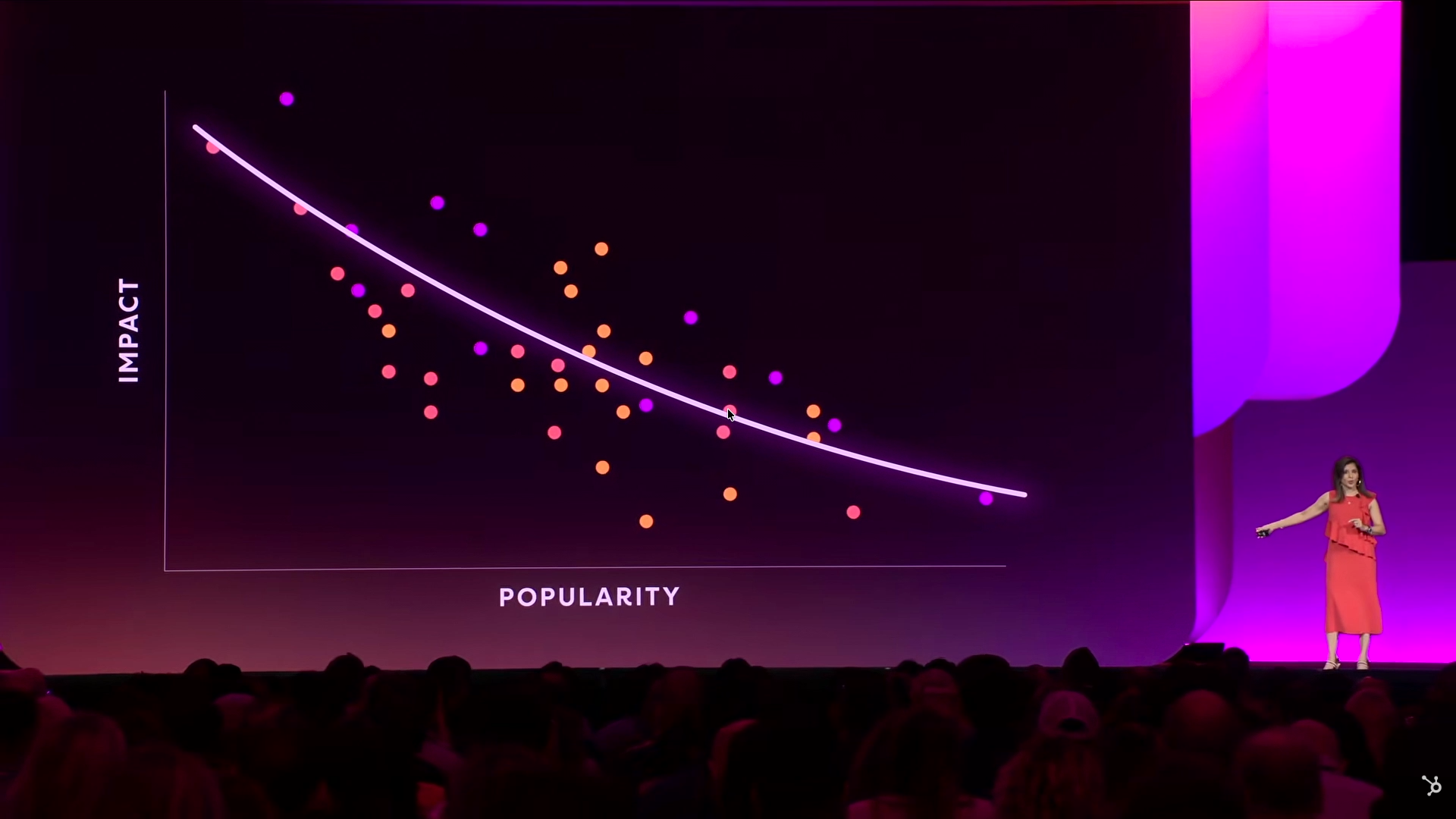
The corollary is that popularity is a poor guide. Plotting use cases by popularity against impact showed a crowded field of widely adopted, low-value applications — the ones that are easy to start and easy to justify in a status update, but that never move a number.
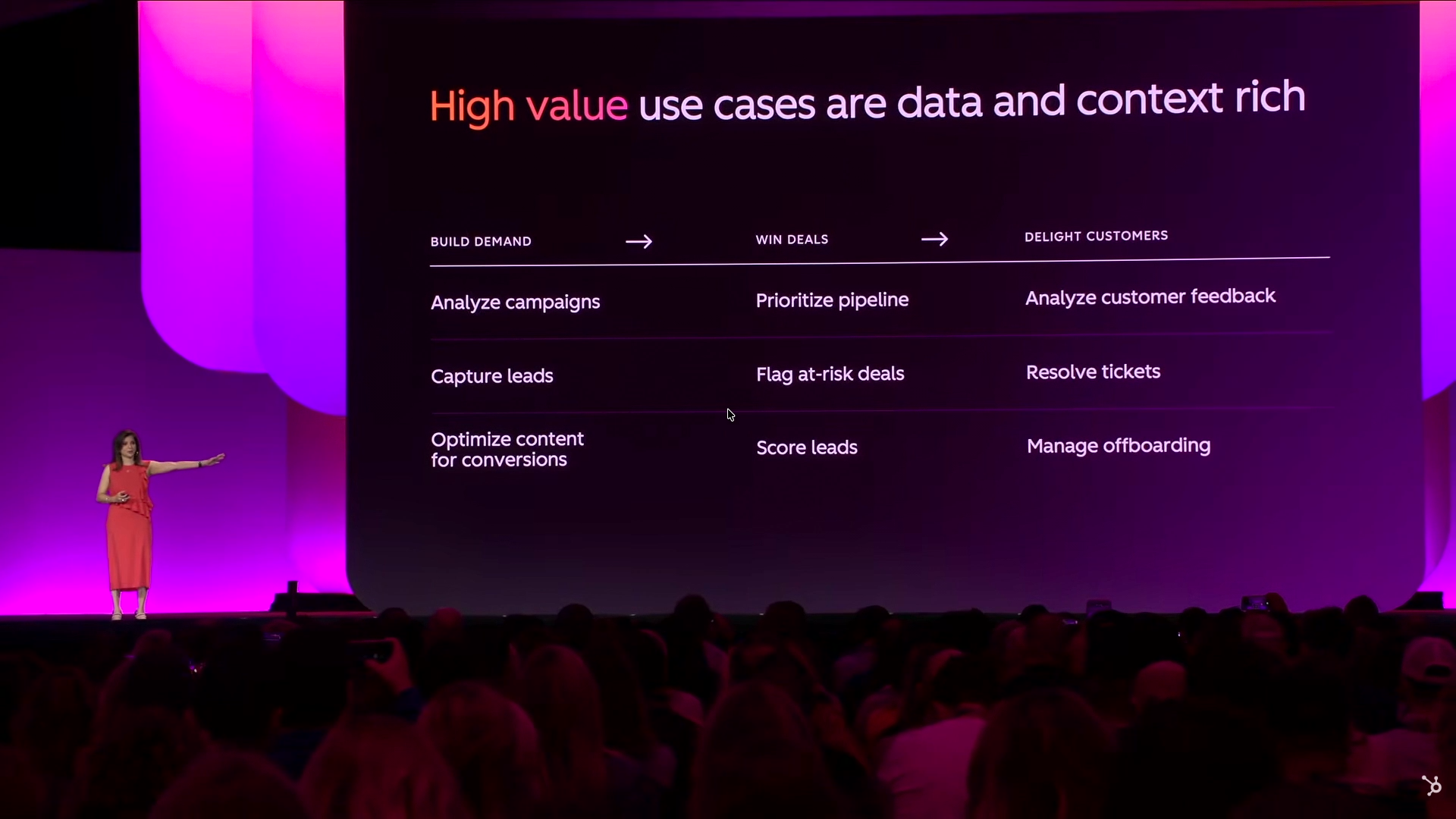
The pattern that separated the high-impact cluster was consistent across all three outcomes: the use cases that paid off were data and context rich. That finding is what carried the keynote into its third and most consequential argument.
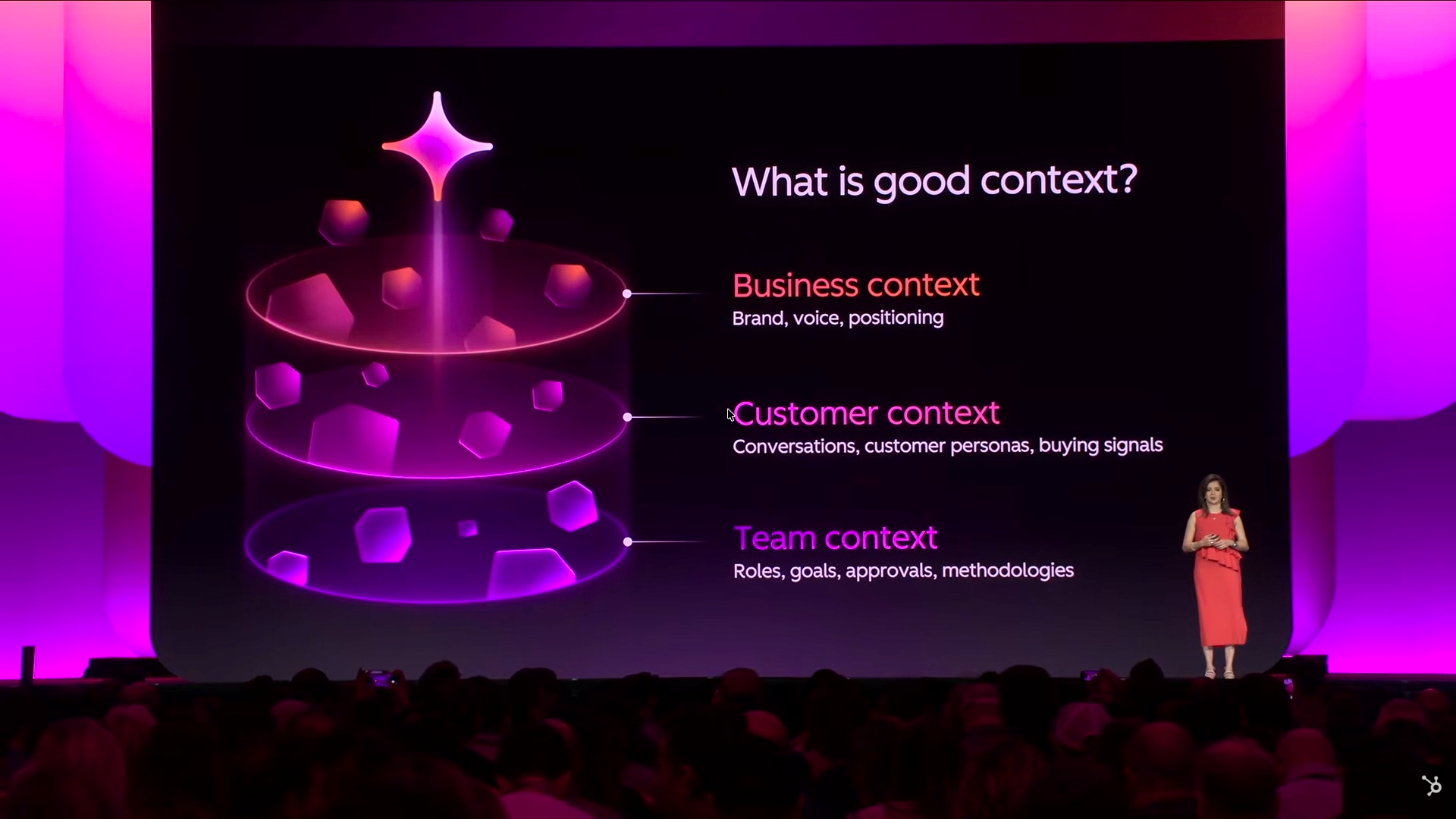
If everyone can buy the same models, the differentiator cannot be the model. It is what you feed it. The keynote defined growth context as the CRM knowing the business, the teams and the customers — customer records combined with everything that makes a particular company unique.
“It is your data, it is your context, and it’s your advantage.”
Good context, as the slide set out, is layered. Business context covers positioning, the company profile and the product list. Customer context covers personas and ideal-customer-profile insight. A third layer captures the way the team actually works — tone of voice, follow-up habits, the rhythms that make output feel like it came from your company rather than a generic engine.
This is also the bridge between the diagnosis and the product. If high-value use cases are context rich, then the quality of the context becomes the ceiling on the quality of the outcome.
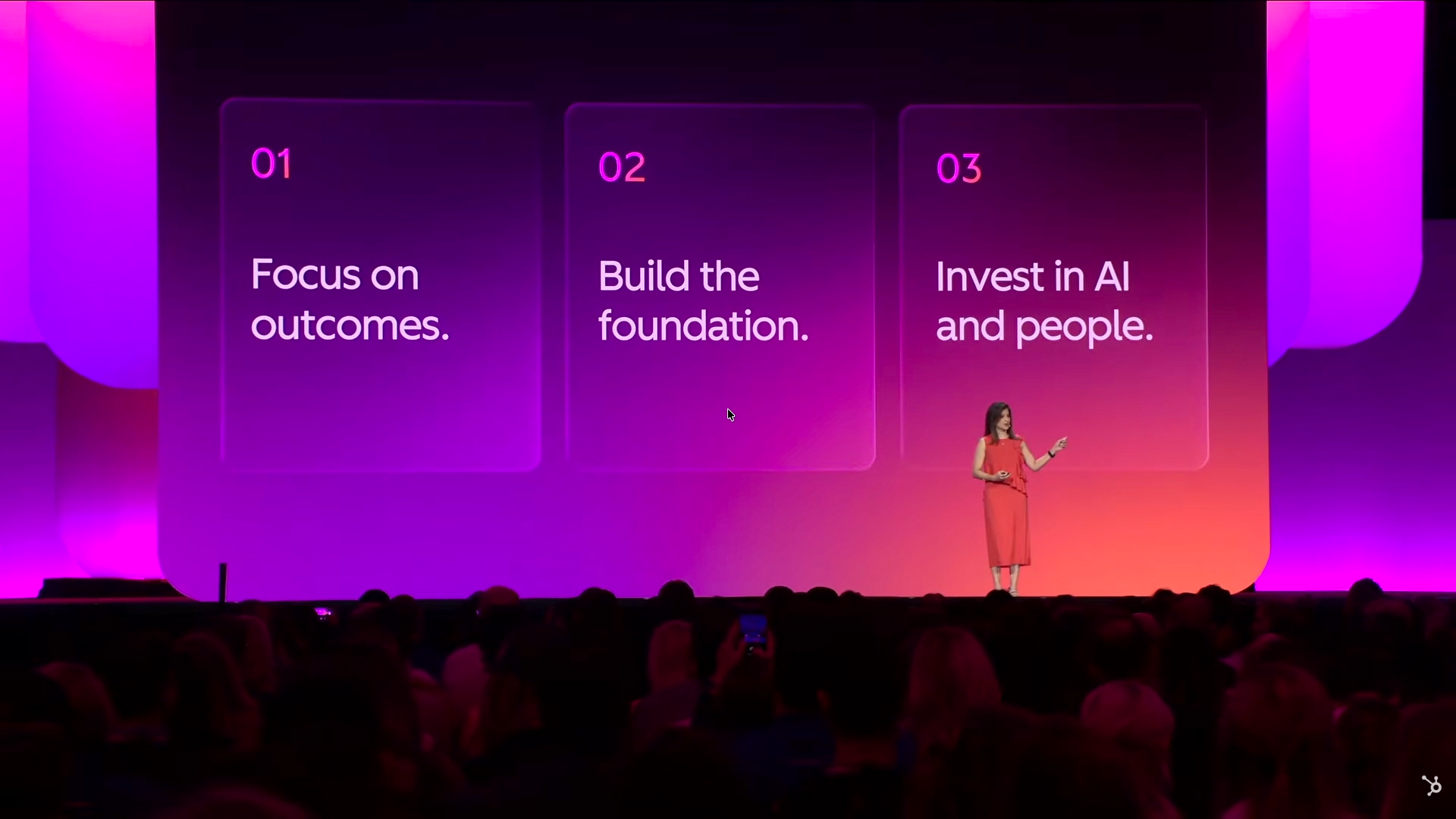
The opening keynote handed over to the product keynote with a shared structure. Winning in the outcomes era, as the second speaker restated it, rests on three pillars.
Read together with the numbered slide — focus on outcomes, build the foundation — the message was that sequence matters. Foundation first, then selected use cases, then a different daily working pattern.
The product keynote opened with the oldest unsolved problem in the category: “A CRM only knows what someone remembers to tell it.” That is true, it was noted drily, of every CRM on the market — “even the vibe coded ones”. Notes stay in people’s heads, deal stages go stale, activity never gets logged, and then teams ask AI to reason over the gaps.
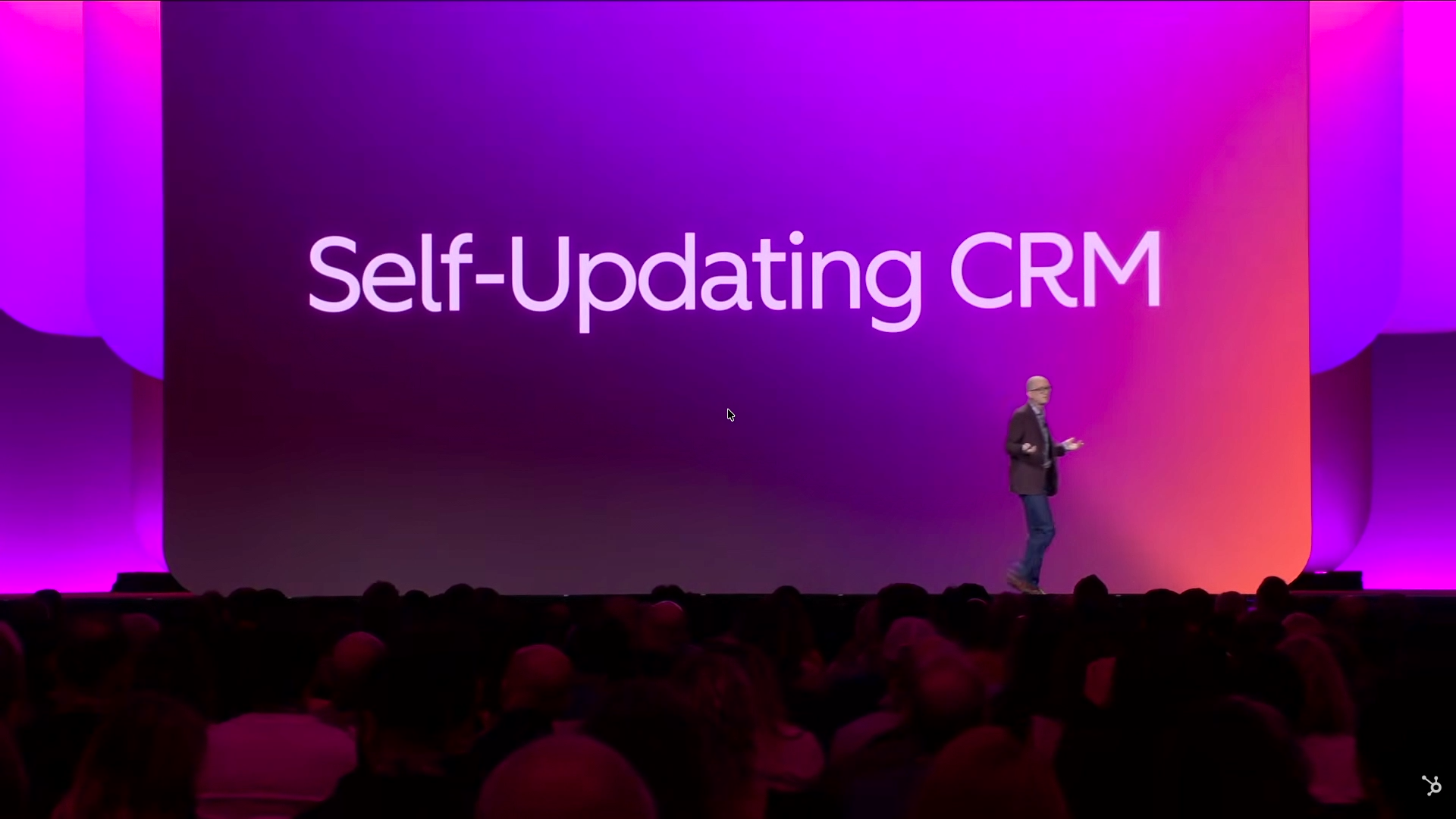
The proposed inversion was simple to state and hard to build: “Instead of you updating the CRM, what if the CRM updated you?” Calls, emails and meetings are captured automatically; contacts are added, deal stages updated and next steps laid out, so the record stays current and clean without manual effort.
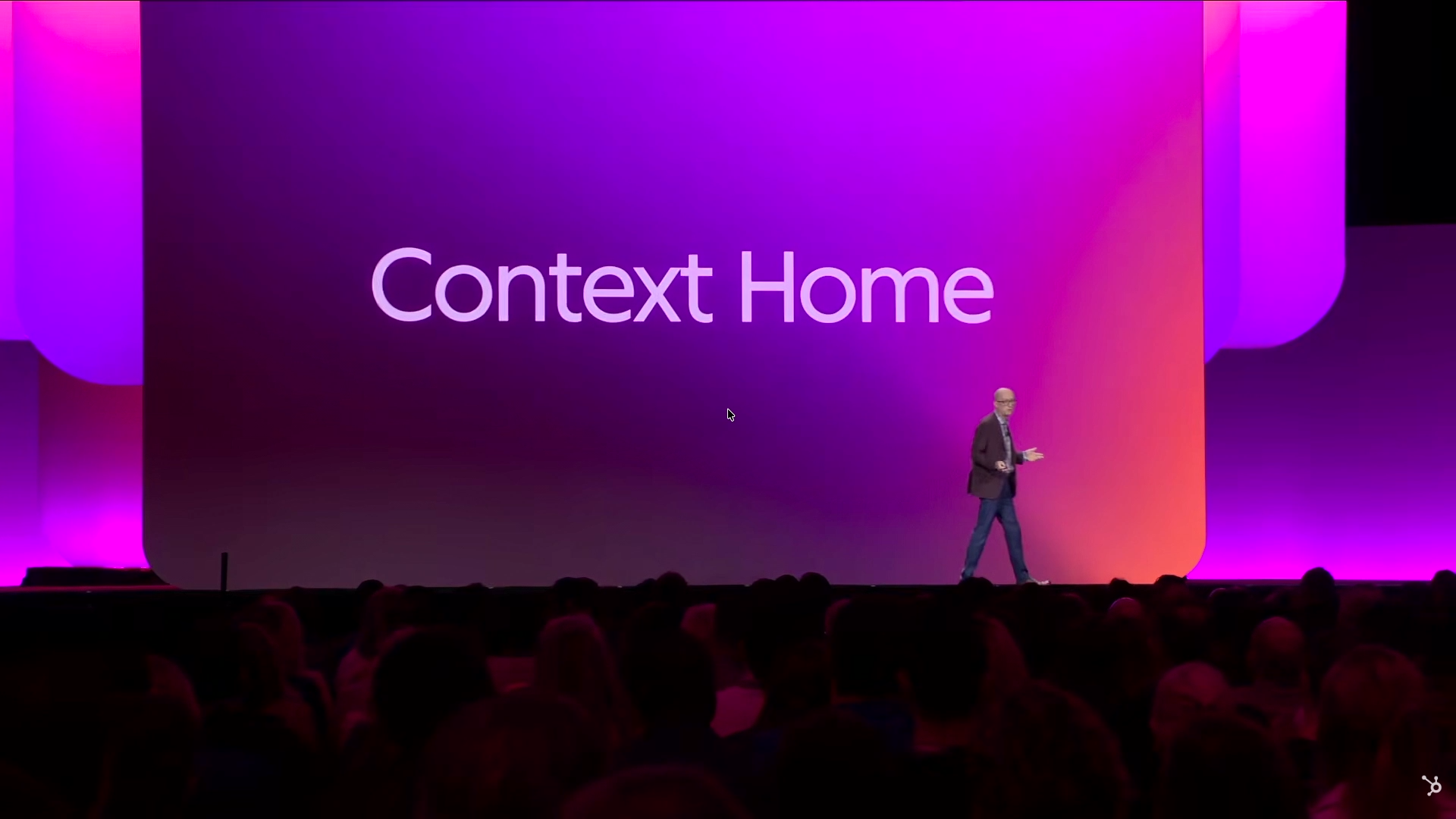
Context Home is the control surface for all of this — a bird’s eye view of the organisation’s growth context. It scores how complete that context is, identifies the gaps worth filling, and lets teams drill into the business layer (positioning, company profile, product list), the customer layer (personas, ICP insight) and the team’s way of working. As new meeting notes and transcripts arrive, it surfaces recommendations about what to update, on the premise that the quality of your context determines the quality of your outcomes.
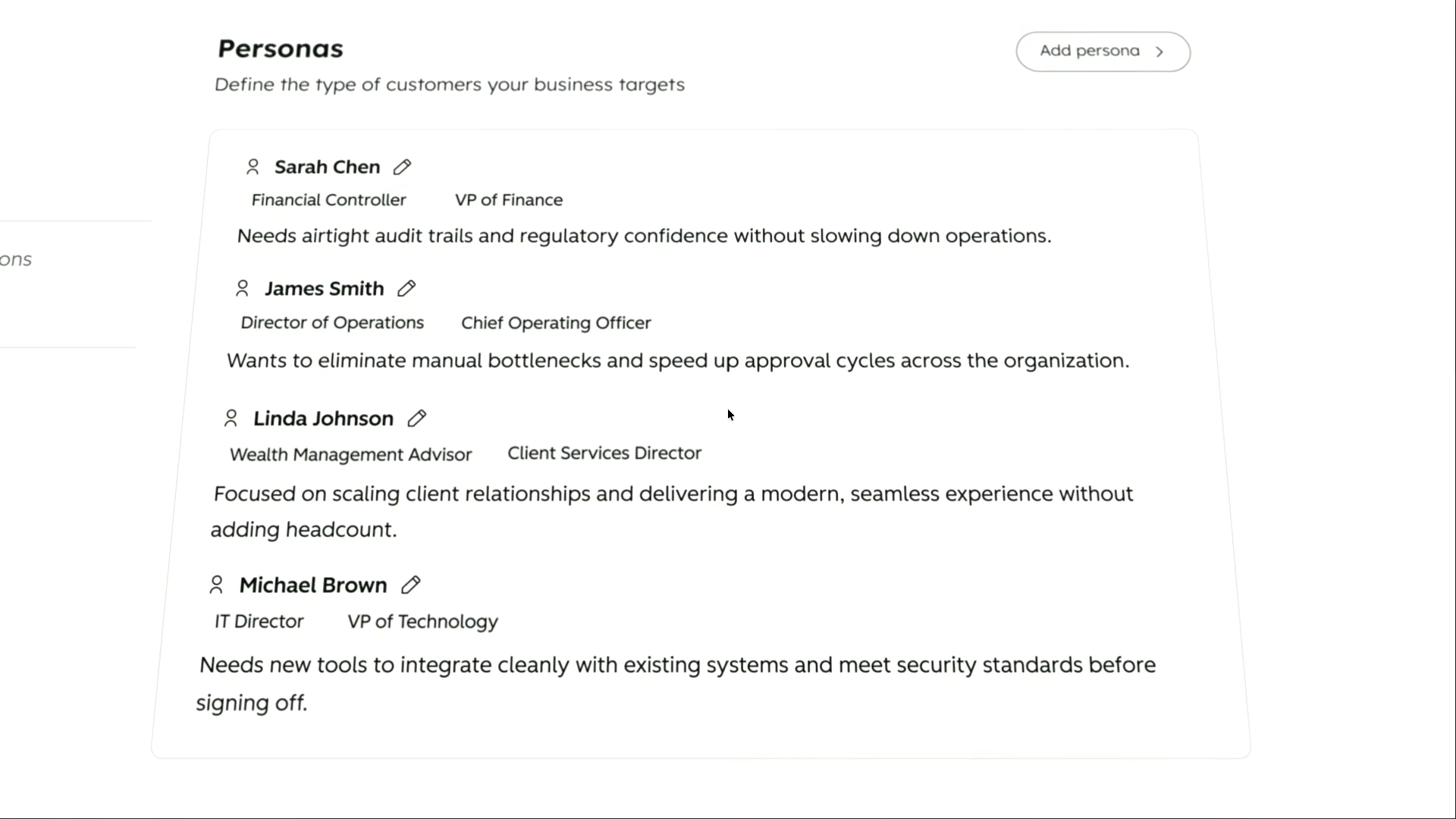
The demonstration that made the case was an email. Two versions were shown side by side for a sales representative called Sarah: a generic AI draft from a tool with no knowledge of the business — dismissed as unreadable, likely to lose the lead and to erode trust in the system — and one written with full growth context.
The context-informed version drew on the product the prospect had trialled, the positioning against a named competitor plus a Gartner rating for the comparison, Sarah’s team’s post-trial follow-up practice and her own tone of voice, UNBOUND as the natural moment to meet, the customer’s stated usability and pricing concerns, the identification of a colleague, Deanna, as the right person to loop in, and pricing relevant to the company’s size.
“Every sentence in that email earned its place.”
The analogy used to justify a rebuild rather than an upgrade was mechanical: you cannot strap a jet engine to an old jalopy, so a new vehicle was built. Breeze Assistant was presented as a complete rebuild, not an incremental release for existing Breeze users.
The design question behind it was posed as a direct rebuttal to the maxing phase: “Instead of needing a million tools to do one thing, what if you had one tool to do a million things?”
Crucially, the assistant is framed as an actor rather than a summariser. It goes beyond recapping deals or preparing for meetings: users state, typed or spoken, what they want done, and Breeze taps the foundation, works the use case and returns the outcome.
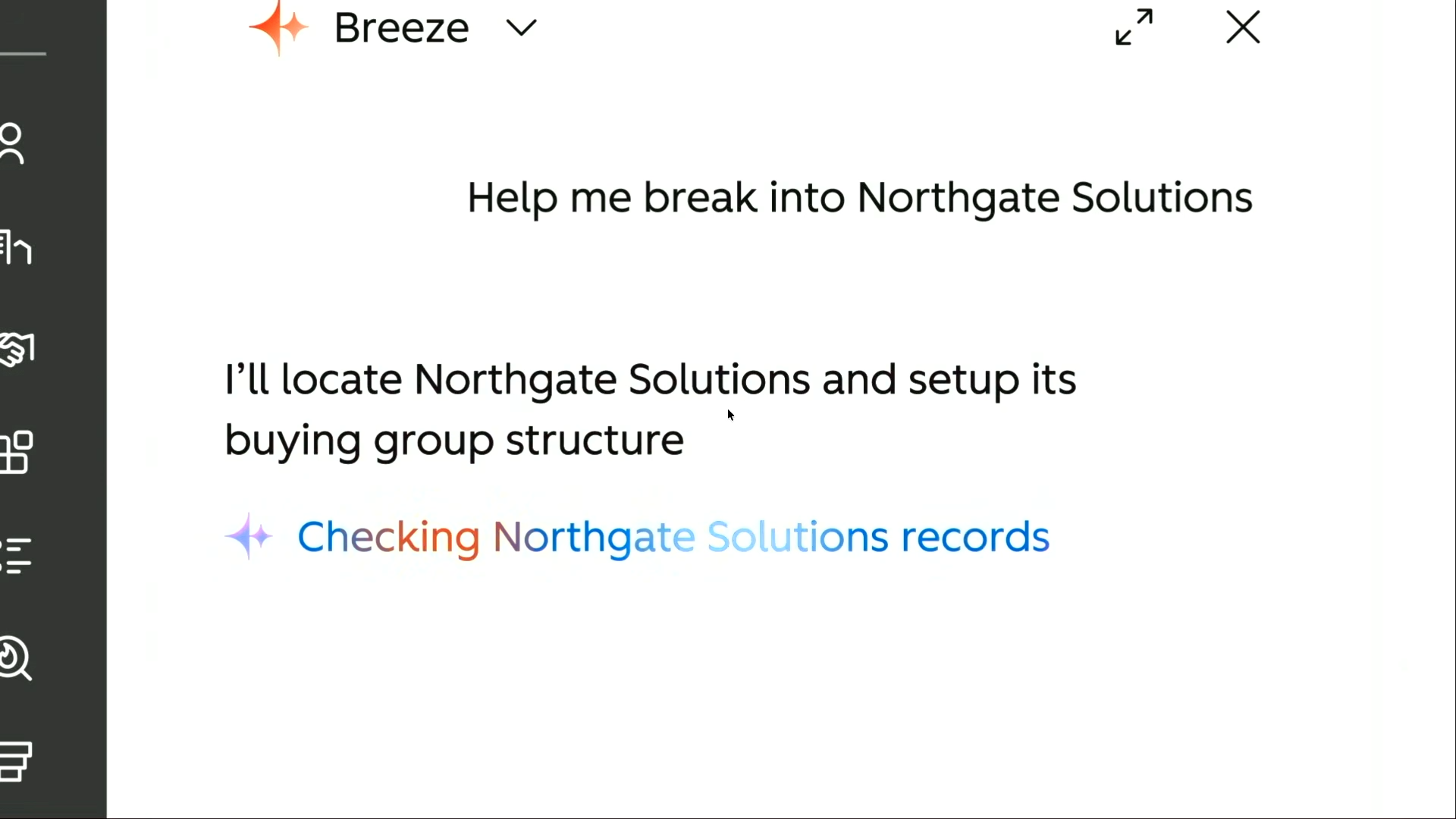
Demonstrations moved across the same three outcomes the keynote had established: building demand, working pipeline and reviewing deals. The through-line was that the instruction stays human and short, while the context and the tool-calling happen underneath — which is precisely the inversion of the prompt-writing burden the marketing leader described at the start of the session.
Every product decision, the audience was told, is tested against a single question: “Will our customers trust it?” Trust that it works, trust that data is safe, and trust that the user remains in control.
Those commitments were made concrete. Users decide what sits in the context and what gets updated. There is transparency over how context is used. The platform acts only on permitted data. And the user retains control over every tool that Breeze invokes — automation without abdication.
That governance argument sat alongside a statement about the people in the room. Marketing, sales and customer service were described as “the lifeblood of every business”, with the jobs acknowledged as harder than ever: more pressure, more noise, more demand to prove return on investment.
“You are the connection point between a business and its customers. In a world drowning in automation and noise, you are what makes it human.”
The spotlight then handed the argument to practitioners. Hosted by John, a ten-year attendee, the panel was framed around the audience itself: sales, marketing, service and operations leaders doing a job that is harder than ever — “but there’s a path through it”, with the panellists offered as people already walking it.
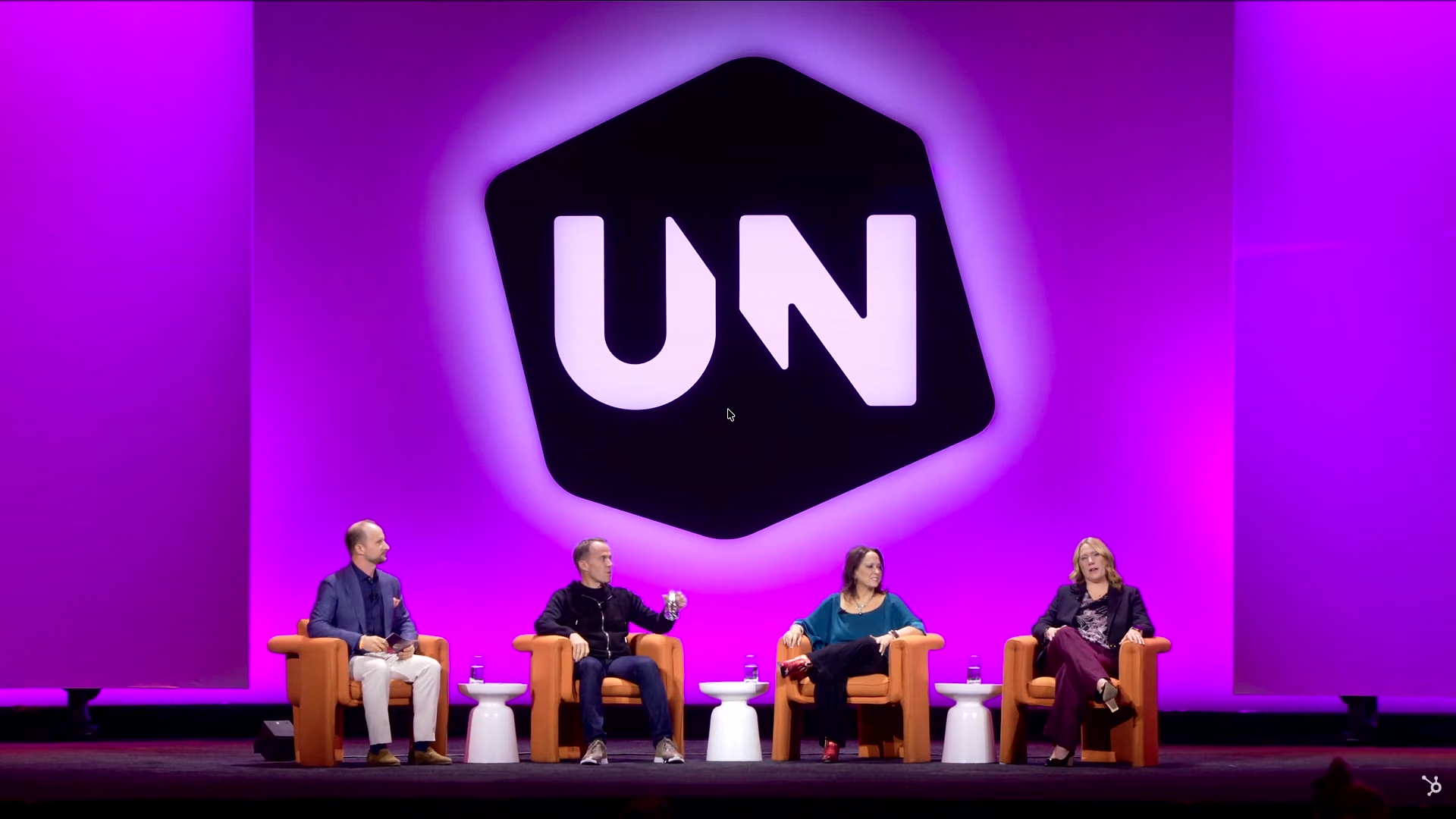
The three businesses deliberately sat at different scales, which made the shared conclusions more interesting than any single story.
Hollywood Branded supplied the most vivid proof point: the agency delivered both title sponsorships in the film F1 — Peak and Expensify — with Expensify branding appearing on Brad Pitt’s chest, his helmet and the cars. Both brands reported what was described as a “massive explosion” in results.
Moffat explained why a company growing at 25% would choose to overhaul its go-to-market anyway: acceleration driven by AI demand in industrial operations, a noisy and complex market, and increasingly complicated buying cycles. What IFS needed was a single unified view of the customer and the ability to reach those customers with messages that matter to their business — leading to the decision to partner with HubSpot as, in his words, a world-class partner underpinning the next phase of growth. It is the same thesis as the keynote, arrived at from the buyer’s side: context first, then outcomes.