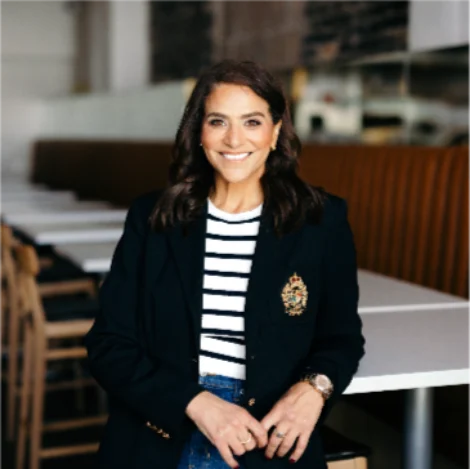
Maha Abouelenein
CEO AND FOUNDER @ DIGITAL AND SAVVY
Maha Abouelenein founded Digital and Savvy and advises global leaders on storytelling, reputation and building trust.


CEO AND FOUNDER @ DIGITAL AND SAVVY
Maha Abouelenein founded Digital and Savvy and advises global leaders on storytelling, reputation and building trust.
 Maha AboueleneinBuild Trust Through Storytelling in a Skeptical World
Maha Abouelenein, chief executive and founder of Digital and Savvy, opened the Impact Stage session with a deliberately uncomfortable premise: we have never produced more content, and audiences have never believed less of it. Drawing on three decades of communications work — ten years alongside Gary Vaynerchuk, a spell as head of communications at Google, the launch of Netflix in Dubai, a decade building Weber Shandwick’s practice in the Middle East, and client work spanning JP Morgan Chase, athletes, celebrities and chief executives — she argued that the marketing playbook most teams still run was built for an economy that no longer exists.
Her thesis, carried through from her bestselling book The Seven Rules of Self-Reliance, is not that people should retreat into isolation but that the power is you: reputation, relationships and personal brand are the assets that hold their value when machines can generate everything else. What followed was a practical case for treating storytelling as a leadership discipline, trust as a measurable business asset, and personal visibility as a form of job protection in the age of AI.
This recap follows the arc of the keynote: the credibility crisis, the shift from attention to trust, why brand storytelling misfires, why audiences follow people rather than logos, the five-part trust framework, the role of AI, and the closing challenge she left with the room.
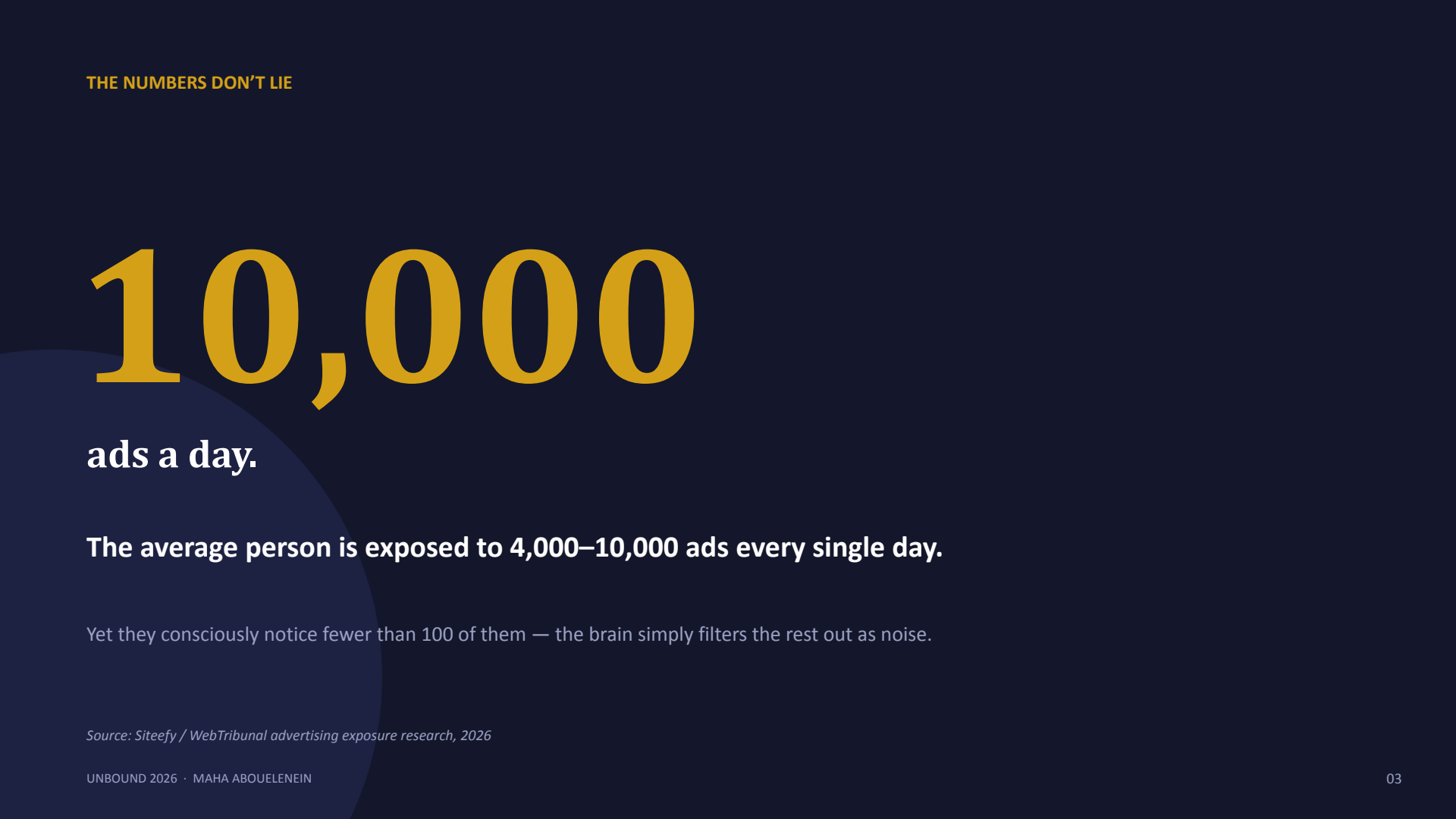
The opening numbers set the terms of the argument. The average person is exposed to somewhere between four thousand and ten thousand advertisements a day — a volume the brain simply cannot process, let alone evaluate. Roughly 74% of content on the internet is now AI-generated, which Maha identified as the root cause of a broad, rational scepticism rather than a passing mood. And the commercial consequence is blunt: 86% of consumers refuse to buy from a company they do not trust.
Read together, those three figures describe a market failure. Supply of content has become effectively infinite while the audience’s capacity to believe has stayed stubbornly finite. In that environment, producing more — more posts, more campaigns, more variants — does not increase influence. It increases noise, and noise is now the default condition rather than the exception.
Her framing of the audience’s response was deliberately simple. Faced with any message, people now silently run three checks: Can I trust this? Who is behind this? Why should I care? Most marketing, she argued, is optimised to answer none of them.
“Content is what everyone is consuming, but trust is what people will remember.”
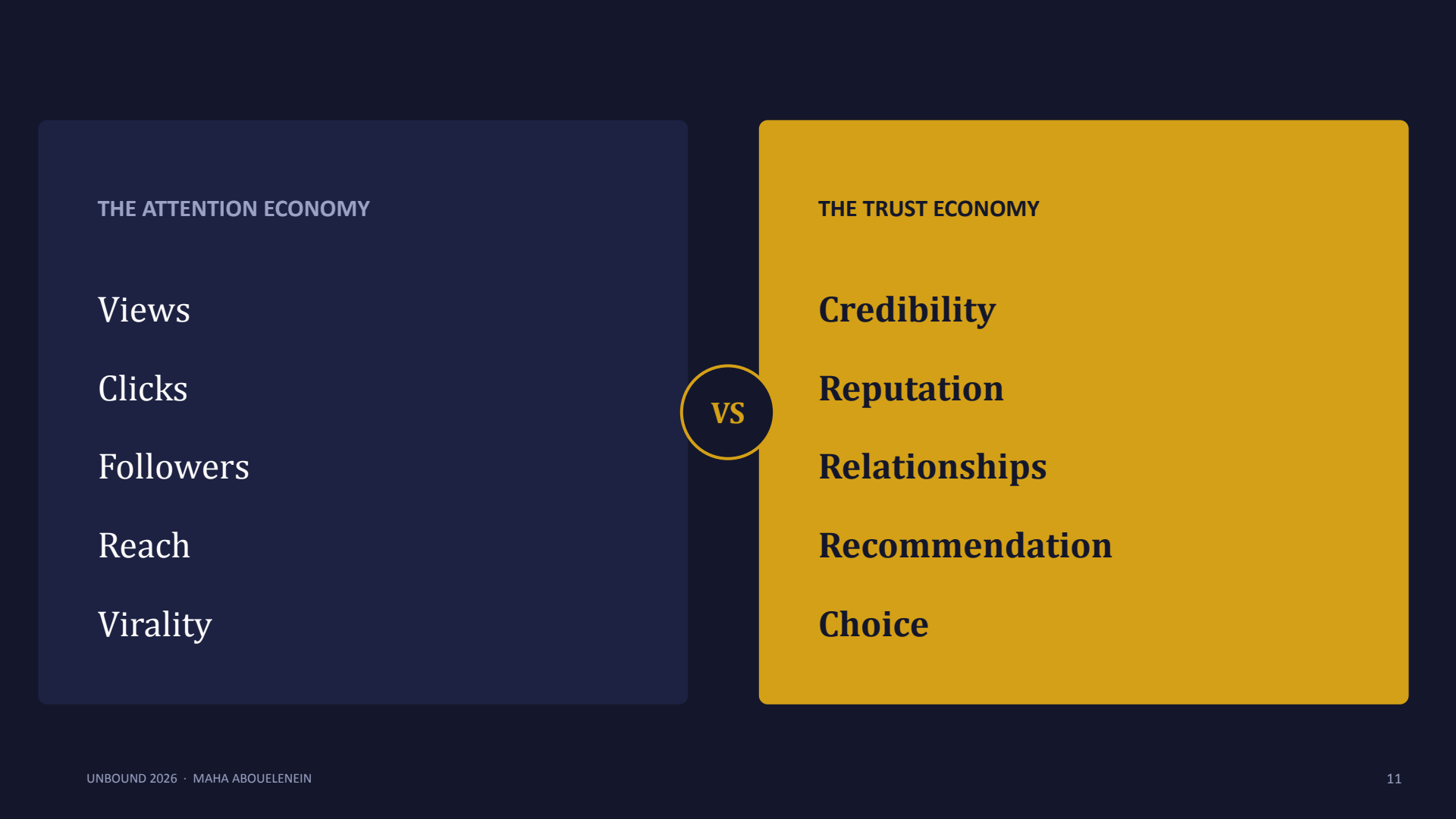
The old funnel, she said, is dead. It ran attention, then awareness, then conversion, and it assumed that capturing eyes reliably produced customers. The sequence has inverted. Today, credibility and reputation come first, and conversion follows as a consequence — which is a considerably less comfortable model for teams measured weekly on reach.
Going viral, she pointed out, is not hard. A provocative post or a striking image will do it. The difficulty is that virality is a spike in consumption, not a deposit in belief. Trust is a long-term gain in a culture engineered for instant gratification — the audience that wants to download the whole season right now is not naturally patient with a brand asking to be judged over years.
She described trust as an account: a Trust Bank filled by consistent, visible good behaviour. Those deposits determine whether an audience forgives a mistake or a crisis, and many organisations discover far too late that the balance is empty. Consistency is the mechanism — “I have to be the same person I was yesterday as I am tomorrow” — and the yield is practical.
What a full trust account buys, in her framing:
The same logic applies well beyond customers — to investors, to strategic partners, and to the colleague sitting beside you. With more choice available than at any point in history, loyalty has to be earned the way a friendship is earned, not bought with a media plan.
Storytelling, she insisted, is not a soft skill. It is a leadership skill: it connects people, drives action, and earns the most honest metric available — the direct message, the repost, the forward to a colleague. It works one-to-one, in meetings, in presentations, on social platforms and at events like this one.
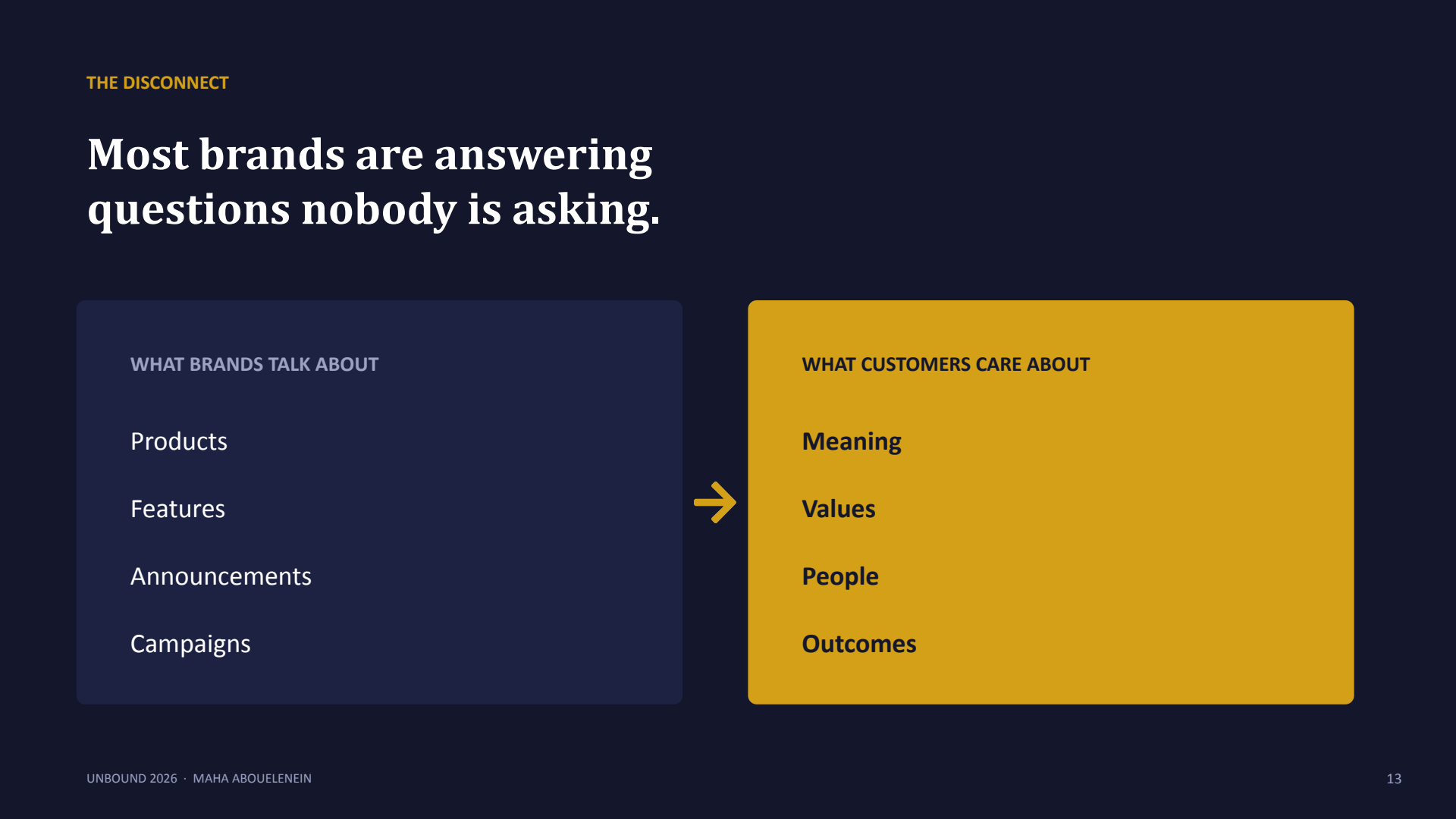
Brands fail at it for a predictable reason: they push product, features, service tiers and announcements when audiences want meaning, values, the people behind the business and the outcomes those people create. The diagnostic question has to change from “What do we want to tell people?” to “What does our audience actually care about?” Behind-the-scenes material — the struggle, the process, the unfinished parts — invites people into the story rather than broadcasting at them.
Her worked example was Dove. The campaign does not talk about soap, ingredients or moisturising benefits; it addresses girls dropping out of sport because of low confidence and body image. It speaks about a person rather than a product, and as a result it resonates simultaneously with parents, teenagers and coaches — three audiences a feature-led message would never have reached at once.
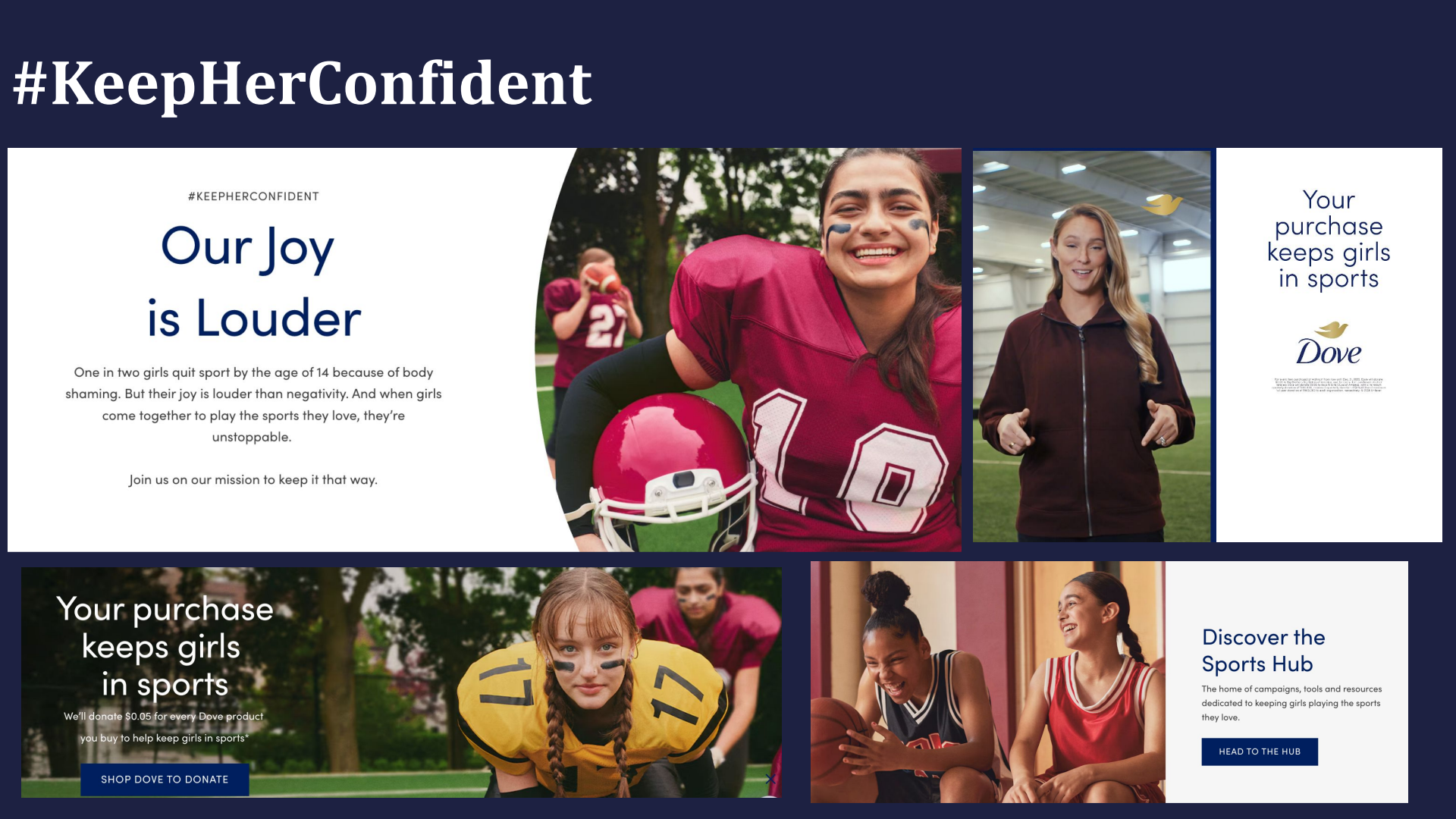
“Instead of talking to me about a product, they’re talking to me about a person.”
She offered a personal proof point for the same principle at human scale. Attending Unbound for the first time last year, knowing nobody, she opened every conversation with a single question: “What’s your story?” It is open-ended, it creates a safe space, and it invites origin, motivation and interest — the raw material of every relationship that later becomes a referral.
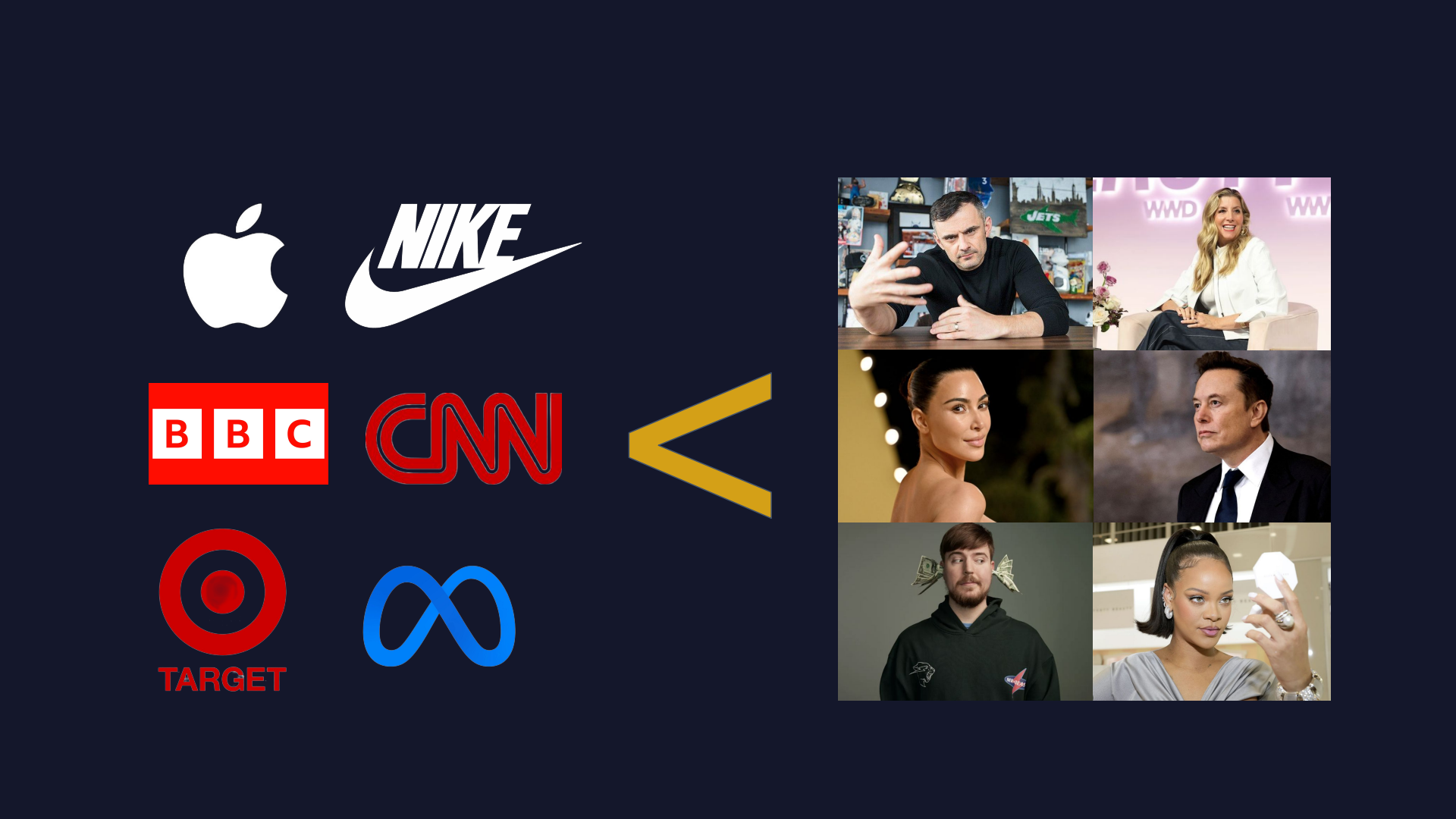
A quick audience poll made the point faster than any statistic: almost nobody in the room follows companies on social media. Authority has migrated away from institutional brands — CNN, Apple, Nike — and towards individual creators and storytellers who show their reasoning in public.
She illustrated it with her own habits as a tennis fan: she follows players, tournaments and independent commentators because they tell stories the branded channels do not carry. “I’m trusting the people instead of the logos.” Sport supplied the corporate parallels too. Pat McAfee succeeded because he arrived with an audience of his own, not because a network conferred authority on him; Ryan Clark, after being let go by ESPN, built his own platform and took his audience with him. Reese Witherspoon, actress and founder-chief executive of Hello Sunshine, uses LinkedIn deliberately, because that is where her business audience, her partners and her executive visibility actually live.
The competitive levers that follow from this are, in her words, the new marketing assets:
This, she argued, is why chief executives are becoming creators. Audiences do not want three-letter titles or corporate statements; they want to know how you lead people, how you build the business and what your leadership style actually looks like in practice. And visibility does not have to mean posting daily — deliberate one-to-one relationship building counts just as much.
“If you are not visible, you are invisible.”
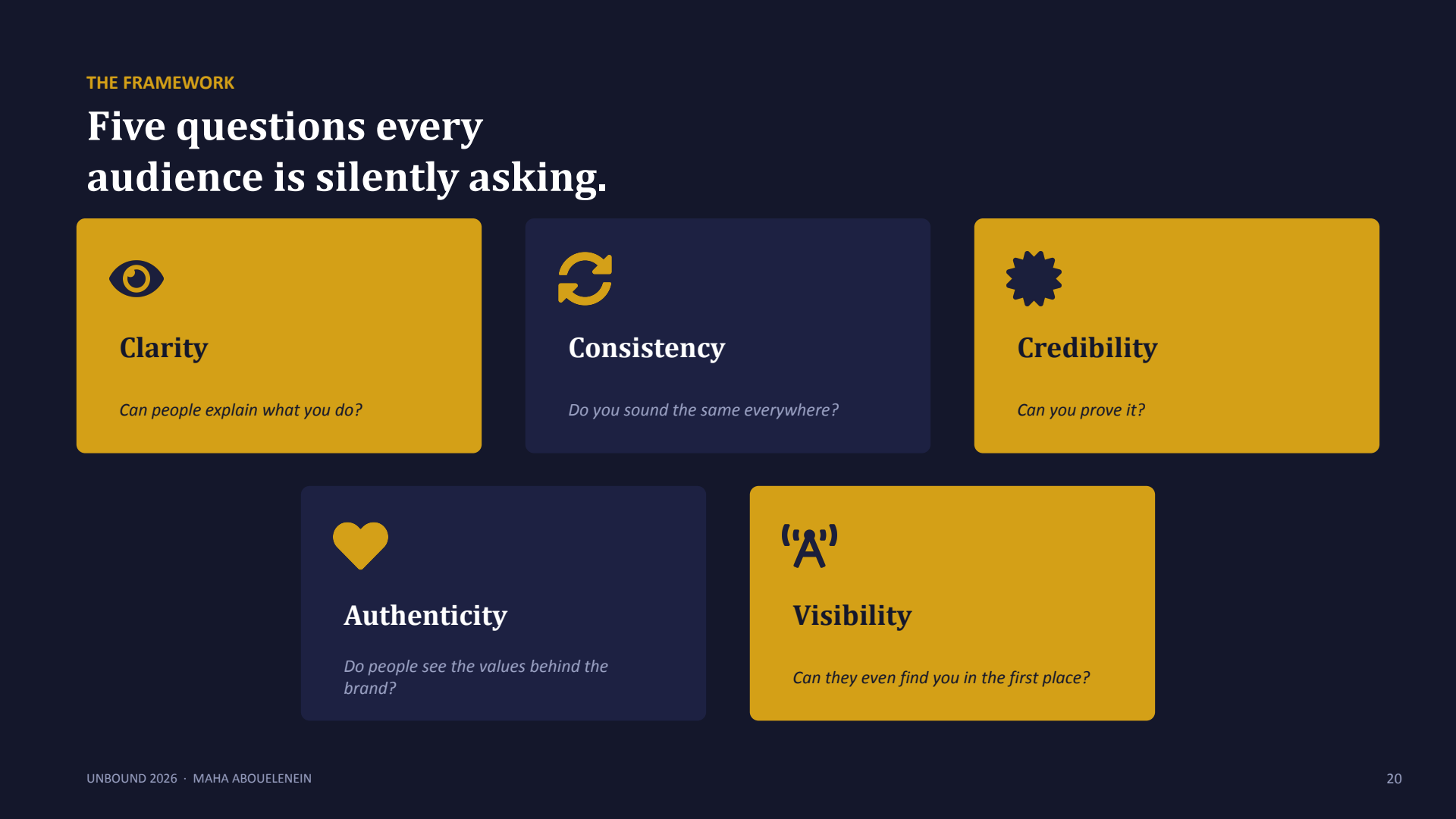
The centrepiece of the session was the framework the room was asked to photograph — five elements that, taken together, constitute a strong personal brand. None of them are about aesthetics, and all of them are about evidence.
She translated each element into a self-audit worth running honestly: Am I building credibility? Am I protecting my reputation? Am I investing in the right relationships? Would people recommend me when I am not in the room? The practical assignments were equally concrete — get clear on what you want to be known for, be able to say your credibility markers out loud in conversation, and build a small visibility game plan, such as choosing three events to attend in 2027 and being intentional about appearing alongside trusted brands and trusted people.
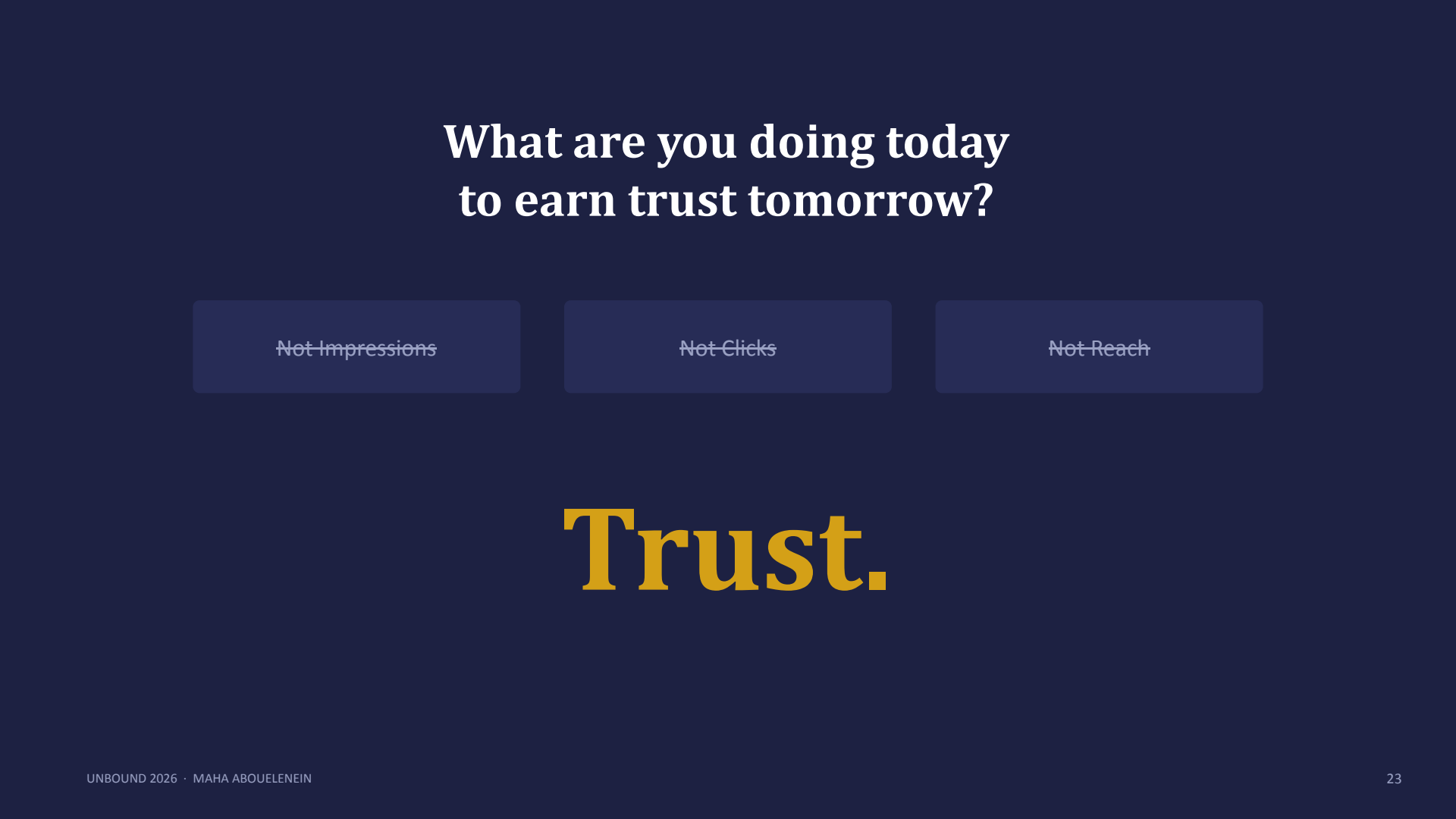
“What are you doing to earn trust? Not impressions, not clicks, not reach — trust, one by one.”
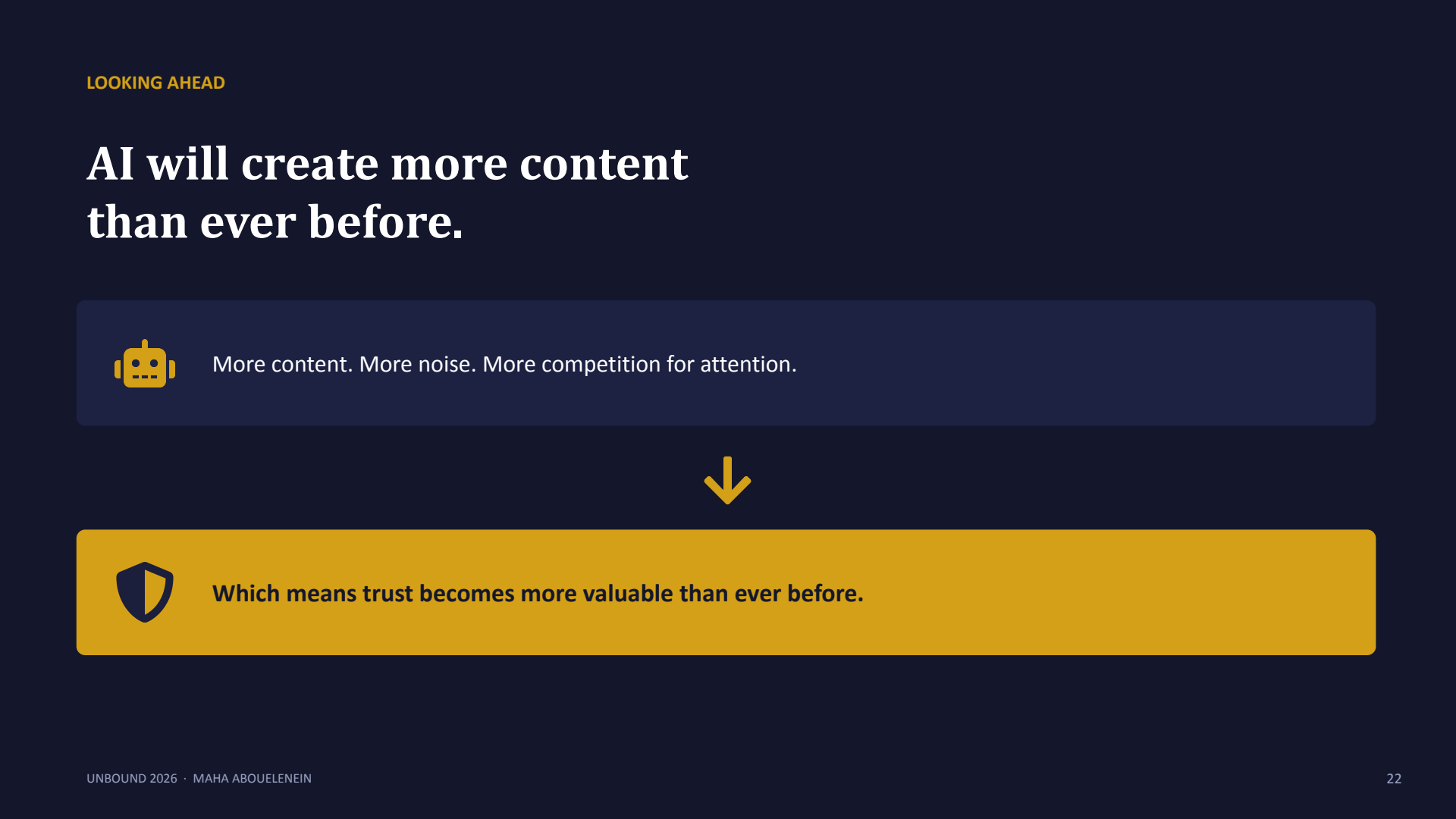
Maha was careful not to position herself against the technology. AI is a legitimate tool for scaling output and shaping ideas — but, in her phrase, “it’s not your ghostwriter”. Audiences have become fast and unforgiving detectors of synthetic voice, and they scroll past it. Trust has to originate from the individual.
The forward projection is straightforward: AI will create more content than ever before, which makes the visible human in the loop — the human at the helm — a differentiator rather than a nicety. The scarce inputs are no longer production capacity but judgement, expertise and relationships.
That is also where her argument about job security sits. If you are anxious about automation, the most durable insurance is a reputation that belongs to you rather than to your job title.
“When AI takes over many things, it can never take away your trust, your judgment, your expertise, and your relationship.”
For anyone allergic to the phrase “personal brand”, she offered a swap that lands better in a corporate setting: call it your reputation. Whether colleagues describe you as a hard worker, a go-getter, a team player, resourceful, thoughtful, someone who takes initiative — or as difficult to work with — that is already your personal brand at work, whether you cultivated it or not.
She was candid about her own resistance. As a communications professional, an executive, a self-described “corporate girl” turned entrepreneur, she had long assumed nobody wanted to hear from her. The unlock was shifting the focus from herself to the audience’s benefit — communications tips, brand-building help, confidence, frameworks, teaching self-sufficiency. Once the value was the subject, creating content became automatic. The number one barrier she sees in others is fear of judgement, the imagined chorus of “Who does she think she is?” Her observation is that those same sceptics keep watching, and eventually ask how you did it.
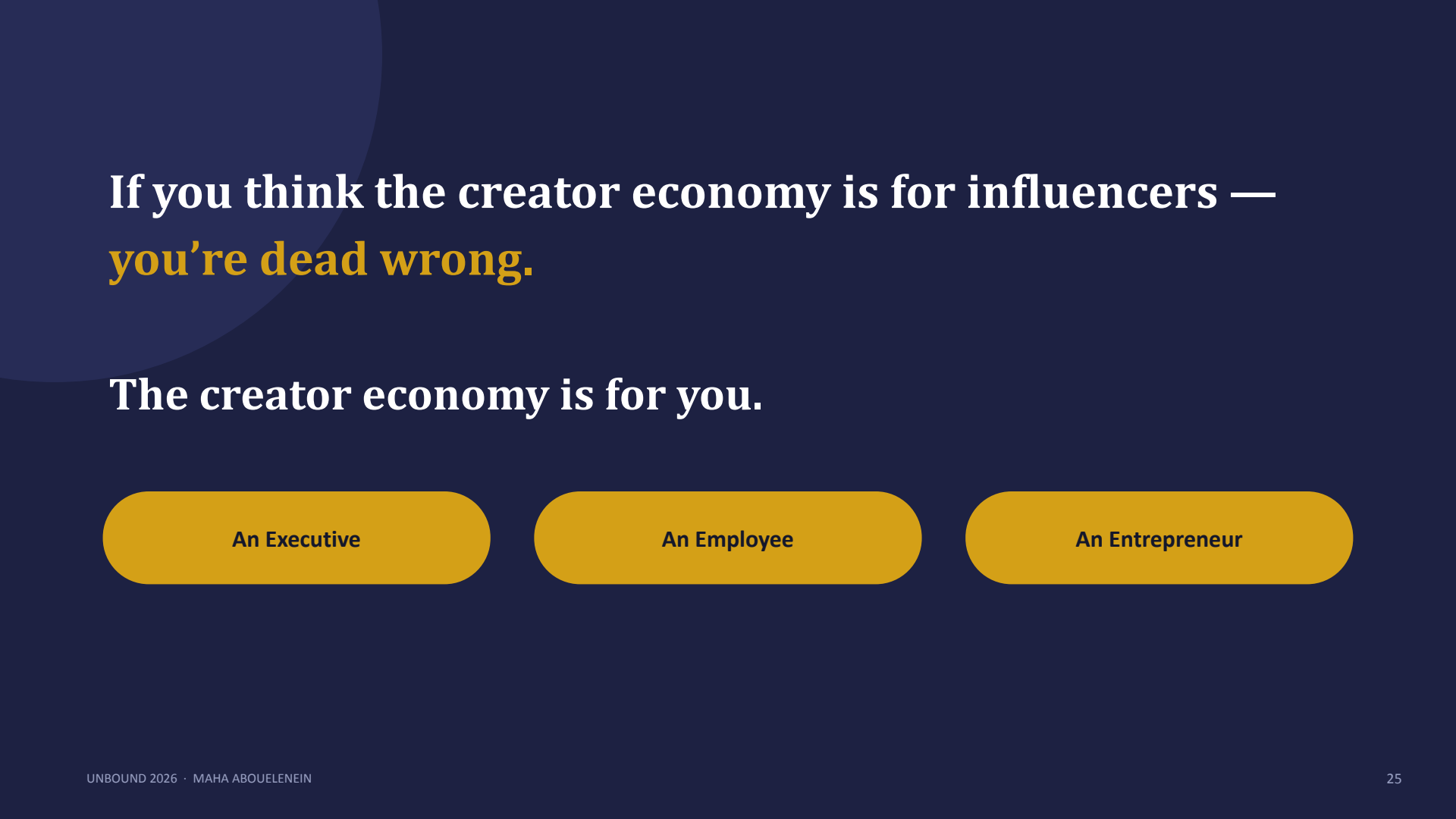
Two examples closed the argument. Her sister Amy retired after thirty-six years at General Mills as a senior marketing executive and initially refused point-blank to create anything; she now runs a small platform telling the story of a one-company career and helping other retired people. And Mel Robbins, speaking later the same day at fifty-seven, only began creating social content at around fifty-two. The creator economy, in this reading, is not a lane for influencers — it is simply the fact that internet access now means access to income, relationships and opportunity, and that where you went to school no longer determines who you become.
“If you think it’s for influencers, you’re dead wrong. It’s for you.”
The underlying capabilities — relationship building, storytelling, communicating with an audience, community building — are real, transferable skills. No employer, she argued, should feel threatened by an employee who has them. For those genuinely worried about a conflict with their employer, she offered to talk it through in person after the session.
Rather than ending on theory, Maha converted the session into a commitment. Personal brand building starts with relationships, so she asked attendees to open the contact QR code on their phones, or their LinkedIn QR code, and connect on the spot — then to leave the event having attempted ten connections: five that day, five the next.
The promised returns were plainly stated: new relationships, greater confidence, financial freedom and inbound opportunity. The caveat was equally plain. Trust is the hard work. It is built through repeated steps and sustained effort, and the compounding shows up a year later rather than by Friday.
What to do next, in the speaker’s own terms:
“It’s never too late to be the person you want to be creating content for.”