Raunaq Akhauri
Technical Product Manager
Raunaq Akhauri is a product leader at Google, specializing in Martech integrations that unlock growth for millions of businesses worldwide.


Technical Product Manager
Raunaq Akhauri is a product leader at Google, specializing in Martech integrations that unlock growth for millions of businesses worldwide.

Global Product Solutions Lead @ Google
Backed by 14 years of deep Google Ads expertise, David McWeeney serves as Global Product Lead and the PMax Growth and Strategy Lead at Google.

The premise of this Google session was disarmingly simple: stop guessing where your next customer will come from, and let the deals you have already won tell your advertising where to look. David McQueen, a global product lead at Google, opened day two of UNBOUND by framing the problem not as a media-buying problem but as an information problem. Most businesses already hold the richest signal they will ever own — the full history of how real buyers moved from first click to closed deal — and most of that signal is sitting quietly in a CRM, doing nothing for the ads that are supposed to find more people like them.
What followed was a three-step argument rather than a product tour. First, connect HubSpot to Google Ads so that sales outcomes, not just form fills, shape targeting. Second, use that connection to create and convert demand in the places buyers actually spend their attention. Third, supercharge the creative itself, because in an environment where people ask longer, sharper, more specific questions, a generic ad is simply noise. A live demo closed the loop, showing how images, headlines and asset variations can be generated in minutes rather than weeks.
McQueen flagged early that the session would not include audience questions, precisely so that more time could be spent on the tooling and the demo. What is left, then, is a tight thesis about relevance: be the answer at the exact moment the problem is being described, and stay present for the rest of the journey.
To explain how HubSpot and Google are meant to work together, McQueen reached for football rather than software. He cited Pep Guardiola, the manager behind Manchester City, Barcelona and several other successful sides, on the division of labour between the touchline and the pitch. The analogy is useful because it resists the usual temptation to describe integrations as plumbing.
“My job as the manager is to get players to the final third of the field. Their job is to finish the play and to score.”
In this reading, HubSpot is the manager. It sets the tactics, supplies the instructions and draws on the full customer history to get the team within scoring distance. Google is the set of players on the pitch: it takes those instructions and finds the leads who are genuinely ready to buy, wherever they happen to be paying attention. Neither half is sufficient alone — tactics without execution never score, and execution without tactics is expensive improvisation.
The partnership framing matters because it changes what “success” looks like in a campaign report. If the CRM is the manager, then the measure of a good campaign is not clicks or leads in isolation but whether the system is being taught, continuously, which leads actually became revenue.
AI, McQueen argued, has changed the route from problem to solution. It has made that route more personal and dramatically faster, and in doing so it has produced what Google calls the supercharged customer — someone who expects the most relevant answer the very second they need it.
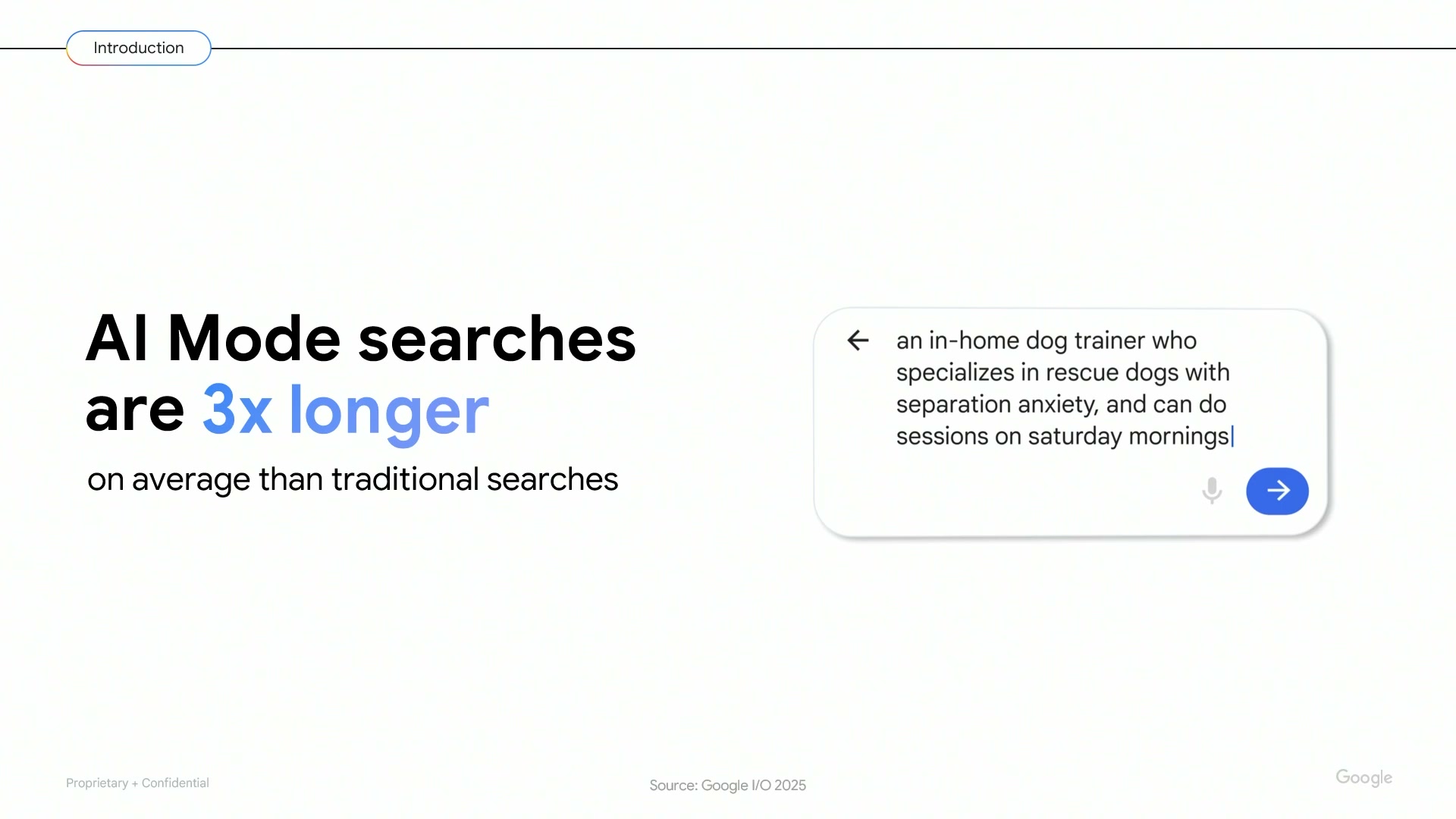
A few years ago, finding an answer online meant collecting a list of options, browsing, and clicking through links until something fitted. Today people arrive online to get something done. The evidence is in the queries themselves: AI Mode searches run roughly three times longer on average than traditional searches, because people are asking real, conversational questions and expecting a specific solution in return.
The example given was deliberately vivid. The old behaviour was typing “dog training”, then another search, then another, breadcrumbing towards something useful. The new behaviour is a single request for an in-home dog trainer who specialises in rescue dogs with separation anxiety and can run sessions on Saturday mornings. That is not a keyword; it is a brief. The business that matches the brief wins.
Finding a customer is no longer a straight line, and being the answer once is not enough. You also have to stay top of mind across an entire purchase journey so that, when the moment to convert finally arrives, your business is the first one that comes to mind. McQueen reduced that messy behaviour to four habits — the four S’s: searching, streaming, scrolling and shopping.
Think about how a phone is actually used. People search for answers, stream video, scroll feeds and shop, frequently within the same few minutes. Businesses have long treated these as separate channels with separate budgets and separate creative. For customers, they are entirely fluid. The claim Google made for itself here is one of coverage: Google and YouTube are the platforms that let a business show up across all four habits simultaneously.
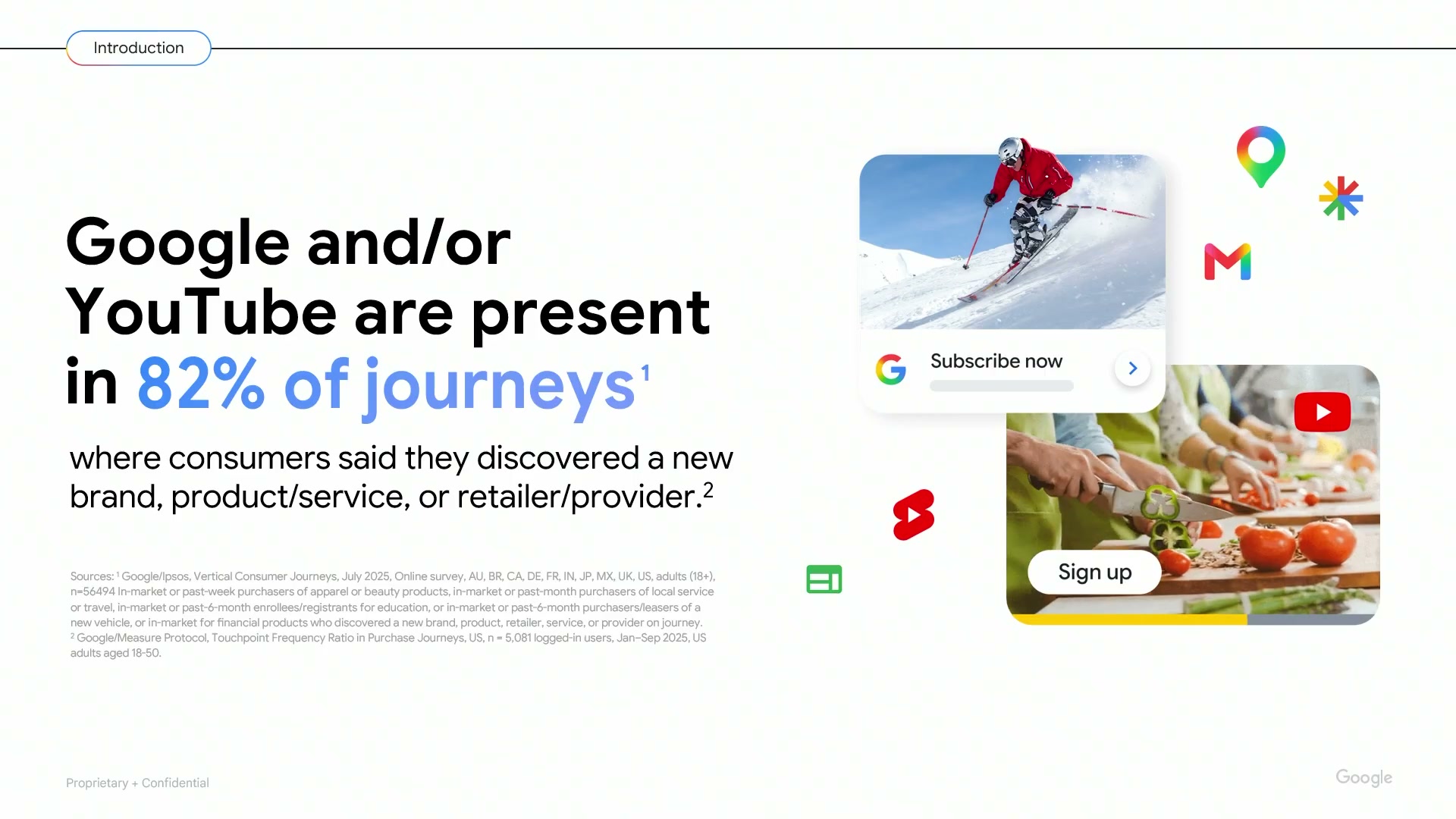
The supporting data point: Google and/or YouTube are present in 82% of journeys in which consumers said they discovered a new brand, product, service or retailer. For perspective, McQueen noted that in the US these surfaces appear in purchase journeys more often than Meta, TikTok and ChatGPT combined.
The strategic consequence is blunt. When people can search for literally anything in their own words, broad advertising becomes background noise. Attention is earned only when the ad is the answer to the question being asked at that moment.
“AI ready” sounds technical and faintly intimidating. McQueen stripped it back: it simply means having your customer data and your marketing tools connected and talking to one another, so that you can show up the second a customer needs you.
By that definition, the room was already halfway there. Anyone using HubSpot already holds the most valuable asset a business can own — first-party data describing how real people interact with them, from website visits to discovery calls to the moment a lead becomes a customer. HubSpot can already show which leads turned into the best outcomes. The problem is that, for many teams, this information simply sits there.
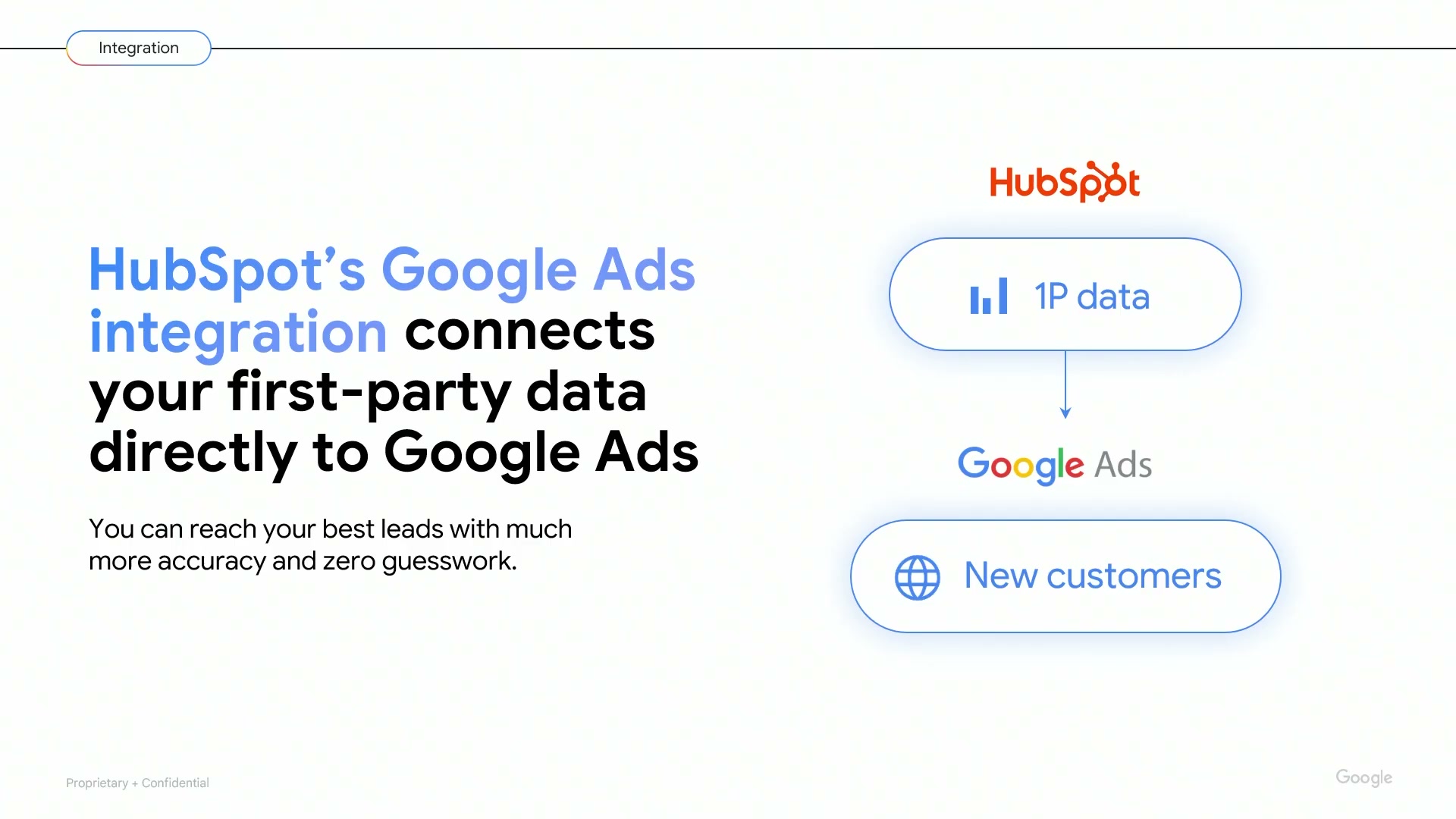
The Google and HubSpot integration is positioned as the bridge. Built and refined across several years of partnership between the two teams, it creates a direct connection between first-party data and the reach of Google Ads, so campaigns can see the actual history of successful deals and use it to decide who to reach next and how. In McQueen’s phrasing, you are letting real-world results guide future ads — which takes the guesswork out of where the money goes.
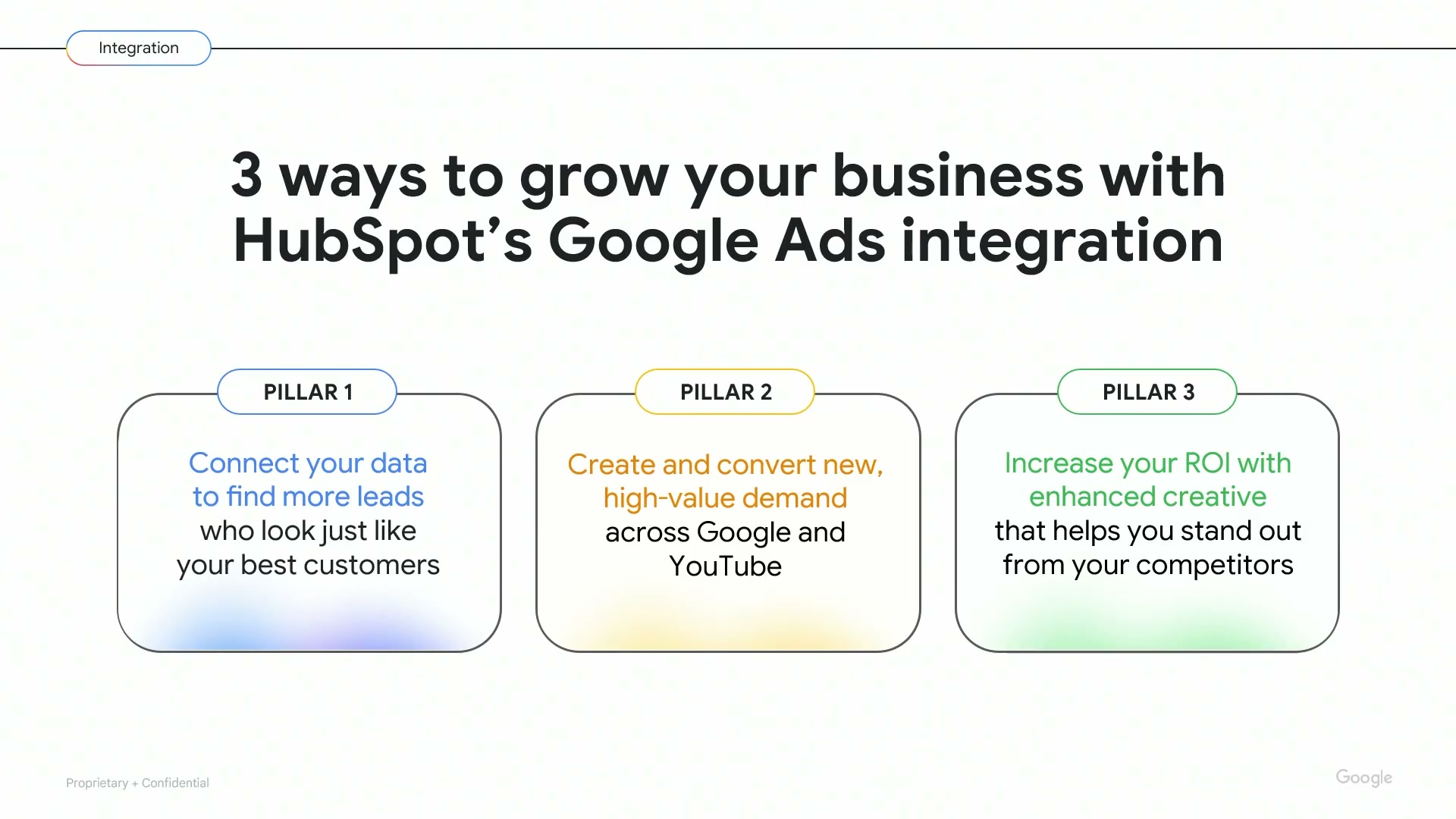
The rest of the session was organised around three moves, presented as a sequence rather than a menu. Each one depends on the one before it, which is why McQueen kept returning to the foundation.
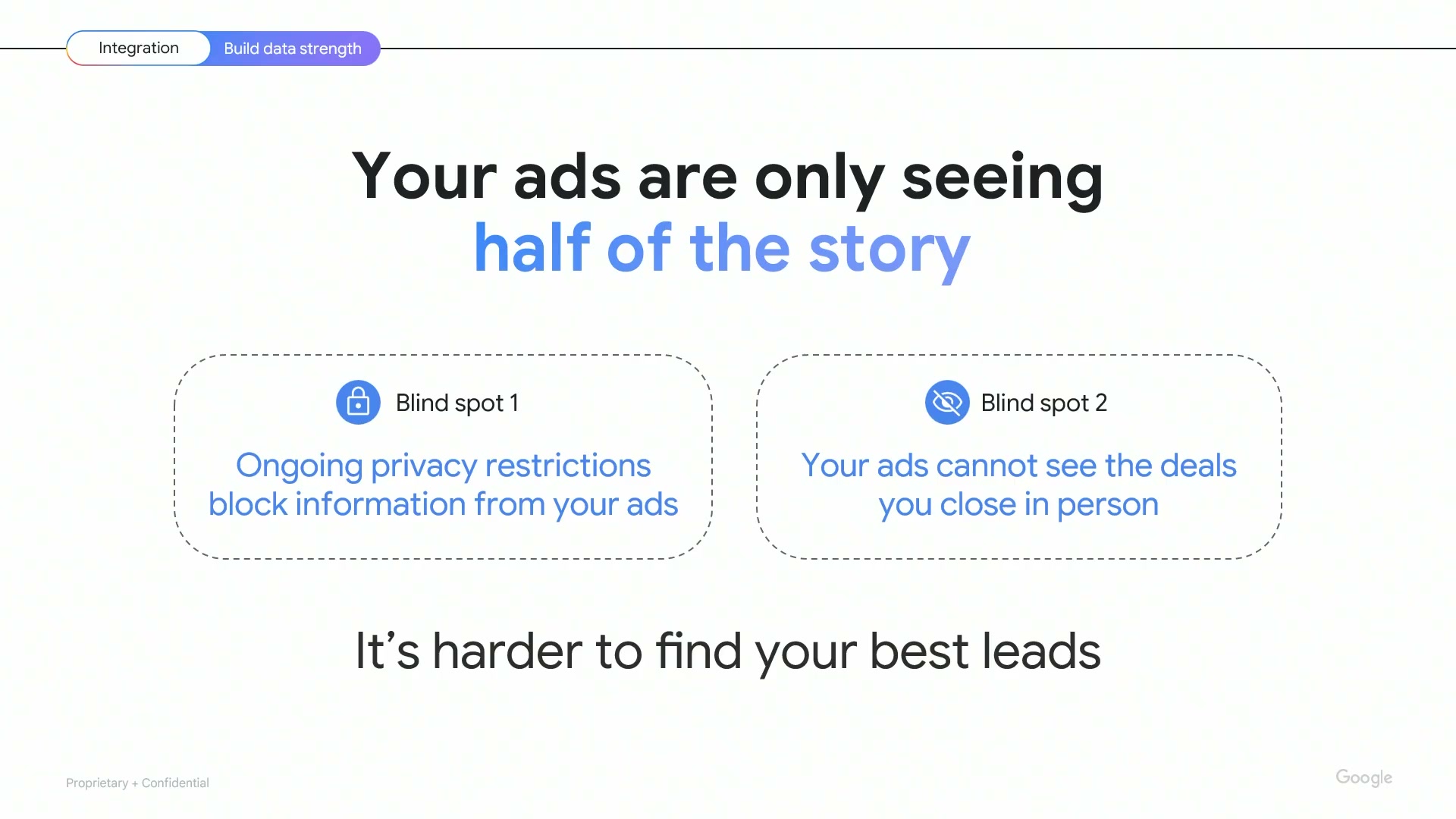
“Data strength” was the phrase McQueen repeated most, and deliberately so: everything that follows is conditional on it. To be the right answer for a customer, your ads need to know the whole story of how people interact with your business — every step from first click to final sale.
In practice, that story is usually incomplete. Most advertising systems see only half of the journey, a condition the session labelled signal loss, and it has two dominant causes. The first is the expanding set of privacy and data compliance rules, which means ads no longer receive information they once took for granted. The second is structural: most sales do not finish online. A customer may click an ad but complete the deal over the phone or in person, leaving the decisive moment invisible to the campaign that created it.
McQueen put the question directly to the room, and it is worth asking of any go-to-market team: how much of your revenue begins with an online action and ends in an offline conversation that your advertising never sees? Where that pattern dominates, optimisation is being trained on the wrong outcomes — rewarding cheap leads instead of closed business. Closing that loop, by feeding CRM outcomes back into Google Ads, is what turns a reporting improvement into a targeting improvement.
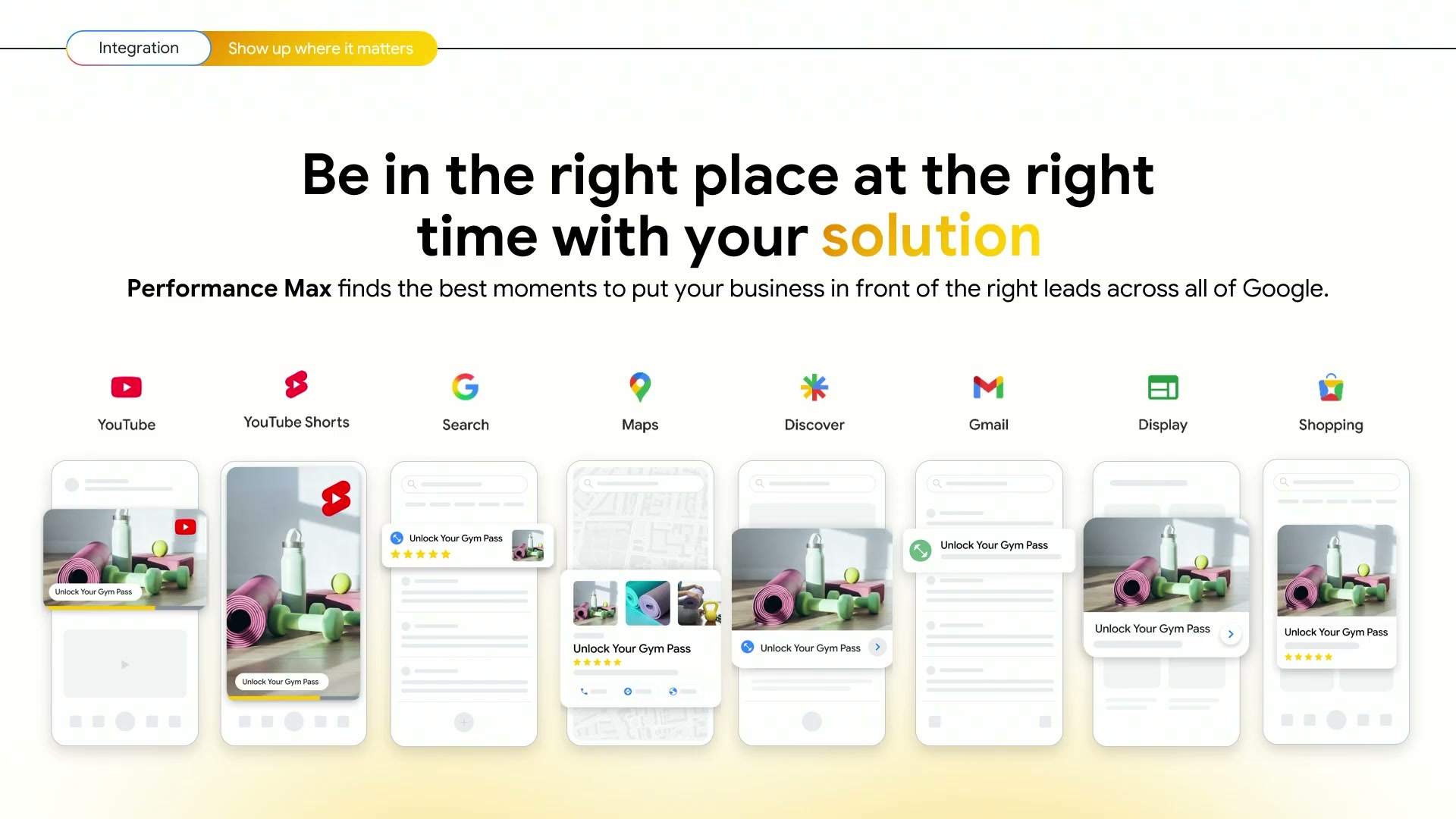
With the connection established, the second step is to put that information to work: growing reach in a way that is disciplined rather than indiscriminate. The objective is to be present in the right place at the right time for buyers who are ready to act — whether they are discovering something on YouTube or actively searching on Google.
This is where the four S’s reappear as a media principle rather than a consumer insight. If buying behaviour is fluid across searching, streaming, scrolling and shopping, then demand creation and demand capture cannot be run as separate disciplines with separate signals. The same understanding of who your best customers are should inform both.
The practical test for any team is whether their campaign structure reflects that. If the audience definition in a prospecting campaign has nothing to do with the deal history sitting in the CRM, the two halves of the funnel are still being managed by different managers.
Better targeting only raises the stakes for the creative. If a buyer has just described a very specific problem in their own words, the ad that appears has to look like a specific answer — which is another way of saying that your ads have to stand out. That was the framing for the third and final step.
The constraint most teams hit is not ambition but production capacity. Strong creative across multiple formats, aspect ratios and messages is slow and expensive to make, so campaigns quietly settle for fewer, blander assets. The proposition here is to compress that production cycle: generate ads with strong creative much faster, covering images, headlines and the wider set of asset elements, so that relevance can be expressed at the level of the individual ad rather than the campaign.
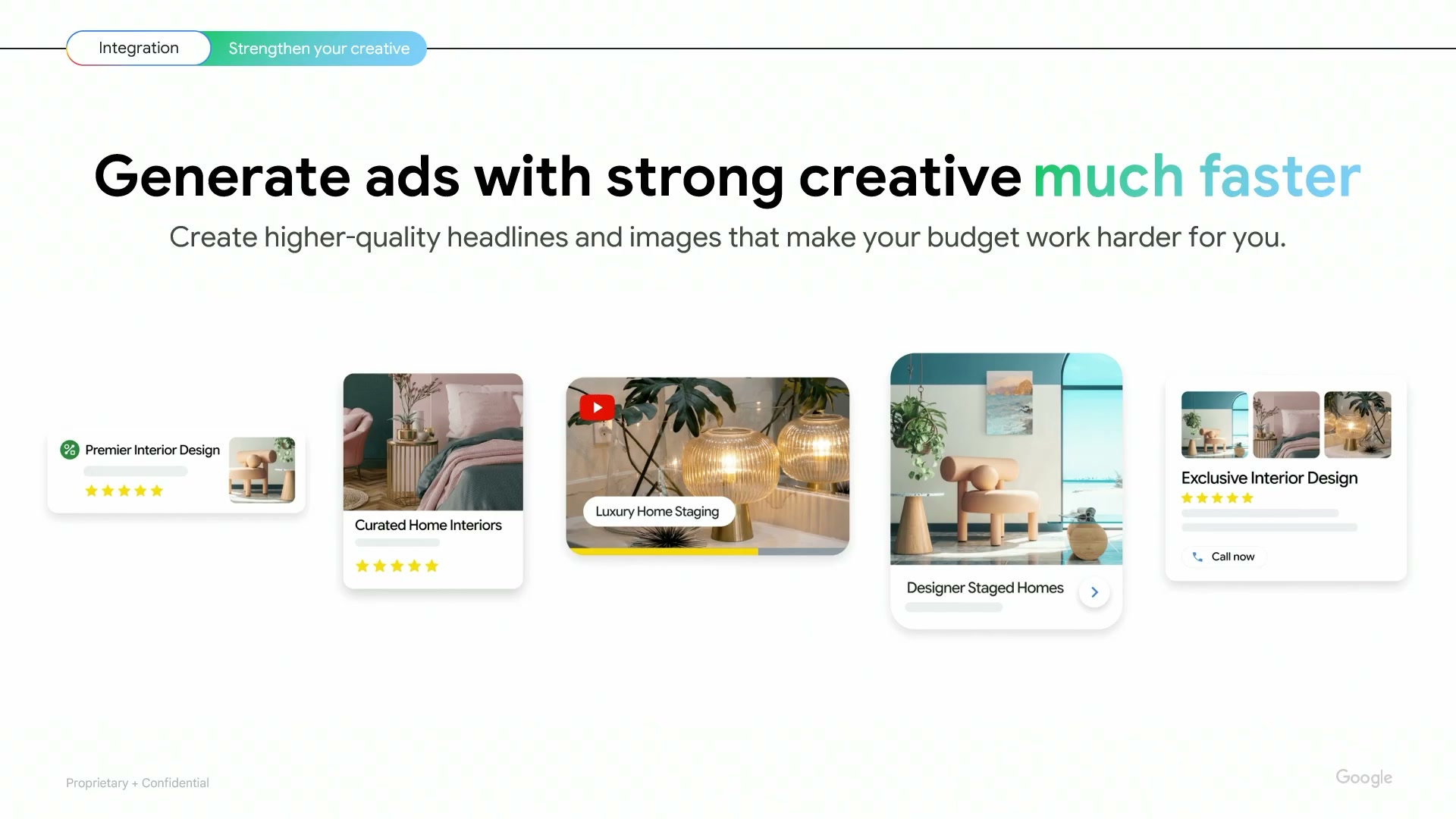
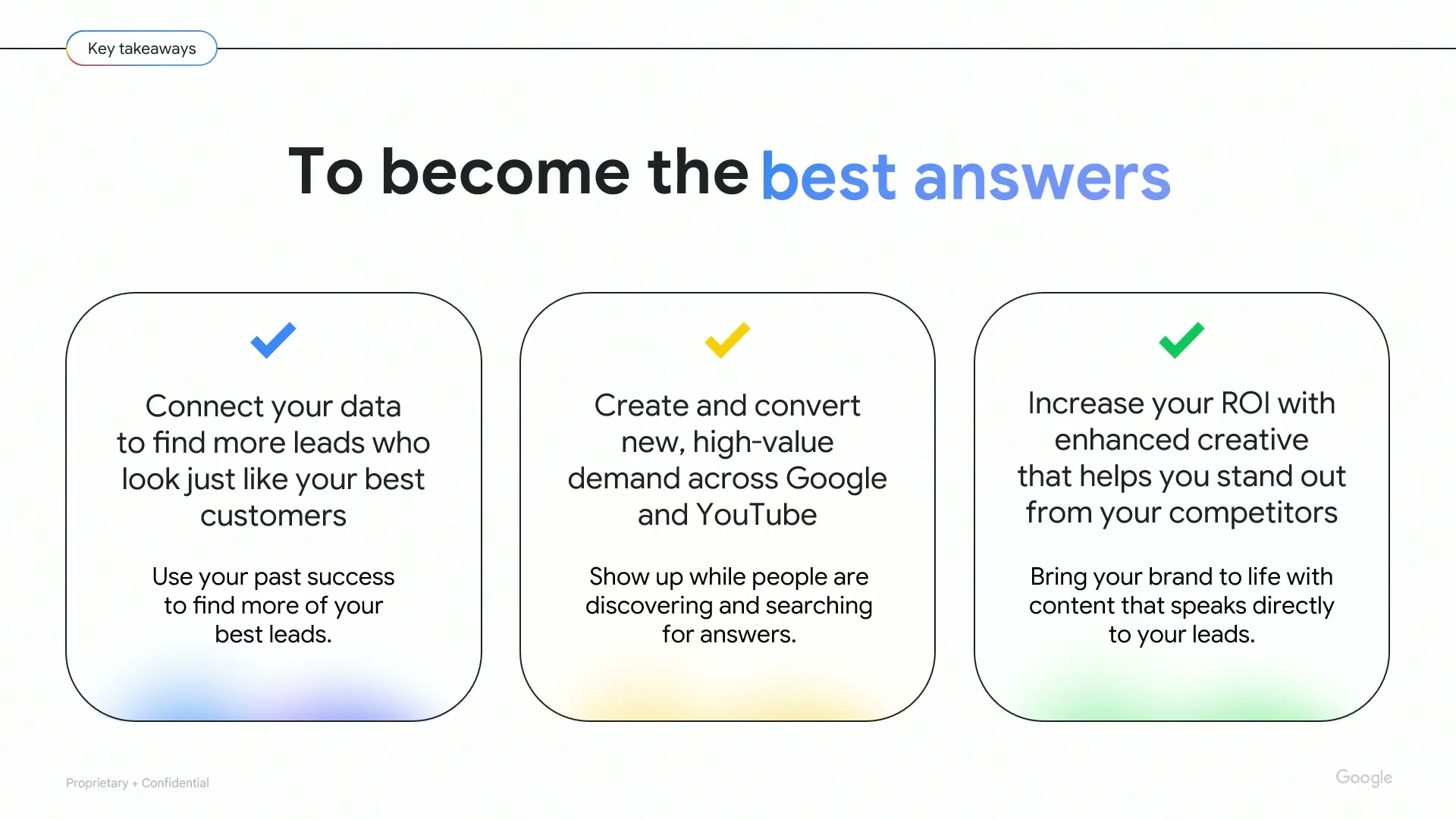
The logic is cumulative. Step one tells the system who is worth reaching. Step two determines where and when they are reached. Step three decides whether, having been reached, they recognise the ad as the answer they were looking for.
Get all three right, McQueen argued, and the combined effect is that your business becomes both the answer people find and the choice they make when they are finally ready to buy.
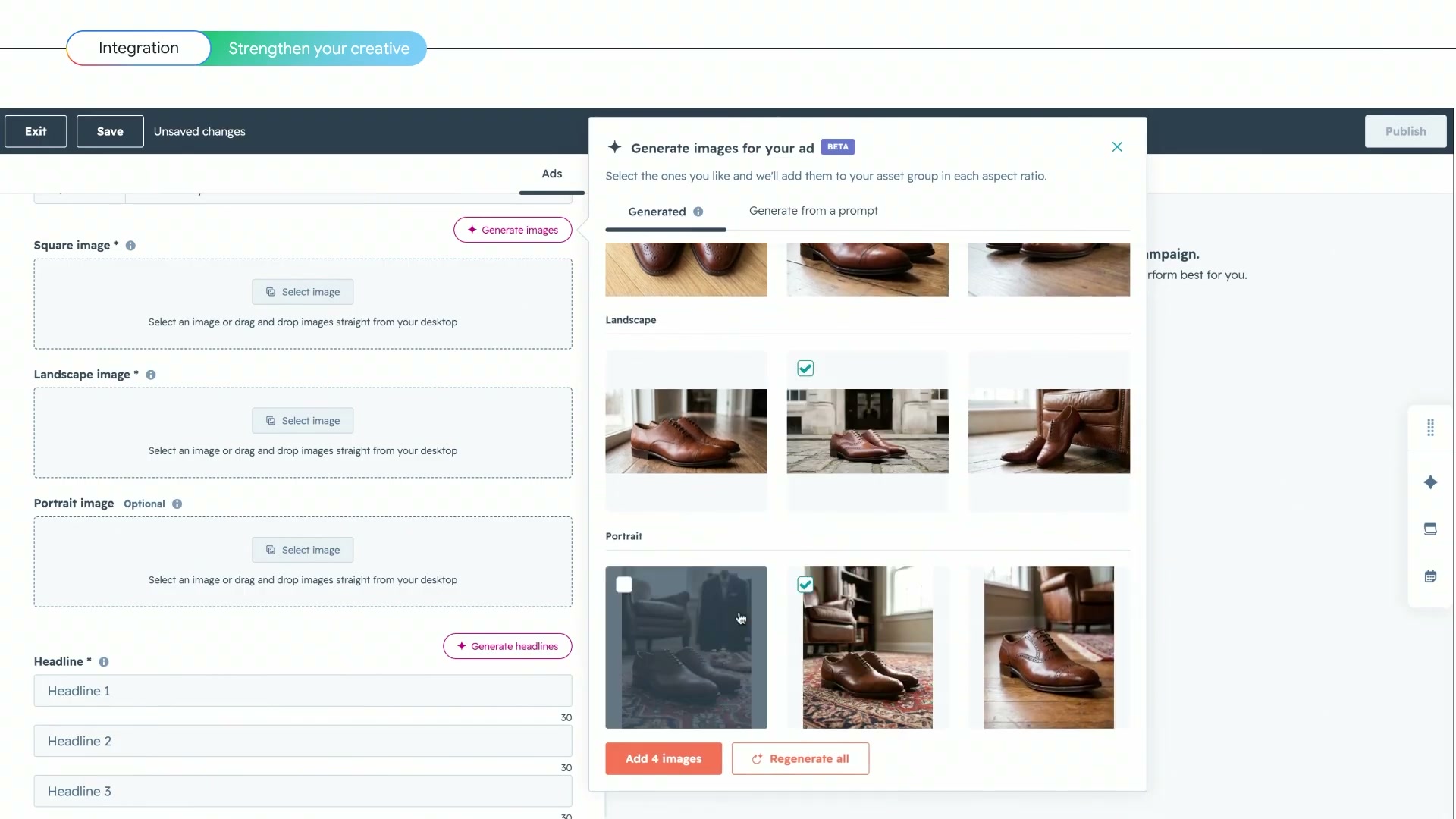
Rather than take questions, the session reserved its final stretch for a live walkthrough. Using a worked example account — a fictional business called My Shoe Store — the demo moved through the campaign creation interface to show how asset production now sits inside the build flow rather than alongside it.
The sequence showed a campaign being assembled, then an image generation panel invoked directly from the ad creative step, producing candidate visuals that could be reviewed and selected on the spot. Because ad formats demand different shapes, the interface handled square and landscape variants as part of the same request, removing one of the more tedious sources of delay in getting a campaign live.
The point of the demonstration was less about any single button and more about the change in rhythm. When headlines, images and asset variations can be produced inside the campaign builder, iterating on creative stops being a separate project with its own lead time and becomes part of the ordinary work of running a campaign.
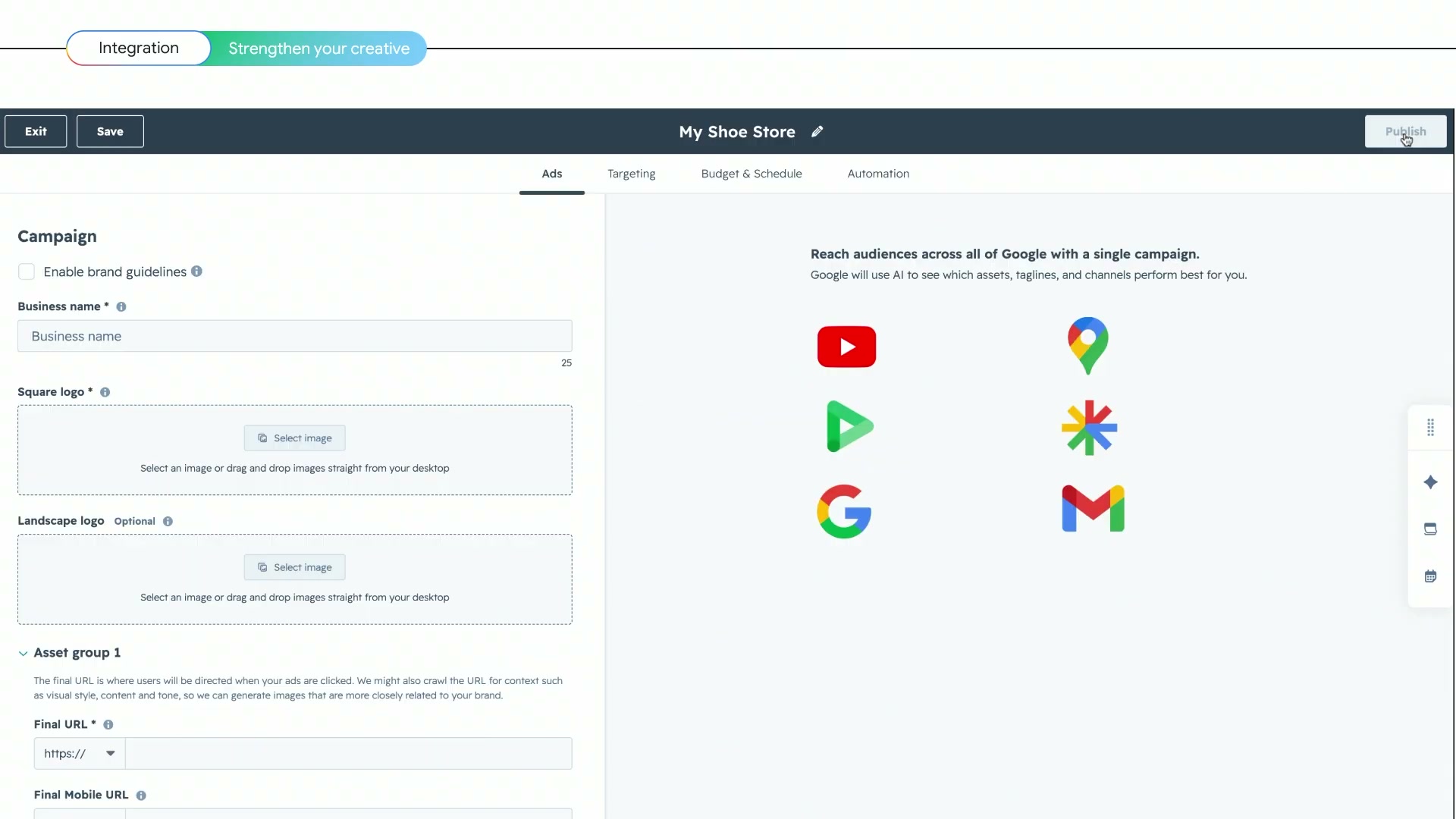
The closing slide returned to the three commitments that hold the argument together, and they are worth restating as a checklist rather than a recap. Connect the data, so that campaigns learn from real outcomes instead of proxies. Grow reach where buyers actually are, across search, video, feeds and shopping. Sharpen the creative, so that relevance survives contact with the ad itself.
What makes the session more than a product narrative is the diagnosis underneath it. Buyers are describing their problems with unprecedented precision; advertising systems, meanwhile, are seeing less of the journey than they used to. The gap between those two trends is where budget gets wasted. Closing it is largely an operational task — connecting systems that already exist and feeding them the outcomes you already record.
For teams leaving the room, the immediate action is unglamorous and entirely within reach: check whether your CRM outcomes are actually reaching your ad platform, and whether the conversions you are optimising towards represent revenue or merely activity. Everything else in the session — audience quality, creative velocity, cross-surface presence — compounds from that single fix.